

From decentralized creativity to the rise of wellness collectivism, these ten data-driven cultural shifts reshaped human behavior in the post-COVID-19 era—and they continue to transform societies globally.
By Namith DP | July 28, 2025
Introduction
The COVID-19 pandemic fundamentally altered how people live, work, worship, and interact. While the crisis was rooted in public health, its impact triggered permanent social and cultural realignments. Digital connectivity, social unrest, and widespread isolation catalyzed global movements once considered local or niche. From virtual rituals and decentralized economies to rising mental health openness and cultural reclamation, the post-pandemic landscape is marked by global convergence.
This analysis identifies ten of the most influential cultural movements that spread worldwide after 2020. Each is backed by quantifiable shifts in behavior and supported by data, case studies, and institutional reports.
1. Remote Work Culture and Digital Nomadism

Transformation:
The pandemic normalized remote work at scale, enabling geographic freedom and pushing individuals to adopt location-independent lifestyles.
- Data Point: According to Statista (2023), 28% of the global workforce operated remotely full-time—up from 4% in 2019.
- Real-World Effects:
- Portugal and Estonia introduced digital nomad visa programs with minimum income thresholds (e.g., €2,800/month in Estonia).
- Bali’s long-term visa applications rose 24% in 2024, with Indonesia tailoring infrastructure to accommodate remote workers.
- Cultural Impact: The remote-first culture enabled professionals from developing nations to access global markets without relocation.
2. Decentralized Art and the NFT Economy
Transformation:
Artists leveraged blockchain and decentralized platforms to bypass traditional gatekeepers and reach global audiences.
- Market Insight: NonFungible.com reported that NFT art sales exceeded $2.5 billion in 2021.
- Access Point: Platforms like OpenSea, Rarible, and Foundation enabled creators in Latin America, Africa, and Asia to monetize directly.
- Example: Nigerian artist Osinachi became the first African artist to sell NFTs through Christie’s.
- Broader Trend: The rise of Web3 lowered barriers for artists lacking institutional support, especially in regions with unstable art economies.
3. Mental Health De-stigmatization
Transformation:
What began as private mental health struggles during lockdowns evolved into a worldwide push for open dialogue and accessibility.
- WHO Data: Global prevalence of anxiety and depression rose 25% in 2020.
- Service Uptake: Teletherapy platforms like BetterHelp, Talkspace, and India-based Wysa expanded to over 100 countries.
- Cultural Legitimization: High-profile figures including Simone Biles, Prince Harry, and Naomi Osaka addressed mental health publicly, making it more socially acceptable.
- Institutional Change: Governments in Australia, Canada, and South Korea have since increased national mental health funding.
4. Online Spirituality and Virtual Faith
Transformation:
Restrictions on physical gatherings led faith institutions and spiritual communities to adopt digital platforms.
- Global Example:
- The Vatican livestreamed Easter Mass to more than 10 million viewers in 2020.
- India’s ISKCON temples began daily live worship broadcasts.
- Trend Adoption: Religious apps like Muslim Pro and YouVersion saw surges in engagement.
- Persistence: Even post-lockdown, online communities continue to supplement in-person faith, expanding access to diaspora and isolated populations.
5. Wellness Collectivism
Transformation:
Self-care evolved into collective healing. Mental, emotional, and physical health became intertwined with community identity.
- Market Growth: The Global Wellness Institute valued the wellness economy at $5.6 trillion in 2023, up from $4.5 trillion pre-pandemic.
- Behavioral Shift:
- Group-based practices like breathwork circles, group therapy, and virtual yoga collectives flourished.
- Platforms like Insight Timer and The Class emphasized shared emotional experiences.
- Geopolitical Overlap: Collective wellness now intersects with social justice, workplace policy, and urban planning.
6. Language Learning and Global Citizenship
Transformation:
Constrained by borders, people turned to language acquisition as a tool for connection, opportunity, and global integration.
- Duolingo Growth: 67% user increase globally between 2020–2021; continued growth reported in Duolingo’s 2024 Q4 earnings.
- User Behavior:
- India saw a spike in Spanish learners.
- Brazilians increasingly pursued English and Mandarin for employment.
- Cultural Positioning: Language is now seen as a civic competency for global collaboration rather than merely a technical skill.
7. Crowdsourced Activism and Global Solidarity
Transformation:
Movements once limited to regional awareness became globally supported causes, thanks to mass connectivity.
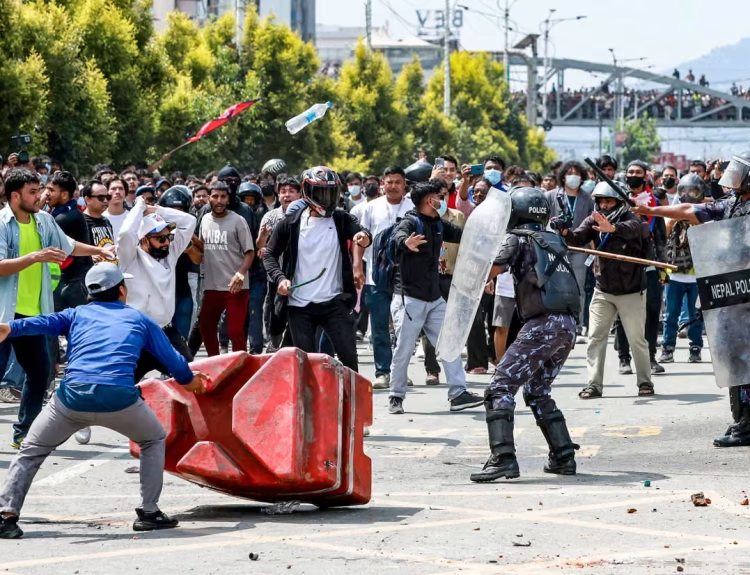
- Example: The #BlackLivesMatter movement saw solidarity protests in over 60 countries.
- Platform Role: TikTok, Twitter, and Clubhouse allowed real-time global organization.
- Cross-Movement Impact: Other causes—such as #EndSARS (Nigeria), #StopAsianHate (USA), and climate justice protests—gained international traction.
- Sociopolitical Impact: Cross-border activism led to formal resolutions in institutions like the UN Human Rights Council and policy reviews in several national governments.
8. Reclamation of Indigenous and Local Cultures

Transformation:
Digital platforms enabled underrepresented communities to preserve and promote cultural identities globally.
- Example:
- Virtual powwows in Canada allowed Indigenous communities to sustain cultural practices during lockdowns.
- Māori, Inuit, and Sámi creators shared linguistic and ceremonial knowledge via TikTok and Instagram.
- UNESCO Insight: Applications for intangible cultural heritage status increased by 34% between 2020 and 2023.
- Legacy Effect: Younger generations are actively re-engaging with ancestral languages and traditions.
9. Globalization of K-Culture and Pan-Asian Media
Transformation:
Korean pop culture scaled dramatically during the pandemic—and carried with it broader Pan-Asian entertainment.
- Stat: BTS surpassed 26 billion YouTube views globally by 2023.
- Streaming Trend: Korean dramas regularly ranked in Netflix’s Top 10 in the U.S., Brazil, and India.
- Adjacent Growth:
- Japanese anime saw a 22% increase in global viewership (Crunchyroll, 2023).
- Thai and Filipino dramas grew across Europe.
- Implication: Asian media now shapes global entertainment pipelines and soft power diplomacy.
10. Maker Culture and DIY Resilience
Transformation:
Disrupted supply chains and extended time at home reignited interest in self-reliance through hands-on creativity.
- Economic Shift: Etsy’s revenue doubled from $818 million in 2019 to $2.3 billion in 2022).
- Trend Activities:
- Surge in sewing machine sales and craft supply exports.
- Growth in DIY YouTube channels (e.g., electronics repair, woodworking, 3D printing).
- Sociocultural Meaning: Beyond survivalism, DIY became linked to sustainability, anti-consumerism, and community knowledge-sharing.
Conclusion
The pandemic catalyzed more than temporary changes—it triggered foundational shifts in culture. These ten movements demonstrate how local ideas, when amplified by digital platforms and collective necessity, can evolve into transnational norms. Whether reshaping the global labor force or redefining identity and activism, these movements continue to influence the world in 2025.
Understanding these cultural realignments is crucial for governments, businesses, educators, and content creators seeking relevance and resonance in a permanently altered world.
For more news on cultural shifts read –
About The Author




True
[…] Top 10 Cultural Shifts Transforming Society Post-COVID-19 […]
[…] Top 10 Cultural Shifts Transforming Society Post-COVID-19 […]