
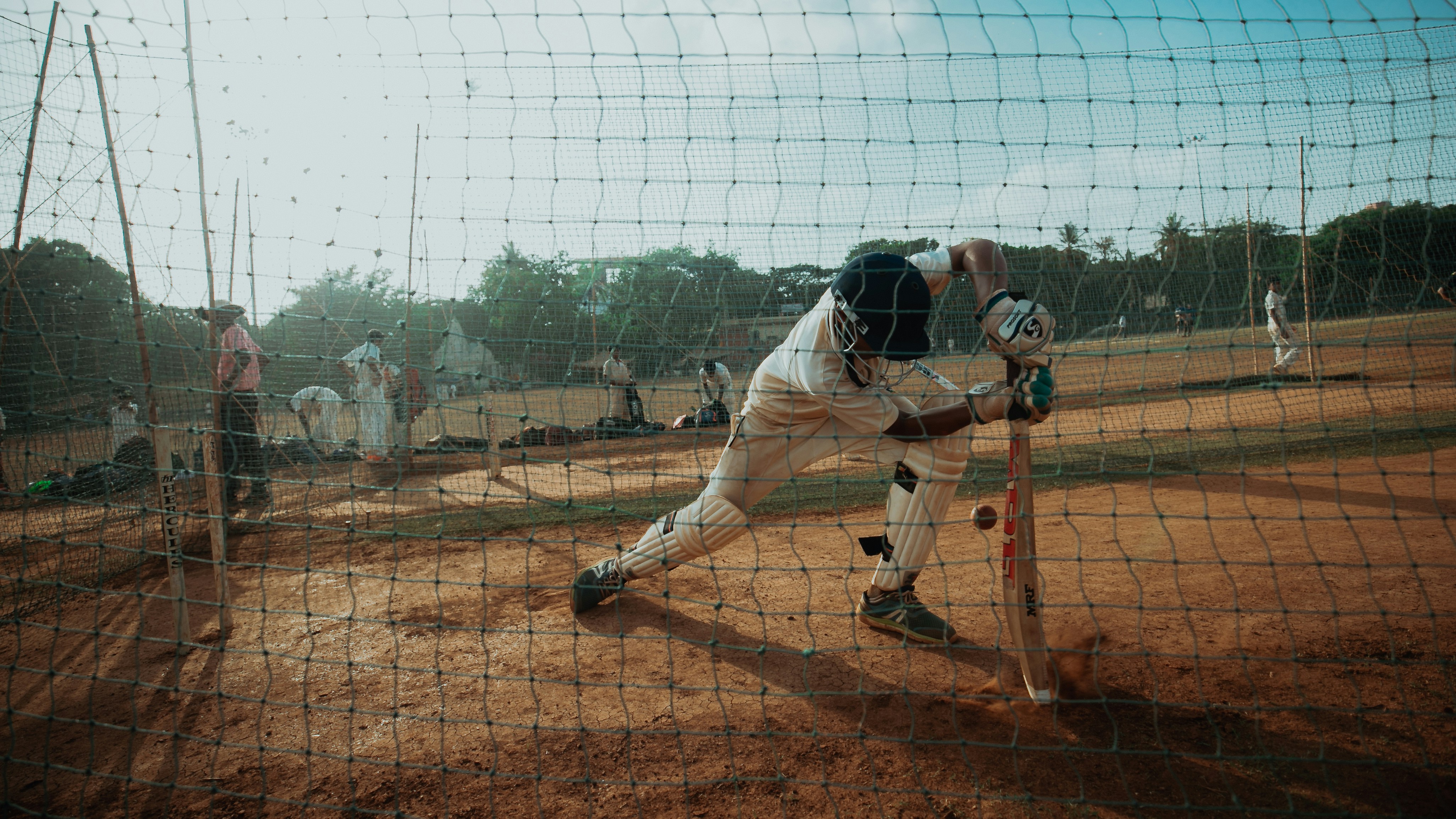
Biomechanics has revolutionized cricket coaching. By applying scientific analysis of movement, forces, and timing, coaches gain precise insight into player actions. This enables faster skill development, injury prevention, and performance enhancement. This guide explores how cricket biomechanics analysis elevates every element of training—running from lab research to field implementation at both grassroots and elite levels.
Why Biomechanics Matters in Cricket
- Objective Feedback: Frame-by-frame review of bowling or batting technique helps identify hidden errors.
- Injury Prevention: Force monitoring highlights stress points before symptoms appear.
- Consistent Performance: Repeated optimal movement patterns lead to better match execution.
- Data-Driven Training: Biomechanics quantifies progress and informs targeted drills.
In fast bowling, ground reaction forces can reach 10× body weight during delivery . Tracking these helps coaches reduce injury risk and enhance efficiency.
Core Biomechanical Principles in Cricket
- Kinematics – Study of body part motion, angles, velocities (e.g., elbow, shoulder, hip positioning).
- Kinetics – Assessment of forces and torques (e.g., ground impact, braking forces).
- Temporal Sequencing – Timing patterns like hip-shoulder separation in batsmen.
- Coordination – Smooth multi-joint movement, reducing performance variance.
Laboratory Tools and Techniques
1. High-Speed Motion Capture
Record action with 200–500 fps cameras to track body segment movements. Used by Loughborough University to improve shoulder offset in bowlers .
2. Force Plates
Measure impact and loading during deliveries. Highlight excessive ground force which could cause stress injuries.
3. Inertial Measurement Units (IMUs)
Wearables that measure acceleration and angles on-field. Peer-reviewed studies validate IMU accuracy vs. lab data .
4. Pressure Insoles
Map plantar pressure to assess front- or back-foot loading during bowling.
Fast Bowling Mechanics Breakdown
Run-Up and Momentum
Optimal run-up generates speed without losing control. Bowling requires gradual acceleration—not abrupt breaks. Poor patterns reduce ball velocity.
Pre-Delivery Stride
Crucial moment where shoulder and hip rotation begins. Data show 15° increase improves ball speed consistency.
Front-Foot Impact
Ground reaction force reaches 10× body weight. Biomechanics helps adjust foot placement, shin angle, and knee flexion.
Arm Action
Elbow extension must stay below ICC’s 15° limit . Shoulder mechanics influence seam and swing performance.
Follow-Through
Proper deceleration after release reduces injury risk and supports recovery mechanics.

Batting Mechanics and Analysis
Backswing Placement
High-speed video helps detect excessive backswing causing imbalance.
Downswing Timing
Techniques use rates to maximize power transfer by measuring milliseconds before impact.
Impact Moment
Biometric tools identify sweet spot alignment; contact angle maps improve length and stroke consistency.
Footwork Patterns
Correct foot placement enables power shots. Data shows front-foot balance drops by 20% for push shots—coaching can restore it.

Fielding and Throwing Mechanics
Throwing involves complex coordination between the legs, trunk, and upper limbs. Effective biomechanics begins with trunk rotation torque, where energy is generated from the hips and transferred through the torso to the throwing arm. By refining hip-to-shoulder separation, players can increase throw velocity without overloading the shoulder joint.
Biomechanical analysis also focuses on elbow extension angles, which—when optimized—reduce stress and improve accuracy. Video-based feedback and sensor data highlight timing inefficiencies during ball release, enabling targeted correction.
In addition, arrival timing at the ball, sprint deceleration before the throw, and shoulder loading dynamics are critical. Improper footwork or delayed transfer can compromise throwing posture, resulting in reduced speed and higher injury risk. Motion tracking helps identify such flaws, ensuring optimal biomechanics under match conditions.
Biomechanics also aids in improving underarm flick throws, relay timing, and dive-to-throw transitions—especially relevant in limited-overs formats where every second counts.

Performance Gains & Skill Retention
- Controlled movement training boosts accuracy and reduces movement variance.
- South Africa identified 80% error reduction by tracking bat swing paths.
- Repeated biomechanics training embeds optimal muscle memory.
Injury Prevention Through Biomechanics
- Load management avoids stress fractures.
- Detection of asymmetry lets coaches prescribe corrective training early.
- Monitoring shoulder rotation helps prevent rotator cuff injuries.
Biomechanical monitoring helped Mumbai Redbacks reduce back injuries by 18% across 12 months.
Elite Case Studies
Loughborough University Training Centre
• 12% bowling speed gain & 15% drop in repetitive injuries after biofeedback training .
Royal Academy Youth Bowlers
• Sensor-based shoulder alignment drills reduced velocity fluctuations by 10%.
National Institute of Sport, Australia
• Hip stability work informed by IMU data cut strain injuries by 20% .
Grassroots: Affordable Biomechanics
- Use slow-motion phone apps for form capture.
- Deploy low-cost pressure sensors and free motion-analysis apps.
- Highlight alignment drill priorities using simple marker-based video.
Equipment and Software Recommendations
- Vicon and Dartfish for recognized motion capture accuracy.
- Xsens IMU systems allow portable tracking.
- Dartfish and AnalyzerPro for coach annotation.
- Garmin sports watches for runoff tracking.
Integrating Data into Training Programs
- Baseline Assessment – Initial joint angles, impact forces, swing speed.
- Identify Dysfunctions – Imbalances, noisy labs highlight inefficiency.
- Customize Drills – For example, adding hip rotation exercises for fast bowlers.
- Iterative Testing – Regular measurements track progress.
- Injury Flag Detection – Host weekly monitoring of workload and stress.
Technology Advancement & Future Trends
AI and Real-time Feedback
Machine learning tools could flag delivery errors live via smart glasses.
Virtual Reality Integration
Simulate visual feedback of bowling or batting actions using VR tech.
Smart Wearable Clothing
Embedded sensors that track strain, heat, and performance.
Genetic and Tissue Data
Custom training programs based on muscle fiber types and metabolism.
Challenges and Solutions
- High Costs: Universities and academies provide shared access.
- Technical Expertise: Online courses help coaches interpret data.
- Data Overload: Coaches need simple dashboards instead of raw data.
- Player Adaptation: Slow, consistent biofeedback embeds long-term gains.
Professional & Ethical Considerations
- Obtain player consent before data collection.
- Ensure data confidentiality.
- Use data only to improve performance, not punish players.
- Educate on proper usage for wellness, not just speed.
Implementing Biomechanics with Stakeholders
- Include physios, strength coaches, tech specialists.
- Provide workshops for coaches.
- Host biomechanical demo sessions with players.
- Align development plans with club or league training goals.
Measuring Success
- Compare bowling speed across 12 months pre- and post-implementation.
- Track shoulder injury incidence.
- Monitor skill retention when reviewing batting percentages.
- Survey coach and player satisfaction.
Case: Pakistan Cricket Board recorded 8% wicket drop after adding biomechanical drills.
Summary & Key Takeaways
- Cricket biomechanics analysis delivers faster skills, fewer injuries, and better workload management.
- Programmable drills, data-informed choices, and objective monitoring empower players and coaches.
- Integration into elite and grassroots systems is increasingly practical via mobile and affordable tech.
- Future developments—AI, VR, smart clothes—will take training precision even higher.
Adopt biomechanics systematically for a modern, data-driven edge.
Sources
- https://pubmed.ncbi.nlm.nih.gov/33428558/
- https://pubmed.ncbi.nlm.nih.gov/38797081/
- https://en.wikipedia.org/wiki/Throwing_%28cricket%29
- https://en.wikipedia.org/wiki/Muttiah_Muralitharan
- https://en.wikipedia.org/wiki/National_Cricket_Performance_Centre
- https://en.wikipedia.org/wiki/ESPRIT_project
About The Author


