
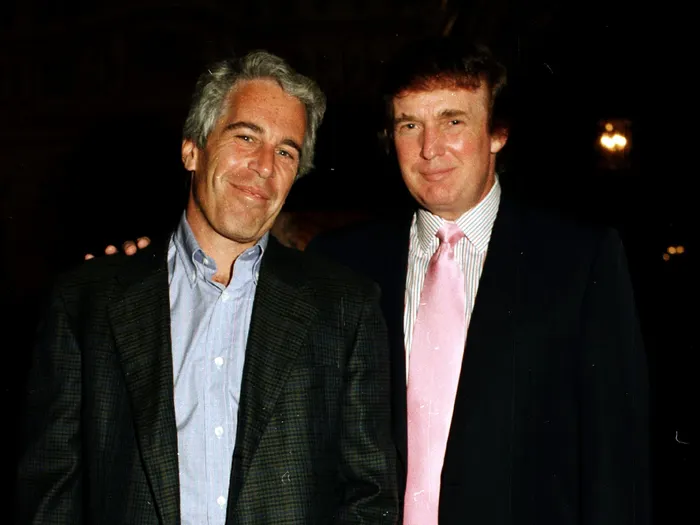
A detailed investigation into Donald Trump’s ties to Jeffrey Epstein, the July 2025 DOJ memo, forensic video controversies, and the political and legal fallout from the limited release of Epstein files.
By Namith DP | July 15, 2025
Introduction: What Happened on July 7, 2025?
On July 7, 2025, the U.S. Department of Justice released a long-promised internal memo summarizing its final investigation into the Jeffrey Epstein case. The memo reaffirmed the official cause of death as suicide, stated no “client list” existed, and claimed no evidence had emerged of blackmail or institutional conspiracy. Attorney General Pam Bondi, appointed by Donald Trump, oversaw the release. The reaction was swift and divided. MAGA influencers, some GOP lawmakers, Epstein survivors, and Democratic officials condemned the release as incomplete, redacted, and politically motivated.
1. Key Findings of the DOJ/FBI Memo

- No “client list” found: Investigators reported no blackmail registry, hidden documents, or transactional ledgers tied to Epstein’s clients. The search included Epstein’s homes in Palm Beach, Manhattan, New Mexico, and the U.S. Virgin Islands. Digital forensics teams reviewed servers, hard drives, and cloud-stored content, but concluded there was no coherent or deliberately maintained list identifying prominent individuals as clients.
- Suicide reaffirmed: Surveillance review and autopsy findings confirmed Epstein’s 2019 death as a suicide by hanging. The report stated that the forensic evidence, including hyoid bone fractures and blood oxygen levels, was consistent with death by ligature and lack of third-party involvement.
- Over 300 GB of seized data: DOJ cited voluminous digital evidence including emails, financial records, hard drives, and surveillance video. The materials were reviewed internally and flagged for potential relevance to criminal investigations. However, the DOJ memo noted that many names were redacted or deemed unconnected to the core trafficking operation.
- No grounds for further declassification: Officials argued that releasing more would violate privacy protections, sealed court orders, and the Crime Victims’ Rights Act (CVRA). The DOJ stated that public curiosity did not outweigh the legal need to protect survivors and witnesses.
- No indictments recommended: The memo confirmed that no additional indictments or charges would be filed posthumously, and there was insufficient evidence to implicate others in Epstein’s immediate circle in ongoing federal crimes.
2. Fallout from the MAGA Base
- Bondi’s credibility questioned: Attorney General Pam Bondi had suggested in 2024 that the Epstein files contained “explosive” materials implicating elite figures. Her July 2025 release was viewed by many Trump supporters as a betrayal of that promise.
- Dan Bongino’s resignation: A former Secret Service agent and staunch Trump ally, Bongino resigned as Deputy FBI Director in protest. In his public resignation letter, Bongino criticized the DOJ’s “optics-first” strategy and accused leadership of stifling transparency.
- Trump’s response on Truth Social: Trump attempted to quell dissent by endorsing Bondi and stating, “We’ve seen what there is to see. Enough already with Epstein. Focus on saving America.”
- MAGA influencers revolt: Right-wing commentators including Laura Loomer, Mike Cernovich, and the Hodgetwins expressed outrage. Hashtags such as #EpsteinCoverup and #ReleaseTheList trended for several days.
- Conspiracy theories reactivated: Despite the DOJ’s findings, social media saw a resurgence in unverified claims about Epstein’s connections to intelligence agencies, international banking interests, and high-profile politicians.
3. Congressional Response and Legal Pressure
- Democratic-led resolutions: Rep. Marc Veasey (D-TX) filed a resolution demanding full declassification of Epstein-related materials. The resolution cites the public interest, prior campaign promises, and the need for victim justice.
- Support from House leadership: House Minority Leader Hakeem Jeffries and Rep. Ro Khanna co-sponsored the resolution. Khanna stated, “The redactions are excessive. Survivors and the American people deserve the full truth.”
- GOP reactions mixed: While some Republicans defended Bondi, others—particularly from liberty caucus and populist wings—expressed frustration. Sen. J.D. Vance (R-OH) told Politico that “the administration bungled this moment.”
- Legal scholars weigh in: Experts from the University of Virginia School of Law and Columbia Law School questioned whether the DOJ over-applied victim privacy laws to justify the redactions. Some pointed to inconsistent practices in past high-profile cases.
4. Forensic Red Flags: DOJ’s Video Release Questioned
- Metadata anomalies: Wired’s digital forensics team examined the video footage released by DOJ. They found altered timestamps and inconsistencies between frame sequencing and known MCC surveillance patterns.
- Missing segment: A gap between 11:58:59 PM and 12:00:00 AM was identified, raising suspicion. DOJ claimed the time lapse was due to automatic camera cycling.
- Compression artifacts: Experts said some footage bore signs of post-production editing, including pixelation indicative of export via Adobe Premiere or Final Cut Pro. DOJ denied these allegations, stating the video was retrieved “as is.”
- Public skepticism rising: The forensic report circulated widely on social media and mainstream outlets, leading to further erosion of confidence in the DOJ’s transparency claims.
5. Timeline: Trump, Epstein, and the Legal Saga
- 1987–1991: Donald Trump and Jeffrey Epstein become acquainted in New York’s elite business and social circles.
- 1992: A Mar-a-Lago party video shows Trump and Epstein together, with Trump seen whispering to Epstein while surrounded by cheerleaders.
- 1995–2002: Epstein and Trump are both featured in social pages, frequenting the same events. Trump refers to Epstein as a “terrific guy.”
- 2004: Reports emerge of Trump banning Epstein from Mar-a-Lago after inappropriate behavior toward an underage girl. This claim remains unconfirmed but widely circulated.
- 2005: Epstein is charged with soliciting prostitution from a minor in Florida.
- 2007–2008: Epstein receives a controversial non-prosecution agreement from federal prosecutors, including then-U.S. Attorney Alex Acosta. Trump distances himself.
- 2016: A woman identified as “Katie Johnson” files a lawsuit alleging Trump raped her at an Epstein party in 1994. The case is later dropped.
- 2019: Epstein is arrested in July. On August 10, he is found dead in his Manhattan jail cell. Trump shares a tweet suggesting the Clintons were responsible.
- 2020–2022: Ghislaine Maxwell is arrested and convicted of trafficking underage girls to Epstein and associates.
- 2024: Trump promises to release all Epstein files if reelected.
- 2025: DOJ releases its internal Epstein review. Public backlash ensues.
6. Key Profiles: Who’s Who of the Investigation
Donald J. Trump
- Former President of the United States.
- Promised full Epstein file release in 2024 campaign.
- Ties to Epstein date back to 1990s.
Jeffrey Epstein
- Financier, convicted sex offender, and alleged trafficker.
- Owned multiple properties used in the exploitation of minors.
- Died in custody in 2019.
Pam Bondi
- U.S. Attorney General since 2025.
- Promised explosive disclosures, delivered a 2-page memo.
- Under pressure from Congress and public.
Dan Bongino
- Deputy FBI Director; resigned in July 2025.
- Accused DOJ of internal censorship.
Virginia Giuffre
- Epstein survivor.
- Filed lawsuits against the UK’s Prince Andrew and Alan Dershowitz.
Alan Dershowitz
- Legal scholar; represented Epstein.
- Accused of misconduct by Giuffre; case settled in 2022.
7. Legal and Political Implications
- Civil suits may follow: Civil liberties organizations have hinted at filing lawsuits under the Freedom of Information Act (FOIA) to compel full disclosure of Epstein materials.
- Bondi’s political future in jeopardy: Some Republicans now suggest Bondi’s actions may cost her any future Supreme Court consideration.
- Trump’s campaign vulnerable: Critics say Trump failed to deliver on a clear promise, weakening his transparency credentials.
- New legislation proposed: Rep. Veasey’s proposed “Epstein Files Accountability Act” would mandate full declassification of documents tied to deceased criminal defendants unless sealed by a federal judge.
8. What Happens Next?
| Development | Significance |
|---|---|
| Special prosecutor inquiry | Could satisfy bipartisan demands for a neutral investigation |
| Court-mandated disclosures | Likely only via successful FOIA or judicial appeal |
| House Oversight hearings | Would place Bondi and DOJ under direct scrutiny |
| Forensic report validation | Could discredit or validate DOJ’s handling of surveillance |
| Midterm campaign fallout | May become a wedge issue in competitive 2026 districts |
Conclusion: A Story Far from Over
The Trump administration’s July 2025 Epstein memo release, meant to put an end to years of speculation, has only deepened mistrust across the political spectrum. While the Department of Justice insists the materials were handled lawfully and ethically, critics from both parties point to redactions, omissions, and digital irregularities as signs of a broader failure of transparency. As legal challenges mount and Congress initiates its own oversight inquiries, the Epstein saga is entering a new phase—one where truth, politics, and public faith in institutions hang precariously in the balance.
With survivors, lawmakers, digital analysts, and citizens demanding answers, it is clear the Epstein investigation remains far from closed.
For more news on Donald Trump read –
About The Author




Good insight.
[…] Trump, Epstein, and the DOJ Memo: Key Findings Explained […]
[…] Trump, Epstein, and the DOJ Memo: Key Findings Explained […]
[…] Trump, Epstein, and the DOJ Memo: Key Findings Explained […]