
By Namith DP | July 13, 2025
Investigative Findings Reveal Engine Fuel Switches at Core, but Full Picture Remains Elusive
The Disaster That Shouldn’t Have Happened
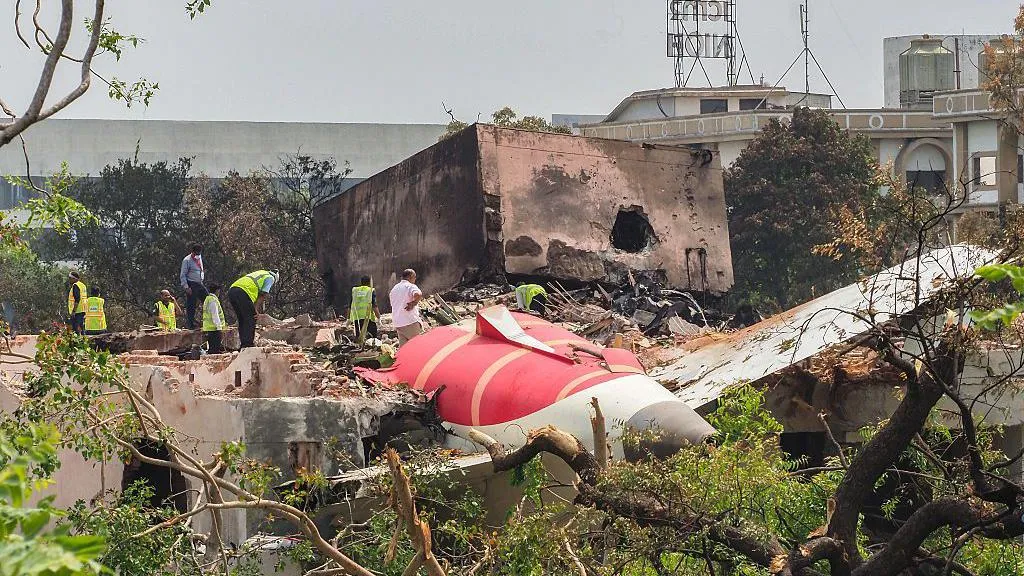
On June 12, 2025, Air India Flight AI171 departed from Ahmedabad’s Sardar Vallabhbhai Patel International Airport bound for London Gatwick. Mere seconds after rotation, the Boeing 787‑8 Dreamliner lost thrust on both engines and plummeted into a dormitory at the Byramjee Jeejeebhoy Medical College. The result: 260 fatalities, 18 on the ground and 242 onboard—including all crew except one flight attendant.
India’s Aircraft Accident Investigation Bureau (AAIB) released its preliminary report on July 11, identifying an unprecedented in-flight fuel cutoff. This mechanical or procedural failure, it said, caused both engines to flame out. But that summary raised more questions than answers.
Key Timeline of the Crash

- June 12, 2025 – 13:38 IST (08:08 UTC): Flight AI171 departs from runway 23.
- Seconds later: Engine fuel control switches flip from “RUN” to “CUTOFF” within one second.
- CVR audio: A voice says, “Why did you cut off?” Another replies, “I did not do so.”
- Relight attempt: Switches flip back to “RUN,” but altitude and thrust are insufficient.
- ~13:39 IST: Aircraft crashes into the dormitory ~2.3 km from the runway.
Who Was in the Cockpit?
Understanding the crash requires context about the crew, whose qualifications and actions shaped the final moments.
Captain Sumeet Sabharwal – Pilot-in-Command (PIC)
- Age: 56
- Total Flight Hours: ~15,600
- Boeing 787 Hours: ~8,600 (including 8,260 as PIC)
- Certifications: ATPL with ratings for Boeing 787, 777, and Airbus A310
- Background:
- Served as Line Training Captain (LTC)—supervised and mentored less-experienced co-pilots.
- Arrived in Ahmedabad a day prior and passed all medical and fitness checks before the flight.
- Executed the “Mayday” call after engines flamed out, suggesting situational awareness and protocol adherence.
- Colleagues described him as disciplined, procedural, and respected within Air India’s long-haul fleet.
First Officer Clive Kunder – Pilot-Flying (PF)
- Age: 32
- Total Flight Hours: ~3,400
- Boeing 787 Hours: ~1,100
- Certifications: CPL with Boeing 787, Airbus A320, and light aircraft ratings
- Background:
- Took off as the Pilot Flying under Captain Sabharwal’s oversight.
- Known for strong procedural recall and emergency response training.
- Came from an aviation family and had been with Air India since 2020.
Both pilots passed alcohol and drug screening, and their licenses were valid. They were medically cleared for duty and had rested per DGCA requirements.
Major Findings in the Preliminary Report

1. Engine Fuel Cutoff at Rotation
- Investigators confirmed both engine fuel control switches flipped to “CUTOFF” within one second.
- This resulted in simultaneous fuel starvation, causing both GE GEnx engines to flame out.
- Fuel samples from the aircraft and refueling systems were clean—no contamination noted.
2. Relight Effort Proved Too Late
- CVR records suggest relight switches were reset to “RUN” shortly after engine shutdown.
- Both engines began relight sequences but couldn’t develop thrust before the aircraft lost altitude.
3. Mechanical Safeguards Existed—but May Have Failed
- Fuel switches have mechanical locks and require a deliberate lift-then-flip action.
- Boeing 787 cockpit design includes detents that should prevent accidental switch movement.
- The AAIB cited a 2018 FAA bulletin that noted potential disengagement of locking mechanisms in similar switches. No mandatory action was ever issued, and VT‑ANB was not modified.
What Did the CVR Reveal?
The only excerpt released:
“Why did you cut off?”
“I did not do so.”
This exchange raises multiple issues:
- Did either pilot mistakenly operate the switches?
- Could a mechanical fault have caused both switches to flip?
- Why has the full transcript not been disclosed?
The limited release of CVR data sparked criticism from pilots’ unions and families of victims.
Stakeholder Reactions
Aviation Analysts
- Terry Tozer (former commercial pilot): “Simultaneous cutoff is practically inconceivable unless done manually or via system failure.”
- Graham Braithwaite (Cranfield University): Noted “spring-loaded and guarded switches require intentional effort.”
Pilots’ Union (ALPA-India)
- Strongly rejected early implications of crew error.
- Called the preliminary framing “speculative” and “damaging to flight safety culture.”
Families of Victims
- Victims’ families, especially international passengers from the UK and Canada, expressed anger over the lack of transparent findings.
- Public petitions now demand that the DGCA and AAIB release the full CVR transcript.
Technical Concerns Raised
| Issue | Description |
|---|---|
| Switch Design | Locking mechanisms may not provide sufficient resistance. |
| Previous FAA Bulletin | Air India had not implemented non-mandatory maintenance recommendations. |
| Flight Deck Ergonomics | Proximity of critical switches to high-use surfaces under review. |
| Crew Checklists | Investigators will assess if checklist sequences inadvertently prompted switch movement. |
Maintenance and Fleet Impact
- Post-crash audits revealed no prior malfunctions on aircraft VT‑ANB since its last C-check.
- India’s DGCA issued inspections for all 787s in Air India’s fleet, focusing on engine controls, fuel valves, and actuators.
- Boeing and GE are fully cooperating but have not issued service bulletins pending final report outcomes.
International Involvement
- The U.S. NTSB, FAA, and UK AAIB are assisting due to aircraft and component origin.
- ICAO guidelines recommend final reports within 12 months. The AAIB has confirmed ongoing analysis but gave no interim date for further updates.
Case Comparisons
| Case | Aircraft | Similarity |
|---|---|---|
| Ethiopian Airlines 302 (2019) | Boeing 737 MAX | Insufficient detail in early reports also drew criticism. Resulted in swift grounding and software revisions. |
| United Airlines 328 (2021) | Boeing 777 | Prompt FAA bulletins followed fan blade failure. Full transparency and public briefings offered. |
Unlike these examples, AAIB’s 15-page document lacks full CVR/FDR detail or preliminary causal assertions.
What Happens Next?

Final Report (Expected release time not disclosed)
- May include:
- Full CVR/FDR transcripts
- Switch mechanical analysis
- Ergonomics and crew behavior analysis
- Root cause attribution
- May recommend:
- Boeing switch redesign
- Mandatory mechanical safeguards
- Revised Air India training/checklist protocols
Policy Impact
- FAA may revisit 2018 bulletin classification.
- India may mandate design retrofits across all Dreamliners.
- ICAO may update switch design standards across airframes.
Conclusion
The preliminary findings into the crash of Air India Flight AI171 provide a chilling first look into how a fully serviceable Dreamliner could lose all thrust seconds after takeoff. The reported cause—both engine fuel switches shifting to “CUTOFF”—is simple yet profound in its implications.
With experienced, certified, and alert pilots in command, the mystery deepens. No flight history anomalies or human-factor red flags suggest crew incapability. On the contrary, both pilots acted swiftly in a doomed situation, following mayday protocol and relight procedure.
The global aviation community now awaits a comprehensive and conclusive report. For the families of 260 victims, nothing short of total transparency and systemic reform will be enough.
For more information on the crash read –
About The Author




Good insight.
[…] Air India Flight AI171 Tragedy: Causes and Consequences […]
[…] Air India Flight AI171 Tragedy: Causes and Consequences […]