
By Namith DP | June 23, 2025
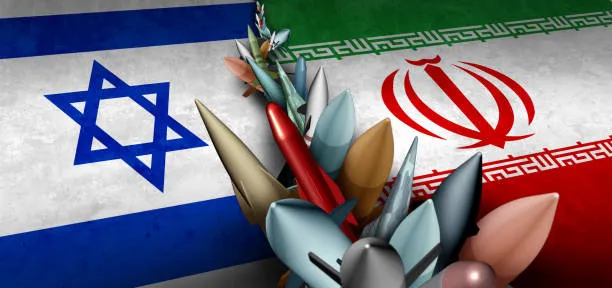
This in-depth article dissects the Iran–Israel conflict through the lenses of nuclear escalation, proxy warfare, and regional military operations. Drawing from verified intelligence and primary sources, it provides a comprehensive, fact-based breakdown of how both nations are shaping the strategic balance of power in the Middle East—impacting global diplomacy, security policy, and defense alignment.
Introduction
Israel and Iran stand at the center of one of the most intense and strategically fraught rivalries in the Middle East. Since the Islamic Revolution of 1979, Tehran has positioned itself as a principal adversary of the Jewish state—backing militant proxies, pursuing nuclear capabilities, and framing Israel as an embodiment of Western influence. In response, Israel has invested heavily in intelligence networks and long-range strike capabilities aimed at preempting threats before they materialize. This article looks at the background, the underlying issues between both countries, and the current conflict happening between them.
Section 1: Historical Foundations of the Iran–Israel Conflict
The Iran–Israel conflict is not rooted in ancient sectarianism or religious hostility. It is a modern geopolitical rivalry that took shape after the 1979 Iranian Revolution and has escalated through decades of military, ideological, and diplomatic confrontation.
Key Milestones Before 1979
- Pre-1979 Cooperation: Iran under the Shah (Mohammad Reza Pahlavi) maintained de facto relations with Israel. Both states shared strategic interests against Arab nationalism and Soviet influence.
- Military and Economic Ties: Israel sold weapons to Iran during the 1960s and 70s, and Iran supplied oil to Israel through covert pipelines.
Example:
Israel was one of the few countries to maintain intelligence outposts in Tehran before the revolution, operating a Mossad station under diplomatic cover.
1979 Islamic Revolution: The Turning Point
- The Islamic Republic of Iran emerged after Ayatollah Khomeini led the overthrow of the Shah.
- Iran’s new regime immediately cut ties with Israel, denouncing it as the “Little Satan” (alongside the U.S. as the “Great Satan”).
- Tehran adopted anti-Zionist foreign policy, declaring full support for the Palestinian cause and legitimizing armed resistance.
Key Facts:
- The Iranian embassy in Palestine was handed over to the Palestine Liberation Organization (PLO).
- Iran ceased all official and commercial contact with Israel overnight.
1980s–1990s: The Rise of Proxy Conflict
During the 1980s, Iran began establishing networks of influence across the Middle East to encircle Israel and deter a direct military confrontation.
Hezbollah in Lebanon
- Iran’s Islamic Revolutionary Guard Corps (IRGC) helped form Hezbollah in 1982, during the Israeli invasion of Lebanon.
- Hezbollah remains Tehran’s most capable proxy, with over 100,000 rockets and a political base in southern Lebanon.
Examples:
- Hezbollah’s 1992 bombing of the Israeli embassy in Buenos Aires killed 29 people.
- The group was central in the 2006 Lebanon War, during which it fired over 4,000 rockets into northern Israel.
Gaza: Relationship with Hamas and Islamic Jihad
- Iran began backing Palestinian Islamic Jihad in the 1980s and later extended support to Hamas after its founding in 1987.
- Tehran provided financial aid, rocket technology, and training.
Fact:
By 2014, Iran had funded Hamas to the tune of over $100 million annually, especially during the lead-up to major escalations like Operation Protective Edge.
Mutual Hostility in Political Rhetoric
- Iran routinely calls for the “elimination” of the Israeli state. Supreme Leader Ali Khamenei has described Israel as a “cancerous tumor.”
- Israel has declared it will never allow Iran to acquire nuclear weapons and views Iran’s regional axis (including Syria, Hezbollah, and Hamas) as existential threats.
Israel’s Strategic Shift
- From Conventional to Asymmetric Defense: Post-1990s, Israel focused on preemptive strikes, cyberwarfare, and missile interception systems.
- Mossad’s Role: Israeli intelligence operations expanded across Lebanon, Syria, and even inside Iran to target weapons convoys, nuclear scientists, and infrastructure.
Section 2: Strategic Doctrines and Capabilities
The Iran–Israel conflict is not defined solely by ideology or diplomacy. It is shaped by competing military doctrines, long-term national strategies, and technological capabilities. Both countries have spent decades preparing for direct and proxy engagements, using a combination of conventional forces, cyberwarfare, and non-state actors.
Iran’s Strategic Doctrine
Iran’s military doctrine centers on asymmetric warfare, regional influence through proxy militias, and the development of long-range deterrence, particularly in response to perceived U.S. and Israeli threats.
Key Components of Iran’s Strategy
- Proxy Network: Iran supports armed groups across Lebanon, Syria, Iraq, Gaza, and Yemen, known collectively as the “Axis of Resistance.”
- Missile Development: Iran has one of the largest missile programs in the Middle East, designed to strike Israel, U.S. bases, and Gulf targets.
- Nuclear Ambiguity: Though officially denying nuclear weapons ambitions, Tehran maintains a uranium enrichment program close to weapons-grade levels.
Examples:
- Ballistic Arsenal: Over 3,000 short- and medium-range ballistic missiles, including the Shahab-3 (1,300 km range), can reach Israeli cities.
- Drone Capabilities: Iran’s Shahed and Mohajer drone families are now widely deployed across Syria and Iraq, with many intercepted over Israeli territory.
Israel’s Defense Posture
Israel maintains a preemptive defense doctrine, supported by real-time intelligence, advanced air defense systems, and targeted strikes to prevent Iranian entrenchment across Syria and Lebanon.
Core Elements of Israel’s Strategy
- Air Superiority: Israel operates a fleet of F-35 fighter jets, F-15I Ra’am aircraft, and long-range precision-guided missiles.
- Missile Defense: The country maintains a three-tier missile shield: Iron Dome, David’s Sling, and Arrow-3.
- Cyber Warfare and Intelligence: Israeli units such as Unit 8200 are globally recognized for cyber-intelligence and cyberattacks.
Key Operations:
- Operation Orchard (2007): Israel bombed a suspected Syrian nuclear facility reportedly constructed with Iranian and North Korean assistance.
- Stuxnet (2010): A joint Israel–U.S. cyber operation disrupted Iran’s nuclear centrifuges at Natanz.
Defense Spending and Technological Edge
| Country | 2024 Defense Budget (USD) | Active Personnel | Missile Programs | Nuclear Capability |
|---|---|---|---|---|
| Iran | ~$10 billion | ~610,000 | Extensive (SRBM/MRBM/UCAV) | 60% uranium enrichment, no warheads |
| Israel | ~$24 billion | ~170,000 | Advanced + Interceptors | Strategic ambiguity (undeclared arsenal) |
- Israel is widely believed to possess 80–90 nuclear warheads, though it maintains a policy of nuclear ambiguity.
- Iran, while not officially nuclear-armed, is now enriching uranium to 60% purity—only short of weapons-grade (90%).
Escalation Control: Deterrence vs. Retaliation
Israel seeks deterrence by targeting Iranian convoys in Syria and intercepting drones and rockets before they strike. Iran, in contrast, responds with strategic patience, often denying involvement in attacks by its proxies.
Recent Example:
- In April 2024, Israel launched airstrikes on Damascus International Airport targeting IRGC positions. Iran responded by denying direct involvement but allowed Hezbollah to fire short-range rockets into the Golan Heights.
External Players and Strategic Balancing
- United States: Provides Israel with $3.8 billion in annual military aid and coordinates air defense and intelligence.
- Russia: Supports Iranian and Syrian forces; often tolerates Israeli air raids in Syria under quiet deconfliction.
- China: Expanding relations with Iran through trade and infrastructure, including the 25-year cooperation agreement signed in 2021.
Section 3: Proxies and Regional Engagements
The Iran–Israel conflict is often waged through third-party actors. These proxy groups extend Iran’s strategic depth while giving Tehran plausible deniability. For Israel, these militias pose an enduring multi-front threat. The most active arenas include Lebanon, Syria, Gaza, and increasingly Iraq and Yemen.
Hezbollah (Lebanon)
Hezbollah is Iran’s most powerful and reliable proxy. Based in southern Lebanon, the Shiite militant group has transformed from a guerrilla faction into a political-military hybrid with regional influence.
Capabilities and Threat Profile
- Rocket Arsenal: Estimates suggest over 150,000 short- and medium-range rockets, many capable of reaching Tel Aviv and Haifa.
- Fighters: Between 25,000 and 30,000 armed members, with battlefield experience from Syria.
- Precision Project: Iran has helped Hezbollah upgrade unguided rockets into GPS-guided missiles to improve accuracy.
Recent Example:
- In October 2023, Hezbollah fired anti-tank missiles at Israeli positions along the Blue Line following an Israeli airstrike in Damascus. The skirmish killed 3 Israeli soldiers and 5 Hezbollah fighters.
Syria: Forward Operating Base for Iran
Since 2011, Syria has become a strategic corridor for Iran. The Islamic Revolutionary Guard Corps (IRGC) uses Syria to transfer weapons, train militias, and position forces near Israel’s borders.
Key Developments
- IRGC Deployment: Hundreds of IRGC operatives remain embedded with Assad’s forces.
- Weapons Transfer: Iran transports missiles and drones via land and air corridors through Iraq and Syria into Lebanon.
- Israeli Airstrikes: Israel has conducted over 1,000 strikes in Syria since 2017, targeting Iranian supply chains and infrastructure.
Example:
- In January 2025, Israeli jets targeted a weapons convoy near the Iraqi border in Deir Ezzor, killing several IRGC officers. Iran vowed retaliation but did not confirm the casualties publicly.
Gaza: Hamas and Palestinian Islamic Jihad
Iran maintains deep financial and military ties with Hamas and Palestinian Islamic Jihad (PIJ), although its influence is occasionally constrained by local Palestinian politics.
Hamas
- Funding: Iran resumed financial aid in 2017 after a brief rift over Syria. By 2022, Iran was providing Hamas with $70–100 million annually.
- Weapons Support: Iran supplies components for Qassam and Fajr-5 rockets and trains Hamas engineers in drone and tunnel warfare.
Palestinian Islamic Jihad (PIJ)
- Full Iranian Proxy: PIJ is more ideologically aligned with Tehran than Hamas and is often the first to escalate conflict with Israel.
- Rocket Capacity: Smaller than Hamas but with a similar range; active in launching short-range rockets from northern Gaza.
Recent Example:
- During the May 2023 escalation, PIJ launched over 400 rockets into southern Israel after the assassination of its West Bank commander. Iran praised the group but denied direct orchestration.
Iraq and Yemen: Expanding Iran’s Reach
While not front-line battlegrounds with Israel, Iraq and Yemen serve as strategic platforms for Iran to diversify launch points and test Israeli defenses.
Iraq
- Iran-backed militias like Kata’ib Hezbollah and Harakat al-Nujaba have launched drones toward Israel during heightened tensions.
- U.S. intelligence reported that some attacks on Israel in April 2024 originated from Western Iraq, using Iranian-manufactured UAVs.
Yemen
- Houthi Rebels, aligned with Iran, have publicly threatened Israel and attempted missile launches toward Eilat during the 2023 Gaza conflict.
- While most launches have failed or been intercepted, the threat of long-range missile fire from Yemen adds another axis of concern for Israeli defense planners.
Strategic Implications
- Multi-Front Pressure: Israel faces simultaneous threats from Lebanon (Hezbollah), Syria (IRGC), Gaza (Hamas/PIJ), Iraq (militias), and Yemen (Houthis).
- Interception Overload: In a major war scenario, Israel’s air defenses could be overwhelmed by saturation attacks from multiple directions.
- Iran’s Leverage: Proxy groups allow Tehran to engage Israel militarily without risking a direct state-to-state war, while still projecting power across the region.
Section 4: Recent Escalations, Risk Forecasts, and Strategic Recommendations

As of mid-2025, the Iran–Israel conflict has entered a phase of frequent escalations, precision warfare, and regional entrenchment. Both nations are avoiding full-scale war but are testing red lines more aggressively. The window for diplomatic restraint is narrowing.
Recent Escalations (2023–2025)
April 2024: Cross-Border Drone Attacks
- Event: Iranian-backed militias in Iraq launched Shahed-136 drones toward northern Israel. Most were intercepted by Iron Dome and David’s Sling systems.
- Outcome: Israel retaliated with airstrikes on militia bases in Al-Qaim (Iraq) and Quneitra (Syria).
January 2025: IRGC Commanders Targeted
- Event: A Mossad-led operation assassinated two senior IRGC Quds Force members in Damascus, accused of coordinating weapons transfers to Hezbollah.
- Response: Iran increased the readiness of its air defenses and facilitated limited rocket fire by Palestinian Islamic Jihad in Gaza.
June 2025: Golan Heights Escalation
- Event: Hezbollah launched a coordinated barrage of Katyusha rockets into the Golan Heights following an Israeli airstrike in Baalbek.
- Israeli Response: Targeted air raids destroyed Hezbollah radar systems near the Bekaa Valley. Lebanon issued formal protests to the UN.
Current Flashpoints
| Flashpoint | Iranian Actor | Israeli Response Method |
|---|---|---|
| Southern Lebanon | Hezbollah | Artillery strikes, Iron Dome |
| Southern Syria | IRGC, pro-Assad militias | Air raids, UAV surveillance |
| Gaza | Hamas, PIJ | Precision bombing, cyber disruption |
| Iraq–Syria border | Kata’ib Hezbollah | Drone strikes, Mossad sabotage |
| Red Sea–Yemen | Houthi missiles | Naval interceptions, international cooperation |
Strategic Risks Ahead
1. Accidental Regional War
- An unintended escalation, such as a high-profile assassination or successful missile strike on a city, could prompt a multi-front Iranian response.
- The lack of direct communication between Tehran and Jerusalem increases the probability of miscalculation.
2. Nuclear Threshold Proximity
- As of April 2025, Iran continues uranium enrichment at 60% purity.
- Israeli officials have publicly stated that reaching 90% weapons-grade enrichment would trigger preemptive strikes on nuclear sites.
3. U.S. Involvement and Strategic Restraint
- U.S. CENTCOM forces in Iraq, Syria, and the Gulf are often exposed to retaliation after Israeli operations.
- While Washington has urged restraint, it continues to supply Israel with interceptors and surveillance intelligence.
Future Scenarios
Diplomatic Reset
- Likelihood: Low
- Trigger: U.S.-Iran nuclear deal or a backchannel Israeli–Gulf diplomatic initiative
- Outcome: Suspension of weapons transfers to Hezbollah and Hamas
Proxy War Expansion
- Likelihood: High
- Trigger: Israeli airstrike killing senior IRGC leader in Tehran or Qom
- Outcome: Simultaneous rocket attacks from Lebanon, Gaza, and Syria
Direct Iran–Israel Conflict
- Likelihood: Moderate
- Trigger: Iran tests or deploys a nuclear weapon
- Outcome: Israeli air campaign against Iranian military infrastructure
Strategic Recommendations
For Israel
- Upgrade Air Defenses: Expand the Iron Beam laser system to counter UAVs and saturation rocket attacks.
- Enhance Cyber Defenses: Neutralize Iranian capabilities to disrupt Israeli infrastructure.
- Maintain Deconfliction Channels: Coordinate limited strike zones with U.S. and Russian forces to avoid escalation.
For Iran
- Reassess Proxy Strategy: Reduce dependence on Hezbollah to avoid regional escalation.
- Engage in Multilateral Talks: Explore re-entry into the JCPOA under new EU or Gulf mediation.
- Focus on Regional Trade: Use economic incentives with Turkey, Iraq, and China to reduce isolation.
For Global Powers
- U.S. and EU: Enforce arms embargoes on Iranian proxies; resume diplomacy tied to nuclear rollback.
- UNSC: Strengthen oversight of weapons smuggling in Syria and Lebanon.
- Arab Gulf States: Increase diplomatic pressure on Tehran while enhancing missile defense cooperation with Israel.
About the author

References
- Furlan, Stefano. “Israeli–Iranian Relations: Past Friendship, Current Hostility.” St Andrews Repository, 2022,
https://research-repository.st-andrews.ac.uk/bitstream/handle/10023/24955/Furlan_2022_IA_Israeli_Iranianrelations_CC.pdf?sequence=1. Accessed 23 June 2025. research-repository.st-andrews.ac.uk - Furlan, Stefano. “A Brief History of Israeli–Iranian Cooperation and Confrontation.” JSTOR, https://www.jstor.org/stable/10.7249/mg1143osd. Accessed 23 June 2025.
- “Hezbollah and Lebanon: An In‑Depth Examination under Hassan Nasrallah’s Leadership.” Israel Defense Forces, 2024,
https://www.idf.il/en/mini-sites/hezbollah-and-lebanon-an-in-depth-examination-under-hassan-nasrallahs-leadership/. Accessed 23 June 2025. understandingwar.org+4idf.il+4en.wikipedia.org+4 - “Missiles and Rockets of Hezbollah’s Rocket Arsenal.” CSIS Missile Threat Project, 10 Aug. 2021, https://missilethreat.csis.org/country/hezbollahs-rocket-arsenal/. Accessed 23 June 2025. reddit.com+9missilethreat.csis.org+9jns.org+9
- “Israel’s Campaign to Defeat Hezbollah in Lebanon.” Institute for the Study of War, Nov. 2024, https://www.understandingwar.org/backgrounder/understanding-israel%E2%80%99s-campaign-defeat-hezbollah-lebanon. Accessed 23 June 2025. understandingwar.org
- Davenport, Kelsey. “Iran Accelerates Highly Enriched Uranium Production.” Arms Control Today, Jan./Feb. 2024, https://www.armscontrol.org/act/2024-02/news/iran-accelerates-highly-enriched-uranium-production. Accessed 23 June 2025. apnews.com+6armscontrol.org+6isis-online.org+6
- “Iran Has Amassed Even More Near Weapons‑Grade Uranium, IAEA Reports.” AP News, May 2025, https://apnews.com/article/iran-nuclear-iaea-uranium-7f6c9962c1e4199e951559096bcf5cc0. Accessed 23 June 2025. apnews.com+1theguardian.com+1
- Centre for Science and International Security. “Analysis of IAEA Iran Verification and Monitoring Report—May 2025.” ISIS Report, May 2025, https://isis-online.org/isis-reports/detail/analysis-of-iaea-iran-verification-and-monitoring-report-may-2025/. Accessed 23 June 2025. iaea.org+2isis-online.org+2isis-online.org+2
- “Update on Developments in Iran.” IAEA News Center, June 2025, https://www.iaea.org/newscenter/pressreleases/update-on-developments-in-iran. Accessed 23 June 2025. iaea.org+2iaea.org+2iaea.org+2
- “IAEA Director General Grossi’s Statement to UNSC on Situation in Iran.” IAEA News Center, 20 June 2025, https://www.iaea.org/newscenter/statements/iaea-director-general-grossis-statement-to-unsc-on-situation-in-iran-20-june-2025. Accessed 23 June 2025. iaea.org+1iaea.org+1
- “Israel’s Strikes Cause Limited Radiation Risk, IAEA Says.” AP News, Jun. 2025, https://apnews.com/article/32da46ad6a3e0050986553bfde0a8fed. Accessed 23 June 2025. apnews.com
- “How Much Damage Have Israeli Strikes Caused to Iran’s Nuclear Programme?” Reuters, 16 June 2025, https://www.reuters.com/world/china/how-much-damage-have-israeli-strikes-caused-irans-nuclear-programme-2025-06-16/. Accessed 23 June 2025. reuters.com+3reuters.com+3reuters.com+3
- “Where is Iran’s Uranium? Fate of Strike Hangs on 400 kg Stockpile.” Financial Times, Jun. 2025, https://www.ft.com/content/12a864cc-eeb8-4725-aed8-5ddff9ac588e. Accessed 23 June 2025. ft.com
About The Author






Good insight.