
By Namith DP | June 19, 2025
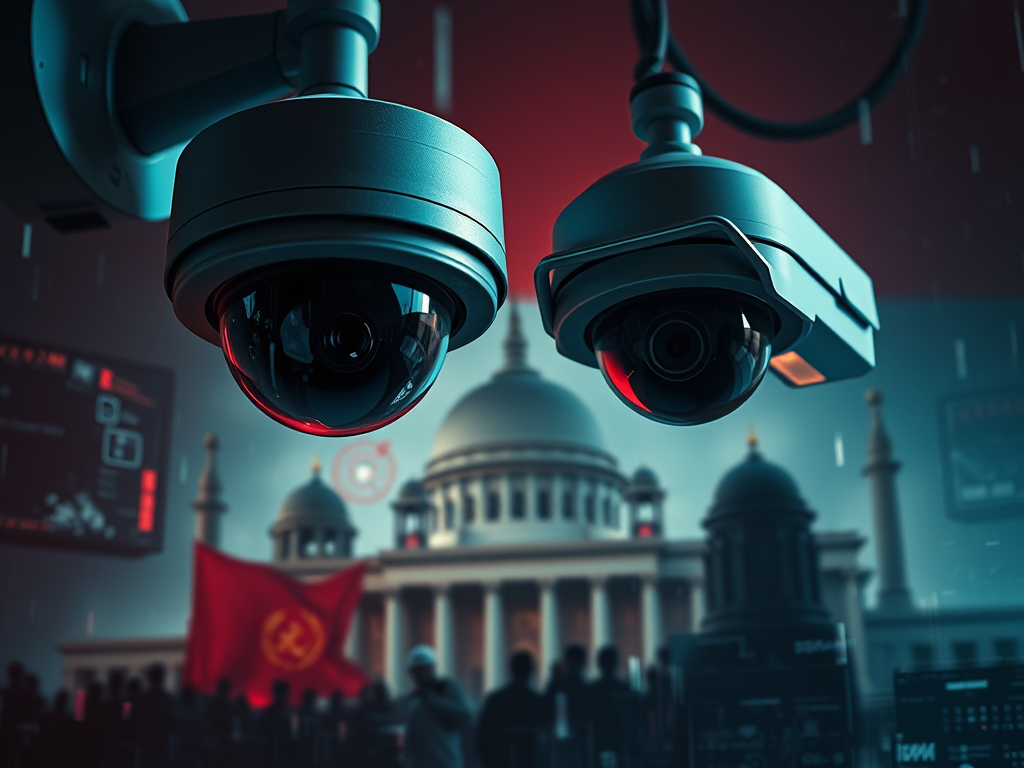
Governments worldwide exploit digital tools—AI, facial recognition, censorship—to surveil, manipulate and repress populations. What once belonged only to authoritarian regimes now permeates democracies. “Digital authoritarianism” emerged as a frontier threat. This article traces its development, technology, actors, global spread, impacts, and paths to counter it.
Introduction
Governments around the globe are leveraging advanced digital technologies to expand state control. Facial recognition, mass surveillance, algorithmic censorship, and internet shutdowns are no longer isolated practices in closed regimes—they’re increasingly common across democracies. The term “digital authoritarianism” defines this strategic, technology-enabled consolidation of power.
The global internet was once a tool of liberation. Today, it is also a vehicle for repression. This shift reflects geopolitical contests over cyber norms, surveillance capitalism, and the limits of democratic resilience.
What Is Digital Authoritarianism?
Digital authoritarianism refers to the use of digital technologies by governments to surveil, control, manipulate, and repress populations.
Core components:
- Surveillance: Mass monitoring via CCTV, facial recognition, phone metadata, biometrics.
- Censorship: Blocking content, blacklisting platforms, controlling narratives through disinformation.
- Control infrastructure: National firewalls, data localization, social credit systems.
- Legal tools: Vague cybersecurity or counterterrorism laws to criminalize dissent.
This model emerged strongly in China but is now mimicked globally.
The Chinese Model: Blueprint for Digital Control

China is the world’s most prominent digital authoritarian state. Its practices include:
- The Great Firewall: A vast, sophisticated censorship system blocks foreign websites and keywords.
- Surveillance ecosystem: Over 500 million surveillance cameras. AI-driven facial recognition is integrated with ID databases.
- Social Credit System: Aggregates data to score citizen behavior and enforce loyalty.
- Export of tools: Chinese firms like Hikvision and Huawei provide surveillance technology to 80+ countries.
The Chinese state positions this model as efficient governance, and many regimes see it as a viable alternative to liberal democracy.
Global Expansion: Who’s Using These Tools?
A 2023 Freedom House report found digital repression in 70 out of 195 countries. Countries using authoritarian tech tactics include:
1. Russia
- Internet “sovereignty” law enforces isolation from global networks.
- Roskomnadzor censors media and blocks VPNs.
- Telegram and YouTube are targeted.
- Surveillance during protests is pervasive.
2. Iran
- Nationwide internet shutdowns during protests.
- Deep packet inspection to monitor and block content.
- Targeting of women and minority groups online.
3. India
- Leads the world in internet shutdowns (84 in 2022 alone).
- Increased use of facial recognition in policing.
- Platforms pressured to remove dissenting content under IT laws.
4. United Arab Emirates
- Pegasus spyware allegedly used against dissidents.
- Prolific online censorship and surveillance.
5. Turkey & Egypt
- Prosecution of journalists for online posts.
- Tight control over social media platforms.
6. Democratic States (growing gray zone)
- France and UK expanding CCTV and biometrics.
- Australia proposing data encryption backdoors.
- United States’ use of predictive policing and facial recognition raises concern.
Digital Authoritarianism and AI
AI supercharges digital repression. Authoritarian states harness it for:
- Automated censorship: NLP tools scan social media for banned topics.
- Predictive surveillance: Machine learning identifies “risky” individuals.
- Emotion recognition: Piloted in schools and public spaces in China.
- Deepfake tech: Used to discredit activists.
AI’s black-box nature reduces transparency. In opaque regimes, it facilitates unaccountable targeting.
Real-world example:
In Xinjiang, China uses AI to flag “suspicious behavior”—like using WhatsApp or growing a beard—leading to detention.
Disinformation as a Political Weapon
Digital authoritarianism isn’t only surveillance—it includes shaping online reality.
- Pro-government bots flood social media in countries like Venezuela, Russia, and Turkey.
- Coordinated inauthentic behavior amplifies narratives, suppresses truth.
- TikTok and Facebook have been pressured or manipulated to downrank protest content.
According to a 2022 Oxford Internet Institute study, 81 countries used online influence campaigns to manipulate domestic or international opinion.
Internet Shutdowns: Blunt But Widespread
Shutdowns are the ultimate form of digital repression.
- Used to suppress protests, rig elections, or halt dissent.
- Costly: India’s shutdowns in 2020 alone cost $2.8 billion (Top10VPN).
- Examples:
- Myanmar: Full shutdown during military coup.
- Ethiopia: Blackouts in Tigray region.
- Sudan, Pakistan, Algeria during civil unrest.
Role of Private Sector
Big tech companies enable or resist digital authoritarianism.
- Apple, Google, Facebook modify apps to comply with repressive laws (e.g., China’s App Store).
- Amazon’s Rekognition sold to police before backlash.
- NSO Group (Israel) sold Pegasus spyware to authoritarian regimes.
However, platforms like Signal, ProtonMail, and Tor remain vital for secure communications.
Legalizing Repression: Rule-by-Law
Many states pass laws under the guise of “cybersecurity” to justify authoritarian measures.
- Vietnam’s Cybersecurity Law mandates data localization and real-name registration.
- Russia’s “foreign agent” law criminalizes media and NGOs.
- Saudi Arabia’s Anti-Cybercrime Law criminalizes satire and dissent.
These laws are vague and overbroad, allowing for selective enforcement.
Erosion of Democracy
Digital authoritarianism is not confined to authoritarian states. Democratic backsliding now involves tech-enabled repression:
- Surveillance of journalists in Europe and the U.S.
- Harassment of activists via doxing and swatting.
- Content moderation laws that limit free speech.
As tools become cheaper and more accessible, the line between liberal and illiberal states blurs.
Resistance and Resilience
Despite the rise, civil society groups, ethical technologists, and global norms offer resistance.
Successful countermeasures include:
- Decentralized tech: Matrix, Mastodon, and Bluesky.
- Encrypted tools: Signal, ProtonVPN.
- Whistleblowing: Edward Snowden’s disclosures reshaped surveillance discourse.
- Digital rights NGOs: Access Now, EFF, Privacy International.
- International pressure: UN resolutions and sanctions.
Policy Solutions: What Can Be Done?
1. Strengthen digital rights frameworks
- Enact and enforce data protection laws.
- Ratify treaties like the Budapest Convention on Cybercrime.
2. Support independent tech
- Fund secure, open-source alternatives.
- Promote interoperability and decentralization.
3. Pressure enabler companies
- Transparency mandates for algorithmic governance.
- Export controls on surveillance tools.
4. Increase civic digital literacy
- Equip citizens to detect manipulation.
- Promote privacy hygiene.
5. Monitor AI development
- Ban facial recognition in public spaces.
- Require audit trails for automated decisions.
Conclusion
The digital authoritarianism landscape is growing faster than global mechanisms can contain it. From China’s surveillance state to India’s internet shutdowns, the fusion of power and technology is redefining global governance. The threat is no longer hypothetical—it is embedded in everyday digital life.
Mitigating this threat requires political will, corporate responsibility, and resilient civic action. The fight for internet freedom is now central to the fight for democracy itself.
About the author

References
- Funk, Allie. “Global Internet Freedom Declines, Aided by AI.” Time, 4 Oct. 2023. https://time.com/6319723/global-internet-freedom-decline-2023/.
- “Digital Authoritarianism Is on the Rise Around the World, Report Warns.” Freedom House, 4 Nov. 2019. https://freedomhouse.org/article/digital-authoritarianism-rise-around-world-report-warns.
- “Revealed: Google Facilitated Russia and China’s Censorship Requests.” The Guardian, 15 Feb. 2025. https://www.theguardian.com/world/2025/feb/15/google-helped-facilitate-russia-china-censorship-requests.
- “Freedom on the Net 2018: The Rise of Digital Authoritarianism.” Freedom House, 2018. https://freedomhouse.org/report/freedom-net/2018/rise-digital-authoritarianism.
- “The AI Cold War That Threatens Us All.” Wired, 2018. https://www.wired.com/story/ai-cold-war-china-could-doom-us-all.
- “The Internet Became Less Free in 2018. Can We Fight Back?” Wired, 4 Oct. 2018. https://www.wired.com/story/internet-freedom-china-2018.
- “Techno-authoritarianism.” Wikipedia, updated 2025. https://en.wikipedia.org/wiki/Techno-authoritarianism.
- “Great Firewall.” Wikipedia, updated 2025. https://en.wikipedia.org/wiki/Great_Firewall.
- “Internet Censorship in Russia.” Wikipedia, updated 2025. https://en.wikipedia.org/wiki/Internet_censorship_in_Russia.
- “Steven Feldstein.” Wikipedia, updated 2024. https://en.wikipedia.org/wiki/Steven_Feldstein.
About The Author






Good insight.