

By Namith DP | June 12, 2025
Los Angeles has emerged as the epicenter of an unprecedented wave of resistance to the U.S. Immigration and Customs Enforcement (ICE). What began as a reaction to a series of targeted immigration raids has escalated into a citywide movement challenging federal authority, systemic inequities in immigration policy, and the militarization of civil enforcement. This piece unpacks the timeline, legal developments, public response, and broader implications of the protests.
1. Timeline & Scale of Protests
- June 6, 2025 – Initial ICE Raids
Federal agents carried out coordinated enforcement operations at several locations—including a clothing warehouse, a Home Depot parking lot, and a donut shop—resulting in at least 44 arrests, part of over 118 arrests in LA in the previous week. - June 6–9 – Escalation on the Streets
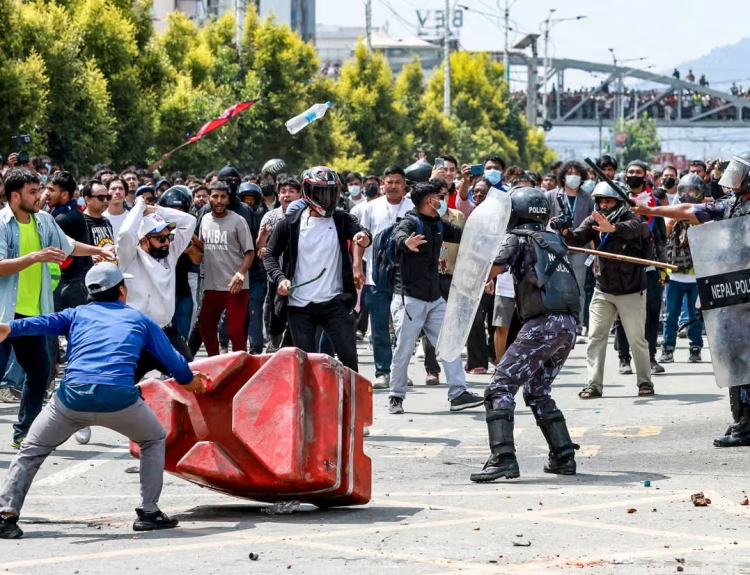
Protesters confronted ICE and LAPD near the Westlake Home Depot and other raid sites. Videos show agents in riot gear using tear gas, pepper spray, and flash‑bang devices. One crowd threw chunks of concrete at federal officers. Police issued an unlawful assembly order in downtown LA late evening. - June 9 onward – Larger Expansion & Symbols
Demonstrators blocked parts of the 101 Freeway and surface streets such as Spring, Main, Arcadia, and Los Angeles Streets. LAPD declared unlawful assemblies and authorized less‑lethal munitions. By mid-June, reports estimate more than 1,000 protesters, 411 arrested, and over $100 million in damages, including injured civilians (3), horses (5), and journalists (7).
2. Federal Response: Military Surge & Legal Action
- Operation “Protect Federal Property”
Former President Trump ordered deployment of 4,000 National Guard troops and 700 Marines to LA without California’s consent. - State Pushback
Governor Gavin Newsom labeled the act “an abuse of power” and filed an emergency lawsuit to block the deployment . Mayor Karen Bass imposed a downtown curfew (8 PM–6 AM) and declared a local emergency, emphasizing the protests remained lawful and peaceful until vandalism occurred. - Judicial Rulings
A federal judge denied California’s immediate restraining order, scheduling a full hearing on whether the military presence violated the Insurrection Act.
3. Dynamics on the Ground

- Weapons and Clashes
Protesters reportedly used rocks, concrete, and in rare cases Molotov cocktails. Federal authorities cite these incidents in their justification for arrests—reported at over 200 in LA alone. - Nonviolent Segments
Thousands of individuals engaged peacefully, marching on the 101 Freeway and chanting slogans such as “Sí se puede” while waving Mexican and Central American flags. - Collateral Damage
Vehicles—including five self-driving Waymo cars—suffered vandalism or arson in downtown LA; Waymo suspended services in the area and cited safety concerns.
4. Leadership, Messaging & Community Organizing
- Elected Officials
- Mayor Bass emphasized immigrant safety and lawful protest: “Everyone has the right to peacefully protest, but violence and destruction are unacceptable”.
- Governor Newsom denounced the unilateral troop deployment and escalated legal proceedings.
- Activist Networks
Groups like Unión del Barrio and the Community Self Defense Coalition deployed “rapid response” patrols that reportedly caused ICE to abort at least one raid due to safety concerns. - Cultural Influencers
Celebrities like Mark Ruffalo, Pedro Pascal, Halle Berry, and Kim Kardashian criticized ICE and praised the protests publicly. Kardashian described ICE raids in the garment district as “inhumane”.
5. Legal and Institutional Fallout
- Class Action & Civil Rights Challenges
Civil liberty groups (ACLU of Southern California) condemned ICE tactics. California filed lawsuits over unauthorized troop deployment. - Journalistic Safety Concerns
At least seven journalists reported injuries during protests, including cases involving rubber bullets and flash‑bang rounds from police. - Transit Disruptions & Safety Orders
Curfews, blocked freeways, and suspended public transit affected commuters and businesses. The California Highway Patrol emphasized risks tied to freeway protests.
6. Broader Implications & National Echoes

- Nationwide Spread
Anti‑ICE protests have triggered similar actions in cities such as San Francisco, Sacramento, Chicago, New York, Austin, Dallas, and Santa Ana. Southern California, in particular, sees solidarity protests in Anaheim and Riverside . - Polarized Debates
Opinion pieces criticize the protests as “lawless,” while progressive leaders defend them as civil resistance. Letters to the editor and conservative outlets frame these protests as dangerous and out‑of‑control. - Federal Policy Reactions
The DHS and White House labeled protesters “insurrectionists,” while ICE defended its operations. California’s legal action challenges federal authority on troop mobilization.
Current Outlook & What to Watch
- Judicial ruling expected imminently on federal troops’ legality in LA.
- ICE enforcement may adjust operations or deploy elsewhere as community patrols continue.
- Future protests likely during raid attempts; activist groups prepare to intercept with open-source alerts.
- Legislative momentum: California’s actions may propel sanctuary policy debates or federal funding disputes.
- Media focus now shift: from protest tactics to legal and constitutional questions about military involvement in domestic law enforcement.
Expert Insights
- Constitutional context: Use of military forces without local approval invokes tensions under the Insurrection Act. Legal experts expect constitutional challenges in federal court.
- Immigration enforcement risk: ICE agents describe growing “community resistance zones” where enforcement becomes difficult––mirroring tactics from civil rights-era occupations.
- Political ramifications: The protests reinforce FAA and public safety divides in upcoming local and federal elections, particularly in House seats in California.
Conclusion
Los Angeles’s current anti‑ICE protests have evolved into a high-stakes confrontation—marked by large-scale civil resistance, punitive federal intervention, business disruptions, and legal entanglements. The central conflict now rests on a constitutional fault line: whether the federal government can occupy domestic jurisdictions without consent, and whether civil protest can protect immigrant communities from aggressive enforcement. As the city awaits court rulings and further federal responses, Los Angeles stands at the forefront of America’s struggle between civil liberties and federal authority.
About the author

Sources
- June 2025 Los Angeles protests – https://en.wikipedia.org/wiki/June_2025_Los_Angeles_protests
- The Guardian – https://www.theguardian.com/us-news/live/2025/jun/10/los-angeles-protests-la-donald-trump-ice-gavin-newsom-california-live-latest-news
- The Wall Street Journal – https://www.wsj.com/us-news/texas-governor-to-deploy-national-guard-as-anti-ice-protests-spread-6347648f
- ABC News – https://abc7.com/post/dozens-march-101-freeway-downtown-los-angeles-during-protest-deportations/15857649/
- Times of India – https://timesofindia.indiatimes.com/technology/social/google-owned-waymo-on-suspending-service-in-la-for-protests-we-do-not-believe-/articleshow/121758573.cms
- Reddit – https://www.reddit.com/r/LosAngeles/comments/1jdm24p/our_website_policing_ice_activists_seek_out/
- 2025 in California – https://en.wikipedia.org/wiki/2025_in_California
- City Of Sunrise Beach – https://cityofsunrisebeach.org/thousands-of-anti-ice-activists-block-101-freeway-and-streets-in-downtown-los-angeles/
- New York Post – https://nypost.com/2025/06/11/opinion/los-angeles-lawless-protests-letters/
- The Washington Post – https://www.washingtonpost.com/nation/2025/06/11/la-protests-ice-live-updates-trump/
About The Author




[…] Anti-ICE Protests in America: A Legal and Social Flashpoint […]