
Copenhagen has a reputation for its chilly weather, especially in January. Hear it from Shakespeare, who had his Danish Prince, Hamlet, tell us: ‘No, believe me, it’s very cold, the wind is northerly.’ Unfortunately for Hamlet, he didn’t have Copenhagen Fashion Week – which began in 2006 – to cheer him up, offer sartorial advice, or distract him from a murderous uncle. Perhaps some Scandi styles would have helped him ditch the drama.
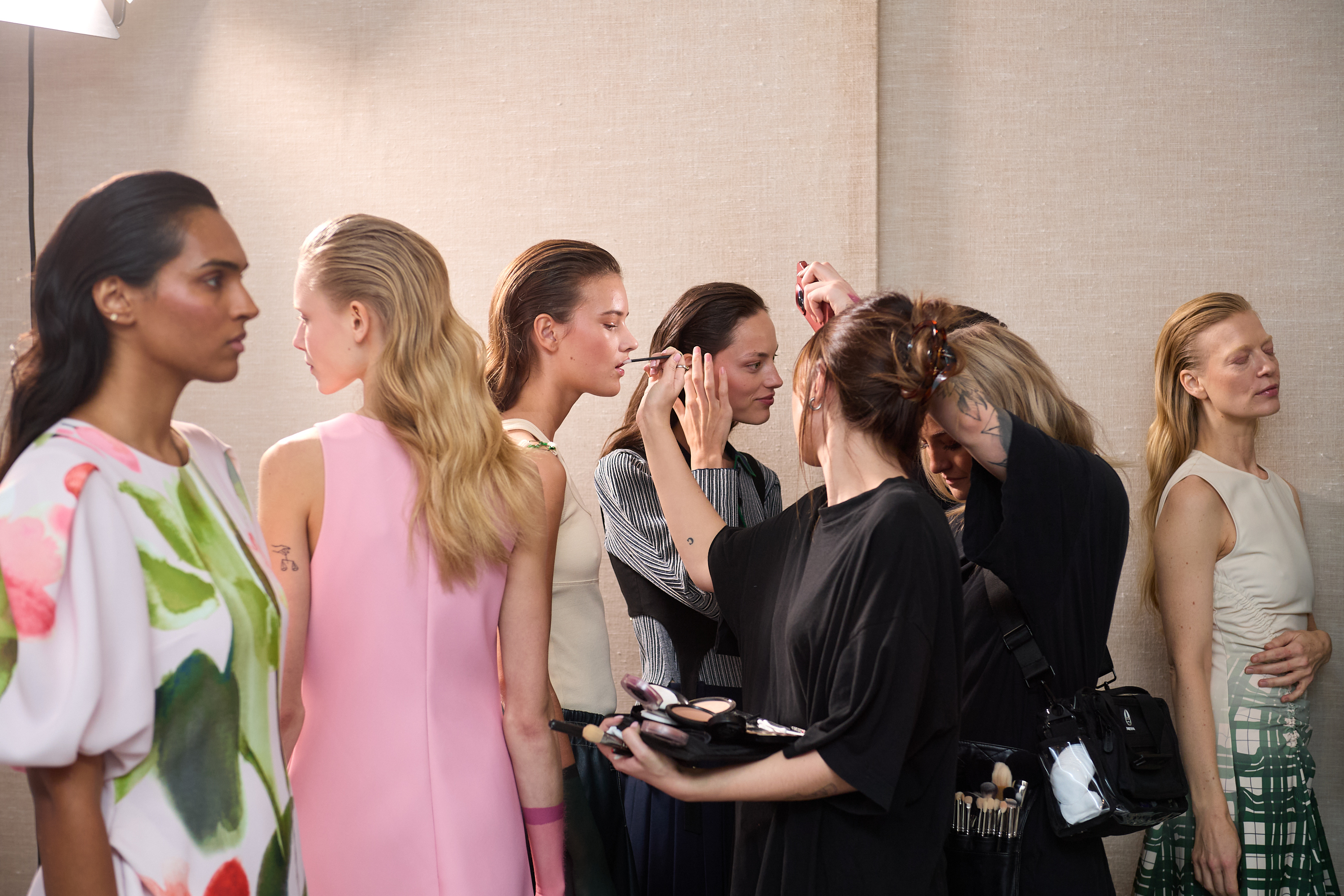
Indeed, Copenhagen Fashion Week 2025 (January 27 – 31) attracted enough drama of its own – in all the right ways. With fashion week yet to arrive in the capitals of Paris, Milan, London and New York, Copenhagen paved the way with cool Scandi and Nordic style in the trendy Denmark hub. Can we consider Copenhagen the younger, preppier sister to the ‘big four’ fashion capitals? After this week in January, I think so. CPHFW has been on the up over the past few years thanks to homegrown names like Baum und Pferdgarten, Rotate, and Gestuz, who all returned for another runway takeover this season. With 27 shows and 8 presentations on the schedule, the city showcased a striking mix of minimalist cool and bold experimentation, carving out its own influential spot in the global conversation.

You wouldn’t have to be eagle-eyed to notice that this year’s schedule was notably different. After more than a decade in Copenhagen, the Danish brand Ganni – a symbolic figure of CPHFW – moved to the Parisian scene to present their SS25 collection, a key step in their development as they aim to establish themselves as a luxury player. Scandi label Saks Potts will permanently close in spring 2025 after ten years of business, and (Di)vision, a Danish fashion brand known for their sustainable designs, filed for bankruptcy at the end of last year. Change, however, brings newness, and this year’s line-up was far from boring. The Swedish fashion label Filippa K joined the schedule for the first time this season, as well as Icelandic outerwear brand 66°North. The absence of some established names has allowed room for fresh energy and talent, making the landscape feel even more dynamic than before.
Like previous seasons, CPHFW’s sustainability requirements remain in place, and all labels must take part. Brands must show, for example, that at least 60% of their collection comes from deadstock material or fabrics, that they have a sustainability strategy, provide equal opportunities, and don’t destroy unwanted clothes. Copenhagen has built a reputation as one of the most sustainable cities in the world, and its fashion scene is no exception. Deadwood, a Stockholm based brand returning to CPHFW, takes this to the most uniquely (and spiky?) sustainable extreme – pioneering the use of vegan cactus leather.

Scandi fashion has a reputation for understated elegance. I don’t think that Hamlet used to wear chunky loafers or turtlenecks, but after he told Ophelia to go to a nunnery (if you know, you know), she mourned Denmark’s loss of a great man and – quote – ‘glass of fashion’. I’m not quite sure where I’m going with this, other than to say that the Danes are historically trendy people: Shakespeare said so. This year, they seem to be returning to the quality, minimalist aesthetic that Scandinavian fashion has long been associated with. There’s a shift back to timeless, durable pieces – sleek wool coats, tailored trousers, fitted shirts – that emphasize longevity over trends. Denim, which has always been essential to a Scandinavian uniform, reigned supreme. Soft handbags seemed to be the accessory of the moment, high-neck styles came out in force, and skater skirts were subtly thrown into the mix. Though layering may be timeless, it isn’t static, as demonstrated by many of the cleverly built up looks suitable for a Scandi winter.
Danish fashion house Baum und Pferdgarten presented their 2025 autumn-winter collection, ‘Heartbeats’, accompanied by an array of giant inflatable hearts. The collection was described as a ‘love letter to free-spirited individuality and the thrill of embracing what makes the heart skip a beat’. It was, undeniably, nostalgic in tone, not only through the hearts, but in the way that the collection seemed to embrace a sense of the rustic. Looks were created by layering checks and prints and clashing different textures and knits in a way that seemed both careless yet also meticulously thought out. The collection, with its earthy palette, seemed unavoidably reminiscent of the British countryside. Some of the looks (checked bubble skirt with crisp white collared shirt and round neck jumper; tweed bubble skirt and jacket two-piece; short trench coat) even seemed like they’d marry well with a pair of wellies in a field. This is absolutely a compliment.

Another label giving a nod to rural England is Filippa K, who were on the official CPHFW schedule for the Another label giving a nod to rural England is Filippa K, who were on the official CPHFW schedule for the first time. The Stockholm-based fashion house centred their AW25 collection on the brand’s own Scandinavian heritage and Nordic climate, whilst gesturing to the British countryside. Filippa K’s creative lead, Anna Teurnell, who designed the collection, said, ‘we’re very proud to take part in Copenhagen Fashion Week, an event that shares our values and lifts the amazing talent in Nordic fashion.’ The brand is quintessentially Scandinavian: sustainable, functional, layers. It does all that whilst looking really cool. As Teurnell puts it, the collection was about ‘wanting to look good without shouting too loud’. Hasn’t she just perfectly summarised Scandinavian style?
For a masterclass in layering, the Won Hundred collection delivered with sophistication and style. The Copenhagen based brand brought a sleek and modern vibe to the runway, staying true to its roots with minimalist designs that felt effortlessly cool. This season, Won Hundred was inspired by the theme of ‘Collapse and Rebuild’, and the collection embodied the duel value of destruction and creation. Distressed fabrics and dirt inspired denim grounded the pieces in raw, earthy textures, while bold materials and refined finishes created a sense of reconstruction. As creative director, Nikolaj Nielsen, put it, ‘we emphasized precise refinement and thorough attention to detail, capturing the essence of Won Hundred: minimal yet distinctive, polished yet edgy, rugged yet sophisticated.’ The collection delightfully played with layering. Heavy wool outerwear, worn leather, and corduroy were layered to create a rich visual texture, yet the overall feel remained light and wearable. The materials were as functional as they were expressive, as the juxtaposition of rugged and refined highlighted Won Hundred’s knack for creating pieces that are as much about style as they are about everyday wearability.
One of the most striking brands was Bonnetje. The Danish label was only founded in 2021, and has already featured as ‘One to Watch’ at last year’s showcase. Bonnetje means ‘receipt’ in Dutch; founders Yoko Maja Hansen and Anna Myntekær, who cut up suits and reassemble them into new silhouettes, found a receipt in a pocket which was from the Netherlands, where they met. Bonnetje upcycles men’s suits, working with a distinctly masculine uniform and transforming it into something very feminine. Reappropriation – taking something and giving it a new meaning – is at the heart of Bonnetje’s creative process. In linguistics, reappropriation is a cultural process where people reclaim offensive words. In literature, authors reappropriate problematic works of fiction. In fashion, Bonnetje has turned a simple concept – upcycling – into a reappropriation of gendered clothing, a high-fashion statement, and a dialogue around the modern woman’s identity. It is unconventional, unique, and brilliant.
For their AW25 collection, Bonnetje addressed the current desire for work-life balance and increasing lack thereof. The show venue was an abandoned office floor. The collection, ‘Doublages’, dealt with the ideals of performing both in the private and professional arena as the gap between the two closes. Bonnetje’s suits no longer signify uniform, as in one form, but one suit might fit different lifestyles and expressions. In one look, vertical blinds – typically used to manage privacy, airflow, and light – are retrofitted as a dress to manifest different images of the self. In another piece, transparent plastic document sleeves are turned into an exposing close fitting dress. This creation makes a bold statement: the wearer is immersed in work, wrapped in the materiality of their professional life, whilst simultaneously maintaining the professional demand for transparency across both the public and private domains. With this collection, Bonnetje continues to challenge traditional fashion, blending artistry, sustainability, and storytelling. Their designs invite wearers to reflect on the multiplicity of modern life while engaging in a dialogue about self-expression and the shifting boundaries of work and personal identity.


It would be rude to talk about CPHFW without mentioning the street style. Whilst I wasn’t there in person (maybe next year…), it’s impossible to ignore the effortlessly cool looks that flood social media during the event. The style of attendees is a perfect mix of polished yet playful, pieces that make a statement without trying too hard. It’s the kind of fashion that looks both high-end and real-world wearable, blending Scandinavian minimalism with bold personal expression. This year, people looked stylishly comfortable as they opted for shaggy faux fur and extra-long scarves. Layers were everywhere, not just to protect from the cold, but as an art form. Elsewhere, ties added a nonchalant elegance to the mix. Street style again proves why Scandi fashion is on everyone’s radar.


Copenhagen Fashion Week 2025 once again proved that Scandi style has both depth and breadth, offering something for every fashion lover, whether they lean towards minimalist elegance or more eclectic, experimental looks. Scandi style certainly has range, but what truly sets it apart is its unique ability to combine thoughtfulness, sustainability, and artistry in a way that feels both contemporary and timeless. As always, Copenhagen has cemented its place as a must-watch destination for global fashion. A stylish winter awaits.
About The Author


