Photo Credit: Times of India
The bustling labyrinth of the New York City subway has witnessed countless stories of survival, chaos, and tragedy. Yet, none has shaken the city—and the world—quite like the horrific events of December 22, 2024. The death of Amelia Carter, allegedly set on fire while sleeping on an F train at the Stillwell Avenue Subway Station in Brooklyn, has ignited an intense firestorm of questions, controversies, and outrage. This tragic incident has exposed not only glaring failures in public safety and law enforcement but also the dangerous power of misinformation in an age of digital dominance.
A Crime of Unimaginable Cruelty
At the heart of this chilling story lies an act so heinous it defies comprehension. According to reports, 33-year-old Sabastian Zapeta-Calil doused a sleeping woman in an accelerant and set her ablaze. Authorities apprehended Zapeta-Calil shortly after the attack, charging him with murder and arson. The New York Police Department confirmed that the crime occurred on a stationary F train in Brooklyn—a place meant for transit and connection, now forever stained by violence.
Who Was the Victim?
In the immediate aftermath of the attack, social media erupted with claims identifying the victim as 29-year-old Amelia Carter. Yet, in a puzzling twist, authorities have yet to confirm the victim’s identity. This lack of official clarity has fueled a maelstrom of speculation online. Many have pointed to a photograph circulating on social media, purportedly showing Amelia Carter. Critics, however, allege the image is AI-generated, raising questions about its authenticity and the motivations behind its dissemination.
If the victim is indeed Amelia Carter, who was she? How did she end up sleeping on a subway train in one of the world’s wealthiest cities? These unanswered questions underscore the social inequalities and systemic failures that often leave vulnerable individuals at the mercy of a broken system.
The Role of the Bystanders
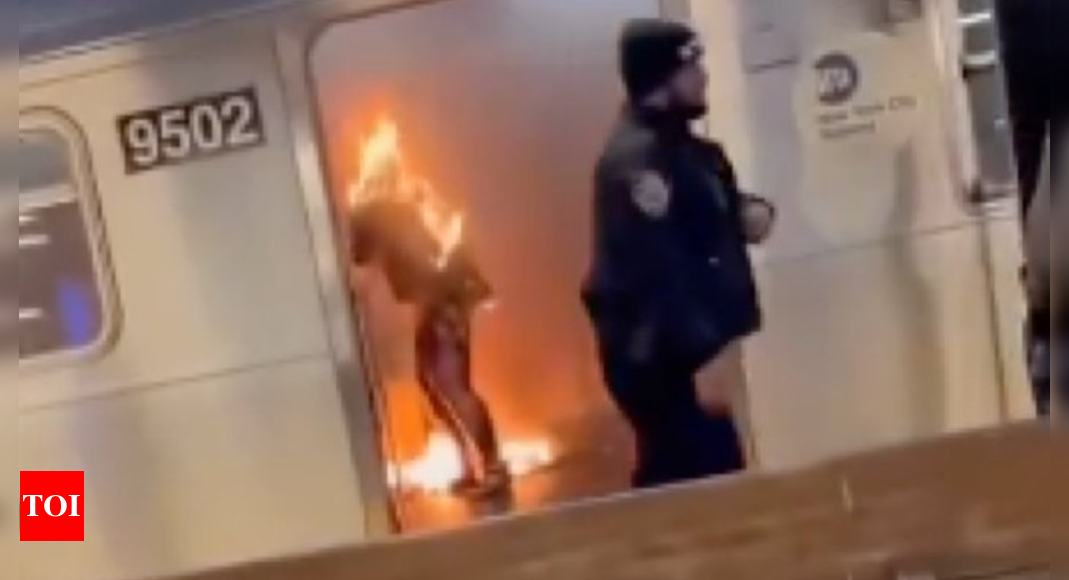
One of the most shocking aspects of this tragedy is the apparent inaction of bystanders. A video that surfaced online shows an individual—reportedly an NYPD officer—walking past the burning victim without intervening. The footage has sparked a tidal wave of outrage, with critics accusing the officer of gross negligence and a disturbing lack of humanity.
The NYPD has launched an internal investigation into the incident, but public trust in the institution has been deeply eroded. Many are asking: How could this happen in a city that prides itself on resilience and community? Why didn’t anyone step in to help, or at the very least, call for immediate assistance?
Subway Safety in the Spotlight
This incident has thrown a harsh spotlight on subway safety in New York City. Despite ongoing initiatives to improve security, the subway system remains a breeding ground for violence and neglect. In recent years, New Yorkers have endured a spate of high-profile crimes on the subway, from stabbings to assaults, each incident further eroding the sense of safety for millions of daily commuters.
The city’s leadership has pledged to address these concerns, but critics argue that these promises ring hollow. The lack of visible police presence, inadequate mental health resources, and the systemic marginalization of homeless individuals contribute to an environment where tragedies like this can occur.
The Dangerous Spread of Misinformation
As if the crime itself weren’t horrific enough, the aftermath has been marred by a deluge of misinformation. The viral claims about Amelia Carter’s identity, coupled with allegations of AI-generated imagery, have muddied the waters of truth. Social media platforms, often lauded for their democratization of information, have once again proven to be double-edged swords.
The rapid spread of unverified information has compounded the grief and confusion surrounding the incident. It’s a stark reminder of the ethical responsibility of both individuals and platforms in handling sensitive situations. When tragedy strikes, the quest for clicks and shares should never supersede the imperative for accuracy and respect.
Public Outcry and Accountability
The reaction to this incident has been swift and furious. Protesters have taken to the streets, demanding justice for the victim and accountability from those in positions of power. Hashtags like #JusticeForAmelia and #SubwaySafetyNow have trended globally, amplifying calls for systemic reform.
Yet, the road to justice remains fraught with obstacles. The NYPD’s investigation into the alleged officer’s inaction is ongoing, and the legal proceedings against Sabastian Zapeta-Calil are expected to be protracted. Meanwhile, the public’s anger continues to simmer, fueled by a pervasive sense of injustice and betrayal.
Broader Implications for Society
This tragedy is not an isolated incident. It is a symptom of deeper societal issues that demand urgent attention. The neglect of the homeless population, the inadequacies of the mental health care system, and the erosion of community values all play a role in creating the conditions for such a crime to occur.
Furthermore, the incident raises critical questions about the role of technology in shaping public discourse. The proliferation of misinformation has not only complicated the investigation but also diverted attention from the core issues at hand. In a world where digital manipulation is increasingly sophisticated, the need for media literacy and robust fact-checking mechanisms has never been more pressing.
The Path Forward
As the dust settles, one thing is clear: this tragedy must serve as a wake-up call. The city of New York, its institutions, and its citizens must come together to address the root causes of such violence. This means investing in mental health services, ensuring accountability within law enforcement, and fostering a culture of empathy and action.
For the media and social platforms, it’s a moment for introspection. The ethical responsibility to prioritize truth over sensationalism is paramount, especially in the wake of such a devastating event.
Conclusion
The death of Amelia Carter—if indeed she is the victim—is a harrowing reminder of the fragility of human life and the profound consequences of societal neglect. As the investigation unfolds, the world watches, hoping for justice and meaningful change. But justice for Amelia, and for countless others like her, will require more than convictions and policy changes. It will demand a collective commitment to building a society where such tragedies are not just rare but unthinkable.
For further details on this case, refer to the original news sources:
About The Author