
By Namith DP | June 10, 2025
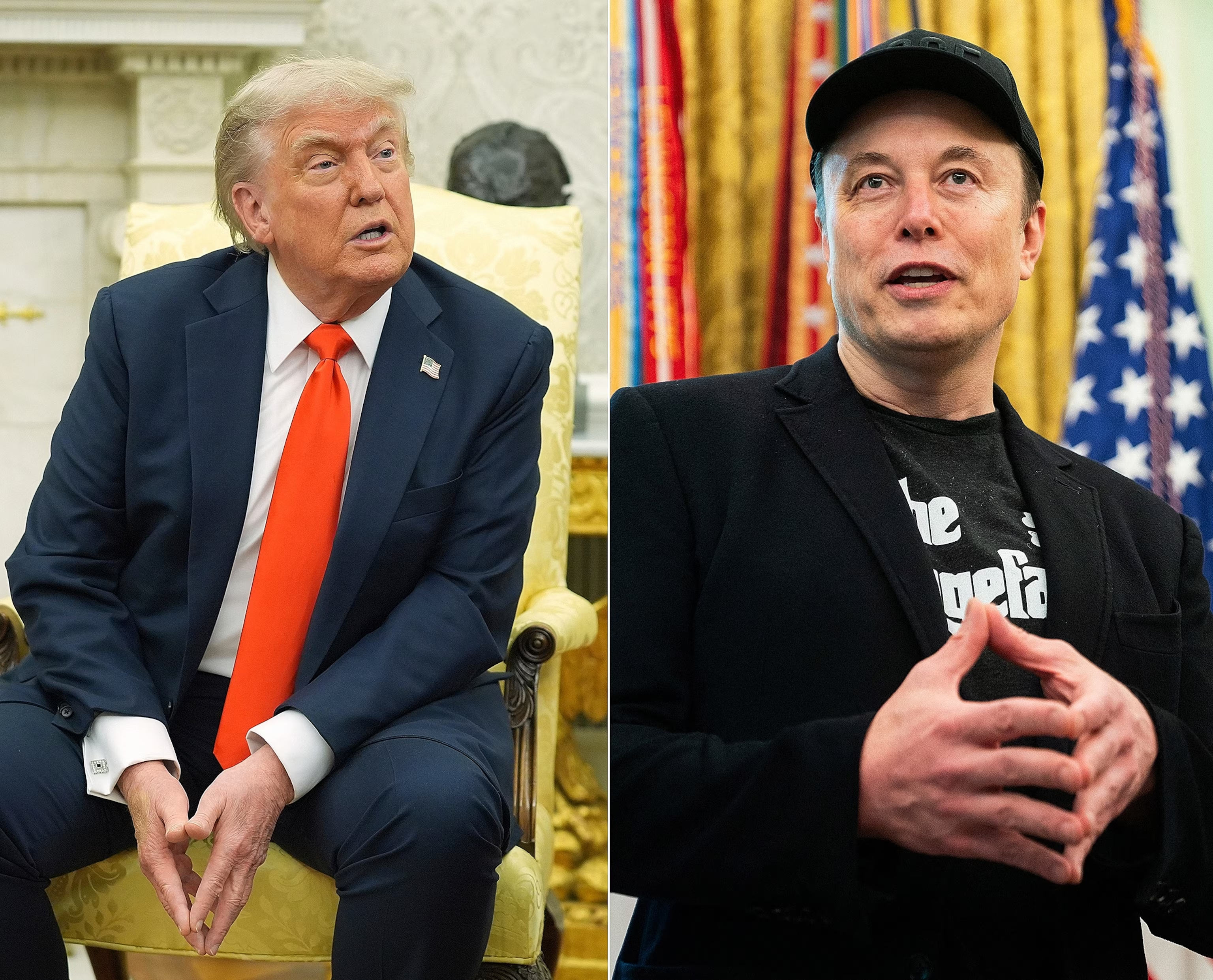
Donald Trump, President of the United States, and Elon Musk, CEO of Tesla and SpaceX, were initially seen as aligned during Trump’s presidential campaign and the early phase of his second term. However, within the span of a month, their relationship has markedly deteriorated. What began as a strategic rapport has now escalated into a public and contentious dispute, with both figures openly criticizing one another across platforms and in the media.
🔥 What Sparked the Feud
Trigger Event – “One Big Beautiful Bill”
Elon Musk publicly criticized Donald Trump’s signature fiscal package—a sweeping tax and spending bill as a “disgusting abomination.” He argued it ballooned deficits, favoured fossil fuel industries, and undermined clean technology. Trump, in turn, viewed Musk’s dissent as a betrayal and began taking direct aim at his business empire.
Public Exchange of Blows
Trump’s Actions:
- Threatened to cancel federal contracts and subsidies to Musk’s companies, including SpaceX and Starlink.
- Ordered Musk’s Tesla vehicle removed from White House grounds.
- Accused Musk of ingratitude and hinted at consequences if Musk supported Democrats.
- In private, reportedly called Musk “crazy” and a “big-time drug addict.”
Musk’s Retaliation:
- Posted criticisms on X, suggesting Trump needed a “body double.”
- Implicitly accused Trump of appearing in the Epstein files—an unsubstantiated and later deleted claim.
- Threatened to decommission Dragon spacecraft temporarily.
🧾 The “One Big Beautiful Bill”: Fiscal Flashpoint
Trump’s tax-and-spending proposal has become the centerpiece of the feud. Musk’s opposition stems from the bill’s structure, which he views as both anti-innovation and fiscally reckless.
🔍 Key Provisions
Massive Tax Cuts
- Corporate tax rate cut from 21% to 15%, with added deductions for fossil fuel industries.
- Repeal of inheritance tax.
Defense and Infrastructure Spending
- $1.1 trillion in military modernization.
- $400 billion in highway and fossil energy infrastructure.
Rollback of Clean Energy Subsidies
- $67 billion cuts in EV tax credits.
- DOE loans for battery and charging infrastructure eliminated.
Fiscal Implications
- CBO projects a $4.3 trillion deficit increase over 10 years.
- Resulted in market uncertainty and inflationary concerns.
💬 Musk’s Response
- Called it “anti-future” and publicly threatened relocation of Tesla R&D.
- Warned of economic damage to the clean tech sector.
- Investor reactions included a ~9% drop in Tesla stock.
Fallout Across Spheres
1. Government Contracts and Regulation
- Trump’s team is reviewing $38 billion in federal benefits to Musk’s companies.
- SpaceX and Tesla face funding freezes and audits.
2. Market Impact
- Tesla stock dropped sharply after Musk’s comments.
- Analysts expressed concern over policy risk.
3. Political Realignment
- YouGov poll: 71% of Republicans side with Trump over Musk.
- Vice President JD Vance has called for unity but backs Trump.
🏛️ The Deeper Problem: Private Influence over Public Power

This episode raises broader concerns about business influence on public governance, especially when corporate leaders control strategic infrastructure.
🔑 Key Concerns
Concentration of Leverage
- Musk’s control over SpaceX, Starlink, and Tesla gives him rare economic and geopolitical leverage.
Policy Asymmetry
- Informal channels like X posts and private meetings bypass institutional transparency.
Undermining Institutional Integrity
- Risks setting a precedent where wealthy individuals shape national policy.
Conflict of Interest Risks
- Appeasing Musk could appear as quid pro quo and undermine ethical norms.
Security Vulnerabilities
- Starlink and SpaceX are critical to U.S. defense. Personal conflicts create strategic instability.
What Comes Next
Federal Review of Contracts
- White House lawyers are assessing Musk-related federal funding.
Private Diplomacy
- Despite public tension, both sides may seek reconciliation.
Investor Pressure
- Investors urge Musk to focus on operations, not politics.
Legislative Action
- Lawmakers may introduce bills to regulate billionaire influence over defense and infrastructure.
Final Analysis
The Trump–Musk fallout illustrates the fragile boundary between corporate power and government authority. While both men thrived on influence and disruption, their clash spotlights systemic weaknesses:
- Billionaire CEOs should not be able to shape national policy without transparency.
- Politicians must avoid retaliatory governance that jeopardizes national infrastructure.
- Regulatory systems need reinforcement to handle outsized private influence.
Unless guardrails are put in place, future policy will remain at the mercy of personality rather than principle.
About the Author

Sources:
- Reuters – https://www.reuters.com/business/autos-transportation/trump-said-he-would-not-drop-elon-musks-starlink-service-2025-06-09/
- Washington Post – https://www.washingtonpost.com/technology/2025/06/09/musk-is-vulnerable-battle-with-trump/
- Cadena SER – https://cadenaser.com/nacional/2025/06/09/se-acabo-el-bromance-trump-musk-cronologia-de-una-discusion-anunciada-cadena-ser/
- Congressional Budget Office – https://www.cbo.gov/publication/59851
- CBS – https://www.cbsnews.com/news/trump-elon-musk-federal-subsidies-cost-tesla-spacex-billions/
- Business Standard – https://www.business-standard.com/world-news/donald-trump-elon-musk-feud-us-tesla-spacex-govt-contracts-125060700093_1.html
- Bloomberg – https://www.bloomberg.com/opinion/newsletters/2025-06-05/trump-threatens-spacex-contracts-as-musk-attacks-president-on-x
- Bloomberg – https://www.bloomberg.com/opinion/articles/2025-06-10/musk-trump-feud-hurts-350-billion-spacex-and-entire-space-economy
About The Author





Well said.