
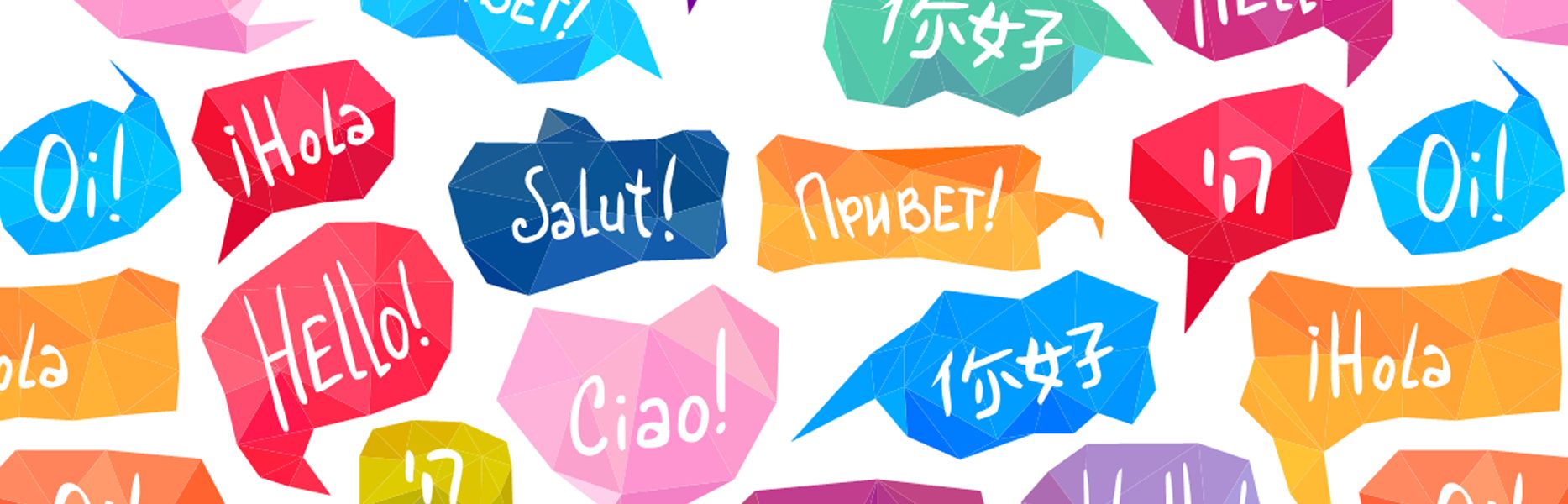
The world we live in is shaped by our words. Over six thousand languages are spoken around the world. It’s a fantastic feeling to learn a new language and talk fluently like a native speaker. Learning a language helps you to broaden your horizons and talk with the locals with ease. Your reason to learn a language can be the girl you want to impress or the right poetry in an oriental language. The following are the top five languages that you might like to learn.
1. Spanish
Over 6 percent of the world’s population speaks Spanish, which means around four hundred million people have Spanish as their mother tongue. The number of people speaking Spanish is ever-increasing, and the statistics suggest that the Latino population in the US would reach 130 million by 2060, overtaking Mexico.
Learning Spanish as a second language will improve your employability and enrich your travel experiences as it is the official language of twenty countries. You can understand and immerse yourself in the country’s culture. It will help you appreciate the music, paintings, and films made in Spanish, and it’s quite simple to learn.
2. English
English is mostly used to teach, learn, and official work, and it’s the most spoken language around the world. It is a well-known fact that one in five people can understand English. It’s the de facto official language of 57 countries worldwide.
Learning to speak in English will help you in your job search and help you communicate with strangers in different countries and continents. It will help you build your network and allow you to participate in discussions. Learning English is fun, and it will help you understand different cultures and communicate with people from all over the world.
3. Mandarin Chinese
A large number of the population on the planet earth speak Mandarin Chinese. China is an excellent country with cultural heritage, beauty, and tasty food, which is widely popular worldwide. It’s a hard language to learn, but it’s the best language to learn for business. The script is hard for the English language speakers, but the payoff to know the language is enormous.
It improves your artistic skills as the language contains symbols and characters require a steady hand. The written words are iconographic rather than letters. It’s almost like calligraphy, which requires a steady hand.
It improves your brainpower as the Chinese speakers use both their brains, which keep them well oiled
4. Portuguese
If you are traveling around the world, then Portuguese is a fantastic language to learn. Portugal is a place where there are exotic beaches with silver sands. The language will help you connect with the locals who would allow you to discover beaches that are unknown to many. The language is relatively easy to pick and is similar to Spanish.
5. French
The country is known for its exuberant beauty, you can get fantastic cuisine, fashion, and wine. It’s a romantic country known for its romanticism, which makes it the language to learn. You can connect easily with the locals, order anything at the cafe and read novels, movies, play in the french language.
It is an easy language to learn. The language is full of melody and love. It structures thought and critical thinking. Once you know french, you can dabble in french cooking, fashion, theatre, the visual arts, dance, and architecture.
These were the top five languages that are spoken by countless people on this planet. Pick up a book from a nearby store and dip your toes in the ocean of words, symbols, and love.
Author Bio
Sanket Alurkar is a MA Creative Writing Student at Kingston University. He is passionate about storytelling, writing, reading books. He loves to go out for cycling, adventure sports, and loves to cook.
About The Author


