
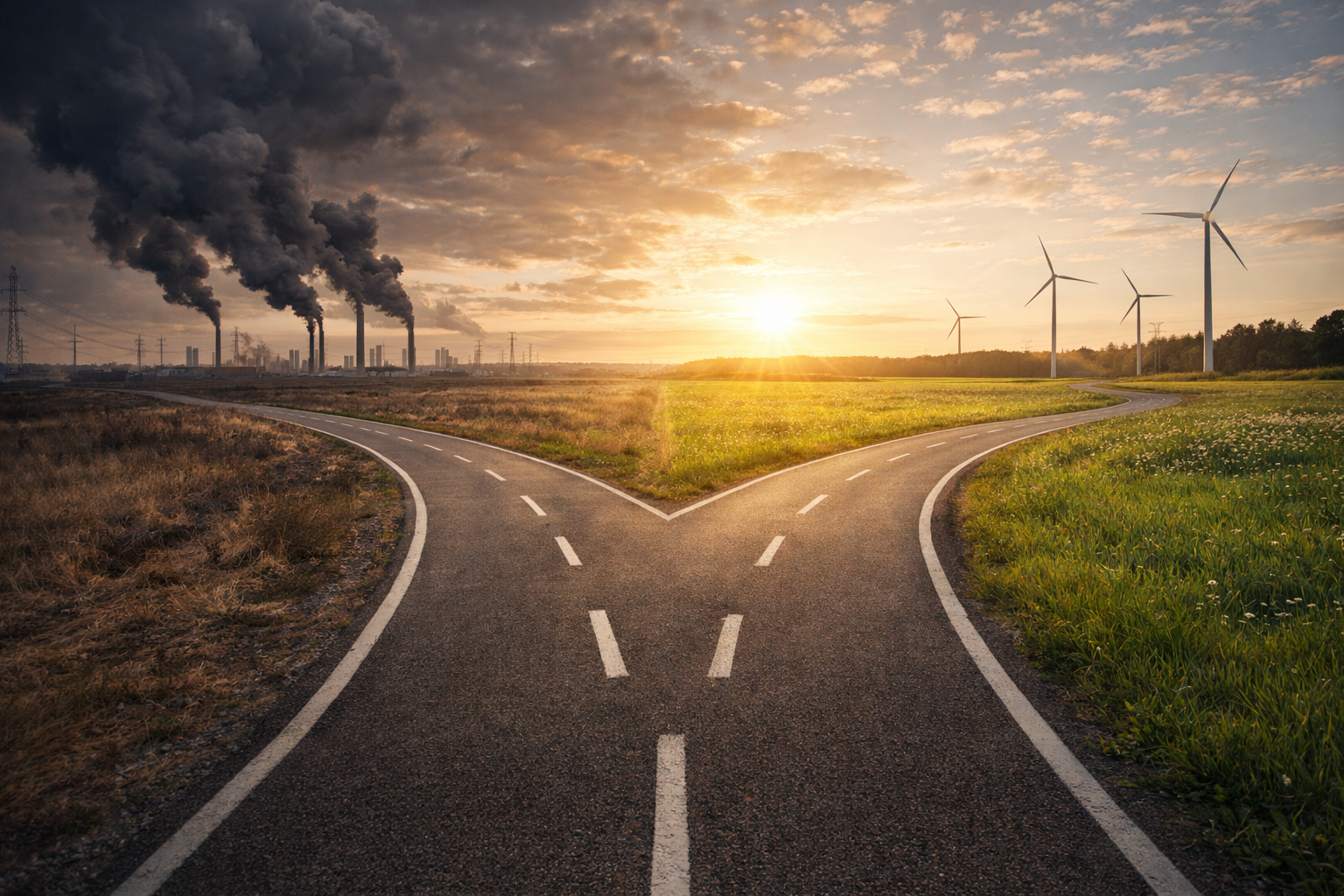
The global consensus on climate science has never been stronger, yet the gap between scientific warning and systemic action remains a chasm. You likely tell yourself that you support a sustainable future. You might even recycle or drive a hybrid vehicle. But when policy shifts threaten your immediate financial security, your geographic identity, or your daily convenience, your support often vanishes. This is the intention-action gap. It is the single greatest obstacle to human survival in the twenty-first century.
Data from the Yale Program on Climate Change Communication confirms that while over 70 percent of the population acknowledges the reality of global warming, less than half believe it will harm them personally. This psychological distance creates a breeding ground for resistance. You view the environment as an abstract concept rather than a structural reality. You treat the Earth as a background setting for your economic life rather than the foundation of it. This perspective leads to a fundamental rejection of the radical changes required to stabilize the biosphere.
Resistance to environmental change does not stem from a lack of information. It emerges from deep-seated cognitive biases, economic lock-in, and the weaponization of cultural identity. Understanding these drivers is the only way to dismantle them.
The Myth of Rationality and the Status Quo Bias
Human evolution did not prepare you for the slow-moving, invisible threats of the modern era. Your ancestors survived by focusing on immediate dangers—a predator in the brush or a sudden storm. You are biologically wired to prioritize the “now” over the “later.” This creates a status quo bias that makes any departure from your current lifestyle feel like a loss, even if that departure guarantees long-term gain.
Psychologists call this loss aversion. You feel the pain of a new carbon tax or a higher electricity bill twice as intensely as you feel the potential benefit of a stable climate fifty years from now. This asymmetry dictates political cycles. Politicians know that asking you to sacrifice today for a benefit you might never see is a losing strategy. They choose the path of least resistance, which is the path of continued environmental degradation.
Does your current lifestyle represent a peak of human achievement or merely a habit you refuse to break? Most people mistake their habits for necessities. You believe you need a two-ton vehicle to move a 180-pound body three miles to an office. You believe you need seasonal fashion that travels halfway around the world to reach your doorstep. When environmentalists suggest these systems must end, you do not hear a call for sustainability. You hear an attack on your freedom.
Economic Lock-In and the Stranded Asset Problem
The global economy is a machine built on the combustion of fossil fuels. This is not just a policy choice. It is a physical reality embedded in trillions of dollars of infrastructure. When you look at a city, you are looking at a monument to carbon. The roads, the power grids, the heating systems, and the logistics chains are all designed for a high-carbon world.
Resistance often comes from the sheer cost of transition. Transitioning to a net-zero economy requires the premature retirement of trillions of dollars in assets. Power plants with thirty years of life left must be shut down. Internal combustion engine factories must be gutted. This is the “stranded asset” problem. It creates a massive financial incentive for the most powerful institutions in the world to fight environmental change.
You pay into pension funds that hold shares in oil and gas companies. Your local government relies on tax revenue from heavy industry. Your bank has issued loans for the construction of pipelines and refineries. If these assets become worthless, the financial shock could rival the 2008 crisis. This creates a circle of protectionism. Investors resist change to protect their portfolios. Workers resist change to protect their jobs. Governments resist change to protect the tax base.
The International Energy Agency (IEA) reports that reaching net-zero by 2050 requires annual clean energy investment to triple to 4 trillion dollars by 2030. Yet, the friction of moving that capital away from “safe” carbon investments remains immense. You are part of an economic system that treats environmental destruction as an externality—a cost that doesn’t show up on a balance sheet. Until that accounting changes, resistance will remain the default economic setting.
The Weaponization of Cultural Identity
Environmentalism has moved from a scientific necessity to a cultural marker. In many parts of the world, your stance on climate change tells people which “tribe” you belong to. This polarization is a deliberate product of political strategy. By framing environmental policy as an elitist agenda, opponents of change have successfully tied carbon-intensive lifestyles to concepts of rugged individualism and national pride.
Look at the “Yellow Vest” protests in France. What began as a response to a fuel tax intended to lower emissions quickly became a broader movement against urban elites who “talk about the end of the world while we talk about the end of the month.” This highlights a critical failure in environmental communication. If you frame change as something imposed by the wealthy on the working class, you guarantee resistance.
You see this in the United States with the defense of coal mining or the obsession with gas stoves. These are not just energy sources. They are symbols of a way of life. When a regulator suggests a move toward induction heating, it is framed as the “nanny state” entering your kitchen. This cultural friction makes rational debate impossible. You stop looking at the data and start looking at who is presenting it. If you dislike the messenger, you reject the message.
Can you separate your identity from your consumption patterns? For most people, the answer is no. Your car, your diet, and your travel habits are part of your social status. Asking you to reduce your carbon footprint is often perceived as asking you to lower your social standing. This fear of social “demotion” drives millions to deny the urgency of the crisis.
Geographic Disparities and the Fairness Trap
The burden of environmental change is not distributed equally. This creates a “fairness trap” that stalls international and domestic progress. If you live in a developed nation, you have benefited from 200 years of carbon-fueled growth. Now, you ask developing nations to bypass that same path to prosperity. This creates an understandable resentment.
India and China frequently point to the historical emissions of the West. They argue that they should not have to sacrifice their industrialization to fix a problem they didn’t create. Within nations, the same dynamic exists. Urban centers often push for “green” policies that disproportionately hurt rural communities. A city dweller with access to a subway system views a gas tax as a minor inconvenience. A rural farmer who must drive fifty miles to the nearest hospital views that same tax as an existential threat.
Resistance is often a demand for justice. If you do not provide a “just transition” for those most affected by the change, they will block the change entirely. The closure of coal mines in the Appalachian Mountains or the Ruhr Valley in Germany provides a clear lesson. When you destroy an industry without providing an equivalent replacement, you create a generation of voters who will support any politician promising to “bring back the old ways.”
The 2023 COP28 summit in Dubai highlighted this tension. While the final agreement mentioned transitioning away from fossil fuels for the first time, the language remained vague to satisfy nations whose entire economies depend on oil exports. You cannot expect a nation to vote for its own bankruptcy. Resistance here is not about denying science. It is about national survival in an unforgiving global market.
The Cognitive Load of Perpetual Crisis
You are currently living through an era of “polycrisis.” You face economic instability, geopolitical tension, and public health threats. In this environment, the climate crisis often feels like one burden too many. Human beings have a limited capacity for worry. Psychologists call this a “finite pool of worry.” When your pool is filled with concerns about inflation or war, there is no room left for the state of the permafrost.
This leads to a phenomenon known as disaster fatigue. You hear that the world is ending so often that you begin to tune it out. The constant barrage of apocalyptic headlines does not motivate you. It paralyzes you. You retreat into “soft denial”—the acknowledgment that the problem is real but the refusal to engage with it in any meaningful way.
Are you waiting for a “silver bullet” solution that requires no personal change? Many people resist environmental action because they believe technology will save them at the last minute. They pin their hopes on carbon capture or nuclear fusion. This techno-optimism is a form of resistance. It allows you to maintain your current lifestyle while pretending that the problem is being solved by someone else in a laboratory.
Data from the Intergovernmental Panel on Climate Change (IPCC) makes it clear that technology alone is insufficient. We need systemic behavioral change. But behavioral change requires mental energy that many people simply do not have. You are exhausted by the demands of modern life, and “saving the planet” feels like an unpaid second job.
The Infrastructure of Inaction
Sometimes, you resist change because the system gives you no other choice. This is structural resistance. You might want to stop driving, but your city is designed in a way that makes walking impossible. You might want to eat sustainably, but “food deserts” leave you with only highly processed, high-carbon options.
Our built environment is a physical manifestation of our resistance to change. We continue to build suburbs that require long commutes. We continue to subsidize industrial agriculture that strips the soil of carbon. These are “path dependencies.” Once a society starts down a certain technological path, the costs of switching to a different path become prohibitively high.
You are trapped in a feedback loop. The more we invest in roads, the more people buy cars. The more people buy cars, the more we need roads. Breaking this loop requires more than just “awareness.” It requires a massive redirection of public funds. But when a government tries to move funds from highway expansion to high-speed rail, the “highway lobby”—composed of construction firms, car manufacturers, and labor unions—mobilizes to stop it.
Resistance is baked into the bureaucracy. Zoning laws often prevent the construction of high-density, energy-efficient housing. Building codes often favor traditional materials over low-carbon alternatives. You are fighting against a mountain of paperwork designed in the 1950s. This invisible resistance is often more powerful than any public protest.
The Illusion of Individualism
The environmental movement has spent decades telling you that “your” choices matter. You are told to buy the right lightbulbs, use a metal straw, and eat less meat. While well-intentioned, this focus on individualism has backfired. It has allowed the largest polluters to shift the burden of responsibility onto you.
When the responsibility is individualized, the solution feels impossible. You look at your own tiny footprint and then you look at the 100 companies responsible for 71 percent of global emissions since 1988. You feel a sense of futility. This futility manifests as resistance. You ask, “Why should I suffer the inconvenience of a shorter shower when a private jet emits more carbon in an hour than I do in a year?”
This is a valid question that environmental policy often fails to answer. Resistance grows when people perceive that the rules do not apply to everyone. If you see the wealthy and the powerful continuing their high-carbon lifestyles while you are asked to make sacrifices, you will rebel. This is the “hypocrisy gap.” It undermines the moral authority of the entire environmental movement.
True change requires collective action and regulation of the largest actors. But those actors are the ones with the most resources to resist regulation. They use their influence to fund think tanks that cast doubt on science and lobbyists who weaken environmental laws. They create a “mirage of progress” where they announce vague net-zero goals for 2050 while increasing production in the present. This corporate resistance is sophisticated and well-funded. It is designed to keep you focused on your metal straw while they continue to extract and burn.
The Psychology of the “End of the World” vs. the “End of the Month”
The most potent form of resistance comes from the fear of immediate deprivation. In the developed world, you fear losing your luxuries. In the developing world, people fear losing their chance at basic comfort. This is the tension between the “end of the world” and the “end of the month.”
If environmentalism does not address the basic human need for security, it will always face resistance. We have failed to build a “bridge of prosperity” to a green future. We offer people a “green transition” that looks like a “green contraction.” We talk about limits and boundaries while people are struggling to pay for heat and food.
You cannot win a debate about the future if you are losing the debate about the present. Every environmental policy must be an economic policy. If a carbon tax does not come with a dividend that puts money back into your pocket, it will fail. If a plan to shut down a coal plant does not include a plan to build a battery factory in the same town, it will fail.
The resistance you see today is a signal. It tells you that the current approach is failing to meet people where they are. You are asking people to jump into the unknown without a safety net. Most people will choose the known disaster over the unknown solution every single time.
Breaking the Cycle of Resistance
How do we move past this inertia? We must stop treating resistance as a sign of ignorance and start treating it as a rational response to a perceived threat. We must design policies that align with human psychology rather than fighting against it.
First, we must make the “green” choice the “default” choice. You should not have to be an expert in thermodynamics to have an energy-efficient home. The system should provide that efficiency automatically through better building standards and grid management. We must remove the “cognitive load” of environmentalism.
Second, we must decouple environmental action from cultural identity. We need a “conservative” environmentalism, a “rural” environmentalism, and a “working-class” environmentalism. This means focusing on local benefits like clean air, lower energy costs, and energy independence rather than abstract global temperature targets.
Third, we must address the fairness gap. This means taxing the highest emitters to fund the transition for the lowest earners. It means honoring historical responsibilities on the international stage. If people believe the transition is fair, their resistance will soften.
Finally, we must replace the narrative of “sacrifice” with a narrative of “upgrade.” A sustainable world is not a world of less. It is a world of better. Better air, better health, better transit, and more durable products. We are currently living in a low-quality, high-waste era. We are resisting an upgrade because we have become comfortable with the defects of the current model.
The Urgency of Now
Every year of resistance is a year we cannot afford. The carbon budget is shrinking. The feedback loops in the Arctic and the Amazon are accelerating. You do not have the luxury of waiting for the perfect political moment. The “perfect” moment was thirty years ago.
You are a passenger on a vessel that is taking on water. You are currently arguing about the cost of the buckets and the identity of the people doing the bailing. This resistance is a form of collective suicide. You must decide if your current habits are worth the future of your species.
The reasons for resistance are clear: psychology, economics, culture, and structure. The path forward is equally clear: we must reorganize our society so that the right choice is also the easiest choice. Until we do that, the inertia of the status quo will continue to pull us toward a cliff. You have the power to demand this reorganization. Will you use that power, or will you continue to resist the only changes that can save you?
The evidence is in your hands. The timelines are set. The real-world examples of both success and failure are all around you. The only thing missing is the courage to accept that the world you knew is over, and the world you need is waiting to be built.
References
Yale Program on Climate Change Communication: Climate Change in the American Mind
International Energy Agency: Net Zero by 2050 – A Roadmap for the Global Energy Sector
https://www.iea.org/reports/net-zero-by-2050
Intergovernmental Panel on Climate Change: Sixth Assessment Report
https://www.ipcc.ch/report/ar6/syr/
The Guardian: The Carbon Majors Database
OECD: The Distributional Effects of Environmental Policy
World Resources Institute: What is a Just Transition?
https://www.google.com/search?q=https://www.wri.org/insights/what-just-transition
Stanford University: The Psychology of Climate Change Denial
NASA Global Climate Change: Vital Signs of the Planet
https://climate.nasa.gov/evidence/
Harvard Business Review: The Business Case for Sustainability
https://hbr.org/2016/10/the-comprehensive-business-case-for-sustainability
Author bio
Julian is a graduate of both mechanical engineering and the humanities. Passionate about frugality and minimalism, he believes that the written word empowers people to tackle major challenges by facilitating systematic collaborative progress in science, art, and technology. In his free time, he enjoys ornamental fish keeping, reading, writing, sports, and music. Connect with him here https://www.linkedin.com/in/juliannevillecorrea/
About The Author


