
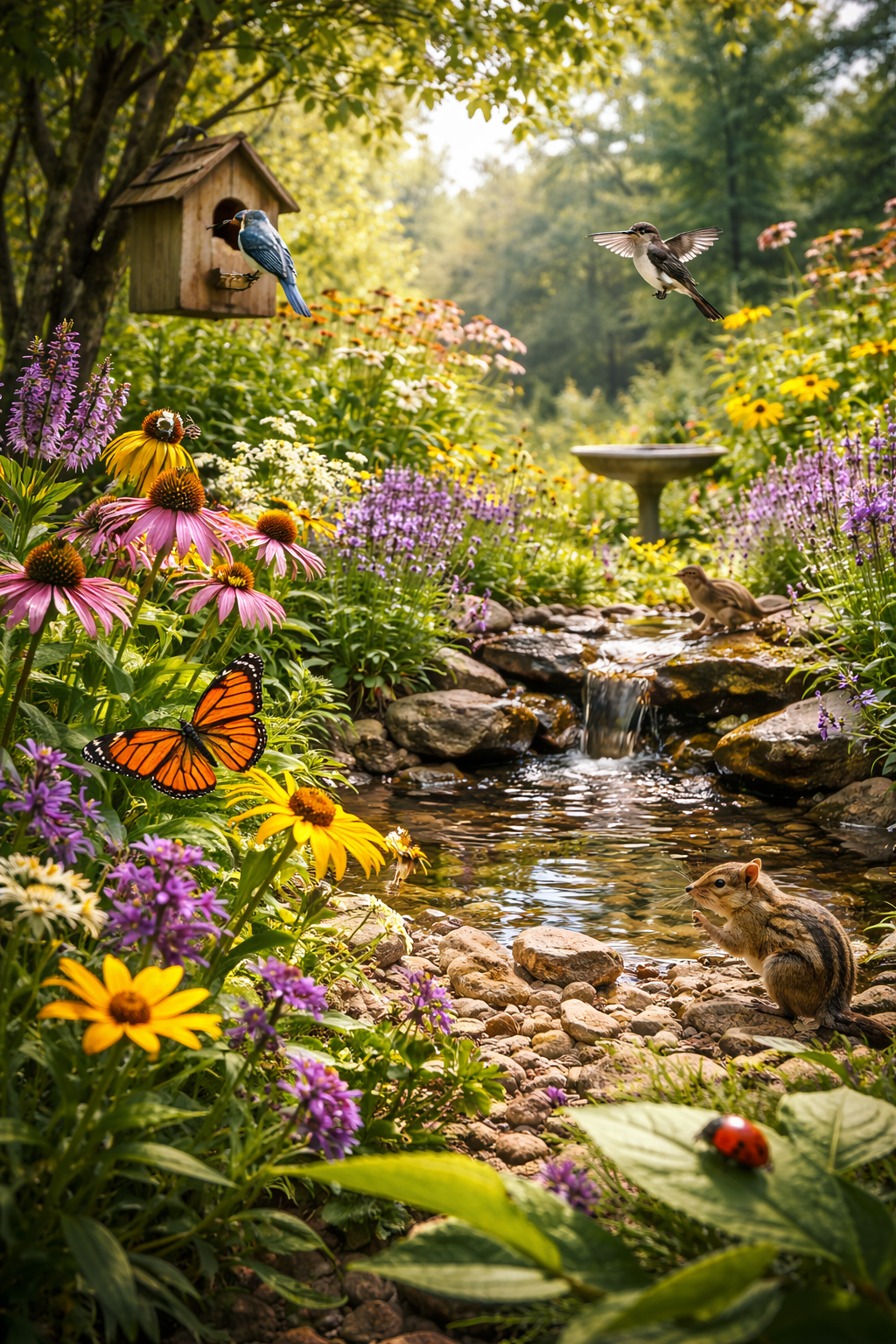
Your manicured lawn is a biological failure. For decades, the multi-billion-dollar landscaping industry has successfully sold you a vision of domestic order that is essentially a liquidation of regional assets. You spend thousands of dollars on synthetic nitrogen, chemical herbicides, and irrigation to maintain a sterile, non-native monoculture that provides zero utility to the local ecosystem. This obsession with a neat perimeter is not just an aesthetic choice. It is a direct strike against the resilience of your community. Data from the Smithsonian Conservation Biology Institute indicates that nearly forty million acres of turf grass in the United States alone act as an ecological desert. If you want to stop the collapse of the pollinators and migratory species that support your food supply, you must immediately rethink the architecture of your private space. The deadline for passive observation has passed. You must become the chief executive officer of your own biological perimeter.
True sustainability is not a lifestyle brand. It is an engineering challenge. We have fragmented the global landscape to the point where protected parks act as isolated islands. These islands cannot sustain genetic diversity in the long term without biological corridors to connect them. Your garden or balcony exists within these potential corridors. By adopting a series of technical, data-driven interventions, you transform your property from a barrier into a bridge. This editorial examines the mechanics of domestic conservation, the photobiology of the suburban landscape, and the financial power of the home-based steward.
The Sterility Crisis of the Manicured Lawn
The American obsession with the perfectly green lawn represents one of the most significant environmental mistakes of the twentieth century. Turf grass provides zero forage for pollinators and zero cover for small mammals. It requires a massive infusion of synthetic chemicals and water to maintain a state of artificial stasis. You are paying a high price in time and money to keep a non-native monoculture alive while local species starve at your doorstep. This is a catastrophic waste of capital.
You must audit your outdoor space and identify portions of the lawn for immediate conversion to native micro-habitats. Native plants evolved over millions of years alongside local insects and birds. They provide the specific chemical compounds and protein levels required for survival. A single native oak tree can support over five hundred species of caterpillars. A non-native ginkgo tree supports five. Which of these trees provides the necessary fuel for the birds in your neighborhood? When you choose native flora, you are not just planting a tree. You are installing a high-performance food factory for the entire local food web.
Consider the concept of soft landings. Most caterpillars drop from trees to the ground to pupate in the soil or leaf litter. If you have mown turf grass beneath your trees, the soil is too compacted for them to enter. They die. By replacing the turf under your trees with native groundcovers and leaving the leaf litter in place, you ensure that the next generation of pollinators survives. Are you willing to trade the aesthetic of a clean lawn for the actual survival of the species that maintain your ecosystem? The urgency of this shift cannot be overstated. We are losing insect biomass at a rate of nearly two percent every year. Your lawn is the most logical place to stop this hemorrhage.
The Soil Factory: Subterranean Biodiversity
Your garden is only as healthy as the dirt beneath it. Most urban soils are compacted, sterile, and depleted of the microbial life necessary for nutrient cycling. When you apply synthetic fertilizers, you are bypassing the natural biological processes of the earth and creating a dependency on industrial inputs. This is the nitrogen wall. Eventually, the soil becomes so biologically insolvent that it can no longer support complex life.
You must view your soil as a living reactor. The first step in creating a wildlife-friendly garden is a total cessation of chemical applications. You must allow the soil microbiome to recover. This requires the addition of organic matter in the form of compost and leaf mulch. These materials provide the carbon that feeds the fungi and bacteria driving the subterranean food web. Earthworms and mycorrhizal fungi are your primary workhorses. They aerate the soil and transport nutrients directly to the roots of your plants.
Healthy soil also acts as a massive carbon sink and a moisture regulator. A soil profile rich in organic matter can hold twenty times its weight in water, reducing your irrigation costs and preventing stormwater runoff. Why do you treat your soil like a medium for chemical delivery when it could be a self-sustaining asset? If you want to support wildlife, you must first support the millions of unseen organisms that build the foundation of the ecosystem. This is a subterranean race for resilience.
Floral Engineering: Why Native Species are Non-Negotiable
A wildlife-friendly garden is not just a collection of pretty flowers. It is a specific set of biological tools. Many popular garden plants are what researchers call ecological traps. They might offer nectar but lack the necessary nutrients, or they might attract pollinators to a location where they are easily predated. To avoid this, you must prioritize native species.
Native plants are the only organisms capable of providing the specialized resources that local wildlife require. Most herbivorous insects are specialists. They can only eat the plants with which they co-evolved. If you fill your garden with exotic species from another continent, you are effectively starving the local insect population. This results in a collapse of the bird and bat populations that rely on those insects for food.
You must select plants that provide a continuous sequence of blooms from early spring to late autumn. This ensures that pollinators have a reliable food source throughout their active season. Focus on keystone species. These are the heavy lifters of the ecosystem. In many regions, plants like goldenrod, aster, and native sunflowers provide the vast majority of the fuel for migrating insects. Do not select plants based on how they look in a catalog. Select them based on their caloric value to the local food web. You are engineering a survival system, not an art gallery.
The Water-Wildlife Nexus: Essential Infrastructure
Wildlife requires clean, accessible water. In many urban environments, natural water sources have been paved over or diverted into underground sewers. You can restore this access by installing a simple, managed water source on your property. A birdbath or a small pond provides a lifeline for birds, bees, and small mammals, especially during periods of drought.
You must manage this water with precision. Stagnant water is a breeding ground for mosquitoes and can harbor avian diseases. You must clean your birdbath regularly and ensure the water stays fresh. If you install a pond, you should include a circulating pump or native aquatic plants to maintain oxygen levels. A pond with sloped sides allows small animals to drink without the risk of drowning.
You must also consider the water you do not see. Stormwater runoff from your roof and driveway carries pollutants directly into local streams. By installing rain barrels or building a rain garden, you capture this water and allow it to filter slowly through the soil. This recharges the local aquifer and reduces the toxic load entering the aquatic ecosystem. You are essentially building a mini-wetland that performs a vital filtration service for your community. Why do you allow your roof runoff to become a liability for the local river?
Balcony Ecology: High-Density Habitat Strategies
If you live in a high-rise apartment, you might assume you have no role in wildlife conservation. This is a tactical error. Balconies in urban centers can act as critical vertical waypoints for migrating birds and insects. In a sea of concrete and glass, your balcony can be a refueling station.
The mechanics of balcony ecology require a focus on container-based native plants. You must select species that can withstand the wind and temperature fluctuations of an elevated environment. Fast-growing perennials and hardy shrubs are your best options. Use large, deep containers to protect root systems from freezing and drying out.
Floating plants and small water features on a balcony can attract dragonflies and damselflies, which are excellent natural predators of mosquitoes. You must also consider the vertical space. Trellises with native climbing vines provide nesting sites and cover for small birds. Every square meter of greenery in an urban center increases the biological connectivity of the city. You are building a high-density habitat in a region that desperately needs it. What prevents you from turning your balcony into a strategic asset for the local flyway?
The Crisis of the Dark Sky: Managing Domestic Light
Light pollution is a persistent, invisible predator that disrupts the reproductive and migratory cycles of nearly every taxonomic group. We have effectively eliminated the night for most urban and suburban environments. This is a catastrophic intervention in the photobiology of wildlife. Insects, which form the base of the terrestrial food web, are particularly vulnerable. A single streetlamp or porch light acts as a fatal trap for thousands of moths and beetles every night. This results in massive population declines that ripple up the trophic levels.
You must take authoritative control of your home lighting immediately. This does not require you to live in total darkness. Instead, you must apply the principles of directed, low-impact illumination. Switch your exterior bulbs to a warm amber hue with a color temperature below three thousand Kelvins. Blue-rich white light is the most disruptive to biological clocks. It suppresses melatonin production and interferes with the celestial navigation used by migratory birds.
You must shield your fixtures. Light should only point where you need it: on the ground. Any light that escapes toward the sky or the horizon is wasted energy and biological interference. Use motion sensors instead of dawn-to-dusk timers. This ensures that the light is only on when you actually require it. If every household in a single suburb adopted these simple lighting protocols, the local insect population would see a measurable recovery within a single breeding season. Why do you leave your porch lights on for eight hours when you only spend ten seconds walking to your door? You are paying to destroy the nocturnal ecosystem.
Chemical Warfare in the Suburbs: The Detox Mandate
Suburban landscaping currently relies on a regime of chemical warfare. The widespread use of neonicotinoid pesticides has been linked to the collapse of honeybee colonies and the decline of insectivorous birds. These chemicals are systemic. They stay in the plant tissue and the soil for years, poisoning every organism that interacts with them. This is a reckless liquidation of biological health for the sake of a weed-free driveway.
You must eliminate the use of synthetic pesticides and fertilizers on your property. There is a biological alternative for almost every chemical intervention. If you have an aphid problem, you likely have a lack of predatory insects like ladybugs or lacewings. Instead of spraying poison, you should plant the species that attract these natural controllers. By fostering a diverse ecosystem, you allow the natural checks and balances to do the work that chemicals used to do.
This also applies to your internal household chemistry. The cleaning products and detergents you use eventually end up in the water supply. Phosphorus and nitrogen runoff from domestic products contribute to algal blooms and hypoxic dead zones in rivers and coastal waters. Switch to biodegradable, phosphate-free cleaners. This is a simple, home-based change that protects the aquatic wildlife in your regional watershed. Why do you use industrial-strength toxins to clean a residential kitchen? You are the steward of the water that leaves your house.
Shelter Logistics: From Nesting to Overwintering
A wildlife-friendly garden must provide safety throughout the entire year. Most people tidy up their gardens in the autumn, cutting back stalks and removing dead wood. This is a strategic mistake. These materials are the primary overwintering sites for insects and small mammals. When you clean your garden in October, you are throwing away the very life you tried to attract in July.
You must embrace a messy aesthetic during the winter months. Hollow plant stems are where many native bees lay their eggs. Leaf litter provides insulation for hibernating amphibians and ground-nesting insects. Brush piles and dead logs act as high-value real estate for decomposers and small birds. If you cannot tolerate a messy front yard, keep the back yard wild.
You should also install specific nesting infrastructure. Bat houses, bee hotels, and bird boxes provide essential shelter in areas where natural hollows are scarce. These structures must be maintained with precision. A dirty bee hotel can become a breeding ground for parasites. You are the facility manager of these shelters. They require regular cleaning and monitoring to ensure they remain an asset rather than a liability. Do you have the discipline to let your garden sleep through the winter without interference?
The Window Strike Problem: Engineering the Glass
Glass is an invisible killer. Research indicates that nearly one billion birds die every year in the United States from collisions with windows. This is a staggering loss of biological capital. Most strikes occur at residential homes, not at high-rise office towers. You likely hear the thud against your living room window and assume it is a rare occurrence. In reality, it is a daily, systemic cull of your local bird populations.
The problem lies in the reflection. Birds do not see glass as a solid barrier. They see the reflection of the sky or the nearby trees and fly at full speed into the surface. You must disrupt this reflection. Conventional bird decals are ineffective because they leave too much open space. You must follow the two-by-four rule. Apply patterns to the outside of your glass that are no more than two inches apart vertically and four inches apart horizontally.
You can use inexpensive bird tape, specialized window films, or even tempera paint to create these patterns. Some manufacturers now offer glass with UV-reflective coatings that are visible to birds but nearly invisible to humans. This is a mechanical solution to a biological crisis. By engineering your glass to be visible, you protect the migratory birds that pass through your yard twice a year. This is a direct, actionable intervention that requires no ongoing behavioral change once the modification is complete. Why do you leave your windows as lethal traps?
The Actuarial Value of a Living Garden
We are moving into an era where environmental literacy is a prerequisite for financial and physical survival. A wildlife-friendly garden is not just a hobby. It is a form of risk management. Properties with high biological diversity are more resilient to the shocks of a changing climate. They stay cooler in the summer, they manage stormwater more effectively, and they suffer from fewer pest outbreaks.
The insurance and real estate industries are beginning to recognize this value. In some regions, properties with mature, native landscapes command a premium. Why? Because they are cheaper to maintain and less likely to suffer from flood or heat damage. You are building equity in your property by building the health of the soil and the diversity of the flora.
Furthermore, the psychological benefits of a living garden are well-documented. Exposure to diverse biological environments reduces stress and improves cognitive function. You are not just saving the bees. You are saving your own mental health. A sterile lawn is a source of labor and expense. A living garden is a source of restorative energy. Can you afford to keep paying for a landscape that gives nothing back?
Citizen Science: The Power of Personal Data
Conservation is a data-poor field. There are not enough professional biologists to monitor the billions of individual organisms moving through our landscapes. You can solve this problem through citizen science. Apps like iNaturalist and eBird allow you to record and upload observations of the wildlife in your yard or on your balcony.
These data points are extremely valuable. They allow researchers to track migratory shifts, identify the spread of invasive species, and measure the success of local conservation efforts. Your phone is a high-performance scientific instrument. By spending ten minutes a week documenting the species on your property, you are contributing to a global database of biological knowledge. This data is used to inform policy decisions and direct funding to the regions that need it most.
Citizen science also changes your relationship with your environment. When you begin to identify and document the species around you, you move from a state of passive observation to a state of active stewardship. You begin to notice the nuances of the seasons and the specific requirements of each taxonomic group. This intellectual engagement is the foundation of a durable conservation mindset. Are you willing to be an unpaid field technician for the planet?
The Geography of the Domestic Corridor
Conservation is a geography-aware discipline. You must understand the specific geography of your region. Are you on a primary migratory flyway? Are you near a sensitive wetland? Are you in a region with high endemicity—species that exist nowhere else on earth?
You can find this information through local university extensions or state wildlife agencies. Once you understand the geography of your area, you can tailor your interventions. If you are on a flyway, your focus should be on providing high-protein forage and safe nighttime stopovers. If you are near a wetland, your focus should be on managing your water runoff and eliminating chemical use.
This geographic specificity is what makes domestic conservation effective. We are not trying to save a generic environment. We are trying to save the specific, complex ecosystems that sustain our own communities. When you act locally with a global understanding, you are performing a radical act of restoration. You are rebuilding the world one backyard at a time. The cumulative impact of millions of such waypoints is the only force capable of reversing the current biological collapse.
A Six-Month Optimization Timeline
You can transition toward a wildlife-friendly life through a series of strategic phases. This process is not about a sudden, radical shift, but about the consistent optimization of your systems.
MONTH ONE: THE BIOLOGICAL AUDIT
Document every plant and animal species currently on your property. Use citizen science apps to identify what you have. Identify the non-native invasives and the sterile turf areas. This is your baseline.
MONTH TWO: THE CHEMICAL AND LIGHTING RESET
Eliminate synthetic pesticides and fertilizers. Switch your exterior bulbs to warm amber tones and install shields to prevent skyglow. This provides an immediate benefit to the local insect and bird populations.
MONTH THREE: THE WATER AND WINDOW INTERVENTION
Install window strike deterrents on all your glass surfaces. Set up a clean, managed water source for wildlife. Identify areas for a rain garden or rain barrels to manage your stormwater runoff.
MONTH FOUR: THE NATIVE CONVERSION
Begin replacing sterile turf with native plant species. Focus on keystone species that support a large number of local pollinators. Use mulch and leaf litter to create soft landings beneath your trees.
MONTH FIVE: THE SHELTER AND OVERWINTERING PLAN
Install bat houses, bee hotels, and bird boxes. Plan your autumn garden maintenance to leave stalks and leaf litter in place. You are ensuring that your garden provides a safe haven through the winter.
MONTH SIX: THE COMMUNITY HUB
Share your results with your neighbors. Encourage them to adopt similar protocols. When multiple households in a neighborhood act in concert, the biological impact increases exponentially. You are now a community-scale conservation hub.
The Psychology of Stewardship
The primary obstacle to home-based conservation is not a lack of resources. It is the psychological weight of the status quo. We are conditioned to seek the approval of our peers through a neat, uniform landscape and a high-consumption lifestyle. To be a steward, you must be willing to be a non-conformist.
You must find aesthetic value in the complexity of a native garden. You must find satisfaction in the darkness of a starry night. You must find status in the longevity of your possessions rather than the novelty of new ones. This shift in perspective is the most important part of the conservation process. When you change your mind, your habits follow.
Conservation is not a chore. It is an act of intellectual engagement with the world. It is the realization that you are not separate from nature, but a functional part of it. When you support wildlife from home, you are not just helping a bird or a bee. You are ensuring the stability of the systems that provide your own food, water, and air. This is the highest form of self-interest. The era of the sterile lawn is over. The era of the living garden has begun. Reclaim your biological sovereignty today.
References
The Smithsonian Conservation Biology Institute: Turf Grass and Biodiversity Loss
https://www.google.com/search?q=https://nationalzoo.si.edu/conservation-biology-institute
Tallamy, D. Nature’s Best Hope: A New Approach to Conservation That Starts in Your Yard
https://www.google.com/search?q=Doug+Tallamy+Nature+Best+Hope
National Wildlife Federation: Certified Wildlife Habitat Standards
https://www.nwf.org/Garden-for-Wildlife/Certify
Cornell Lab of Ornithology: Bird-Window Collisions and Prevention
The Xerces Society for Invertebrate Conservation: Pollinator-Friendly Plant Lists
https://xerces.org/pollinator-conservation/plant-lists
International Dark-Sky Association: Lighting Guidelines for Wildlife
https://www.darksky.org/light-pollution/wildlife/
US EPA: Green Infrastructure and Rain Gardens
https://www.google.com/search?q=https://www.epa.gov/green-infrastructure/what-green-infrastructure
Audubon Society: Native Plant Database
https://www.audubon.org/native-plants
The Journal of Biological Conservation: The Decline of Global Insect Biomass
https://www.sciencedirect.com/journal/biological-conservation
American Bird Conservancy: Solutions for Bird-Friendly Glass
https://abcbirds.org/program/glass-collisions/
Author bio
Julian is a graduate of both mechanical engineering and the humanities. Passionate about frugality and minimalism, he believes that the written word empowers people to tackle major challenges by facilitating systematic collaborative progress in science, art, and technology. In his free time, he enjoys ornamental fish keeping, reading, writing, sports, and music. Connect with him here https://www.linkedin.com/in/juliannevillecorrea/
About The Author


