
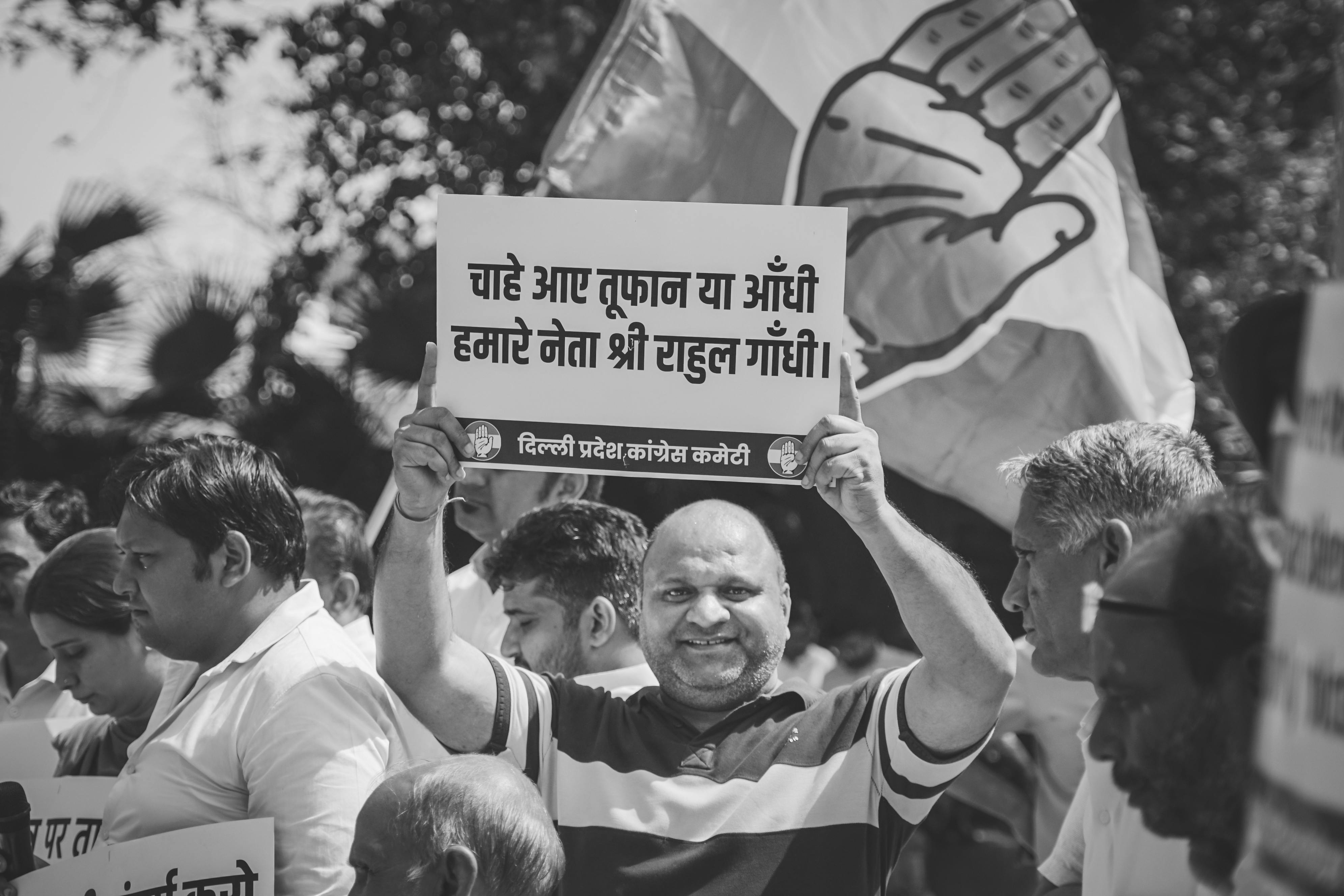
The Mechanics of Belief Before Truth
Facts rarely lose because they lack evidence. They lose because they arrive late, sound boring, or fail to flatter what you already believe.
In India, political narratives do not just compete with facts. They overwhelm them. You see it every election cycle, every breaking news event, every viral clip ripped out of context and pushed into your feed with surgical precision. By the time a correction appears, the narrative has already settled into public memory. You move on. The damage stays.
This is not a literacy problem. It is not even a media problem in isolation. It is a psychological one.
Your brain rewards speed, not accuracy
You do not process political information like a neutral analyst. You process it like a human under cognitive load.
India’s digital audience consumes politics at scale and at speed. According to data from IAMAI and Kantar, hundreds of millions of Indians now get news primarily through smartphones, social platforms, and messaging apps. This environment favours content that triggers fast emotional responses.
Your brain relies on shortcuts when overwhelmed. Psychologists call these heuristics. In political consumption, three matter most.
-
Availability bias pushes you to believe what you see repeatedly.
-
Confirmation bias pushes you to trust information that aligns with your existing views.
-
The affect heuristic pushes you to judge truth based on how content makes you feel, not what it proves.
Narratives exploit all three. Facts struggle with each.
A data-backed explainer needs time, attention, and patience. A narrative needs a villain, a hero, and a feeling. Guess which one wins when you scroll.
Repetition beats rebuttal every time
You may believe that once misinformation gets debunked, it loses power. Research says the opposite.
Repeated exposure increases perceived truthfulness. Psychologists call this the illusory truth effect. When a claim appears often enough, your brain starts treating it as familiar. Familiar starts feeling true.
Indian political messaging understands this deeply. Parties and aligned ecosystems do not rely on a single viral post. They rely on volume.
-
The same claim appears across WhatsApp forwards, regional YouTube channels, X threads, Instagram reels, and television debates.
-
The language changes. The core idea does not.
-
Fact-checks appear once. The narrative appears a hundred times.
When you encounter the correction, your brain compares it against what it has already absorbed repeatedly. Familiarity wins. Scepticism loses.
Emotion is not a side effect. It is the delivery system.
Political narratives in India succeed because they attach themselves to identity, grievance, and pride.
Anger travels faster than nuance. Fear sticks longer than context. Moral outrage invites participation. You do not just consume the content. You share it to signal who you are.
Social media platforms amplify this dynamic. Algorithms reward engagement, not accuracy. Content that provokes strong reactions travels further. Political actors design messaging with this reality in mind.
Look closely at what spreads fastest.
-
Short clips framed as revelations
-
Headlines that suggest betrayal or threat
-
Messages that divide the world into us and them
These formats bypass rational evaluation. They trigger emotional alignment first. Once alignment happens, facts turn optional.
Group identity turns belief into loyalty
In India, politics rarely operates as a detached policy discussion. It operates as a group identity.
Once a narrative aligns with your perceived group, challenging it feels personal. Accepting contradictory evidence feels like disloyalty.
Social psychology calls this identity-protective cognition. You unconsciously reject information that threatens your social belonging. This effect intensifies in polarised environments.
Online spaces magnify the pressure.
-
You see likes and shares from people you identify with.
-
You see ridicule directed at dissenters.
-
You learn quickly which opinions earn approval.
Over time, belief becomes performative. You repeat narratives not because you verified them, but because they signal alignment.
Facts do not offer belonging. Narratives do.
Speed kills verification
Traditional journalism relies on verification cycles. Political narratives exploit speed gaps.
A claim emerges. It circulates instantly. Newsrooms take time to verify. By the time a report publishes, the narrative has already shaped perception.
This lag matters more in India’s multilingual ecosystem. Claims travel across languages faster than corrections. Fact-checks in English rarely reach audiences consuming content in Hindi, Tamil, Bengali, or Telugu.
The result is asymmetry.
-
False claims move fast and wide.
-
Corrections move slowly and narrowly.
Once belief sets in, later information struggles to dislodge it.
Why you still feel informed even when misled
Here is the uncomfortable part. Consuming narratives feels like staying informed.
You receive updates constantly. You know the talking points. You can predict what your side will say next. This creates an illusion of understanding.
Psychologists call this the knowledge illusion. Familiarity with explanations makes you overestimate how well you understand an issue.
Political narratives feed this illusion. They simplify complex realities into repeatable frames. You feel confident. You stop questioning.
That confidence does not correlate with accuracy. It correlates with exposure.
What this means for you as a reader
If you believe facts should win on merit alone, you misunderstand how political belief works.
Narratives do not defeat facts by lying better. They defeat them by aligning better with human psychology.
In the next part, we will examine how Indian political actors design narratives deliberately, how platforms enable them structurally, and why fact-checking alone fails to stop their spread.
The uncomfortable question you should sit with until then is simple.
When you last shared a political post, did you verify it — or did it just feel right?
How Political Narratives in India Are Engineered to Spread
Political narratives that dominate Indian public discourse do not spread by accident. They are built, tested, refined, and deployed with precision. What looks organic often follows a predictable structure designed to move faster than verification and stick longer than facts.
If you want to understand why certain claims refuse to die, you need to look at how these narratives are constructed.
Simplicity is not ignorance. It is strategy.
Complex political realities do not go viral. Simplified versions do.
Narratives strip issues down to a single cause, a single enemy, or a single moment. This is not because audiences cannot handle complexity. It is because complexity slows sharing.
A well-designed political narrative in India usually has three features.
-
A clear moral frame that tells you who is right and who is wrong
-
A compressed storyline that fits into a headline, clip, or forward
-
A conclusion that requires no further thinking
Policy debates collapse into personality conflicts. Structural problems become conspiracies. Long-term failures get pinned to one visible actor.
Once you accept the frame, every new piece of information gets filtered through it. Facts stop standing alone. They serve the story or get rejected.
Selective truth makes narratives harder to debunk
The most effective narratives are not built on complete fabrications. They are built on fragments of truth.
A real video clipped out of context.
A genuine statistic presented without baseline or comparison.
A legitimate quote stripped of its conditions.
This selective truth strategy creates two advantages.
First, fact-checking becomes harder. When a claim contains some truth, debunking it requires explanation, not denial. Explanation does not travel well on social media.
Second, audiences feel smarter for recognizing familiar elements. The narrative feels informed rather than manipulated.
In India’s political ecosystem, this tactic appears across platforms.
-
Short videos circulate without dates or locations.
-
Data points float without sources or timeframes.
-
Headlines imply causation where only correlation exists.
By the time context appears, the emotional conclusion has already formed.
Localisation multiplies reach
One reason political narratives spread so efficiently in India is linguistic and cultural adaptation.
The same message does not travel as a single piece of content. It gets rewritten, re-voiced, and re-framed for different audiences.
-
Urban English-language audiences receive one version.
-
Regional language audiences receive another.
-
Cultural references shift to match local grievances or pride.
This decentralised adaptation gives narratives resilience. Even if one version gets challenged, others continue circulating untouched.
Fact-checks rarely keep pace because they tend to address the original claim, not its dozens of mutations.
Informal networks outperform institutions
You trust people you know more than organisations you do not.
Political narratives in India exploit this trust gap. Messaging platforms and closed groups function as accelerators.
When a claim arrives from a family WhatsApp group, it bypasses skepticism. When it comes from a community leader or local influencer, it carries social weight.
Institutional credibility struggles here.
-
Media organisations feel distant or biased.
-
Official statements feel defensive or delayed.
-
Corrections feel like damage control rather than truth-seeking.
Informal networks deliver information with implied trust. That trust transfers to the narrative.
Visual formats bypass critical thinking
Text invites scrutiny. Visuals demand reaction.
Indian political narratives increasingly rely on images, videos, and graphics because visuals reduce cognitive resistance.
A short clip creates the illusion of witnessing reality. Screenshots simulate evidence. Charts intimidate without explaining.
Once visuals trigger an emotional response, your brain prioritises interpretation over verification.
You are not asking whether the clip is representative. You are asking what it proves.
That shift matters.
Outrage creates participation
Narratives succeed when they turn audiences into distributors.
Outrage invites action. Sharing becomes a moral act rather than a communicative one. You pass content forward not to inform, but to warn, defend, or expose.
Indian political messaging often frames sharing as responsibility.
-
If you care about the country, you must share this.
-
If you stay silent, you are complicit.
-
If you question it, you are suspicious.
This framing discourages pause. It replaces verification with urgency.
Why facts enter the arena already weakened
By the time verified information enters public discussion, it faces structural disadvantages.
-
It arrives after emotional alignment has occurred.
-
It challenges identity rather than just claims.
-
It demands attention in an environment optimised for speed.
Fact-checking responds. Narratives preempt.
That asymmetry explains why corrections rarely reverse belief at scale.
In the next section, we will examine the role platforms play in amplifying these dynamics, why algorithmic incentives reward narrative spread, and how political communication adapts to those incentives faster than journalism does.
Before moving on, ask yourself something uncomfortable.
If a political claim reached you through someone you trust, would you still question it — or would questioning feel unnecessary?
About The Author


