
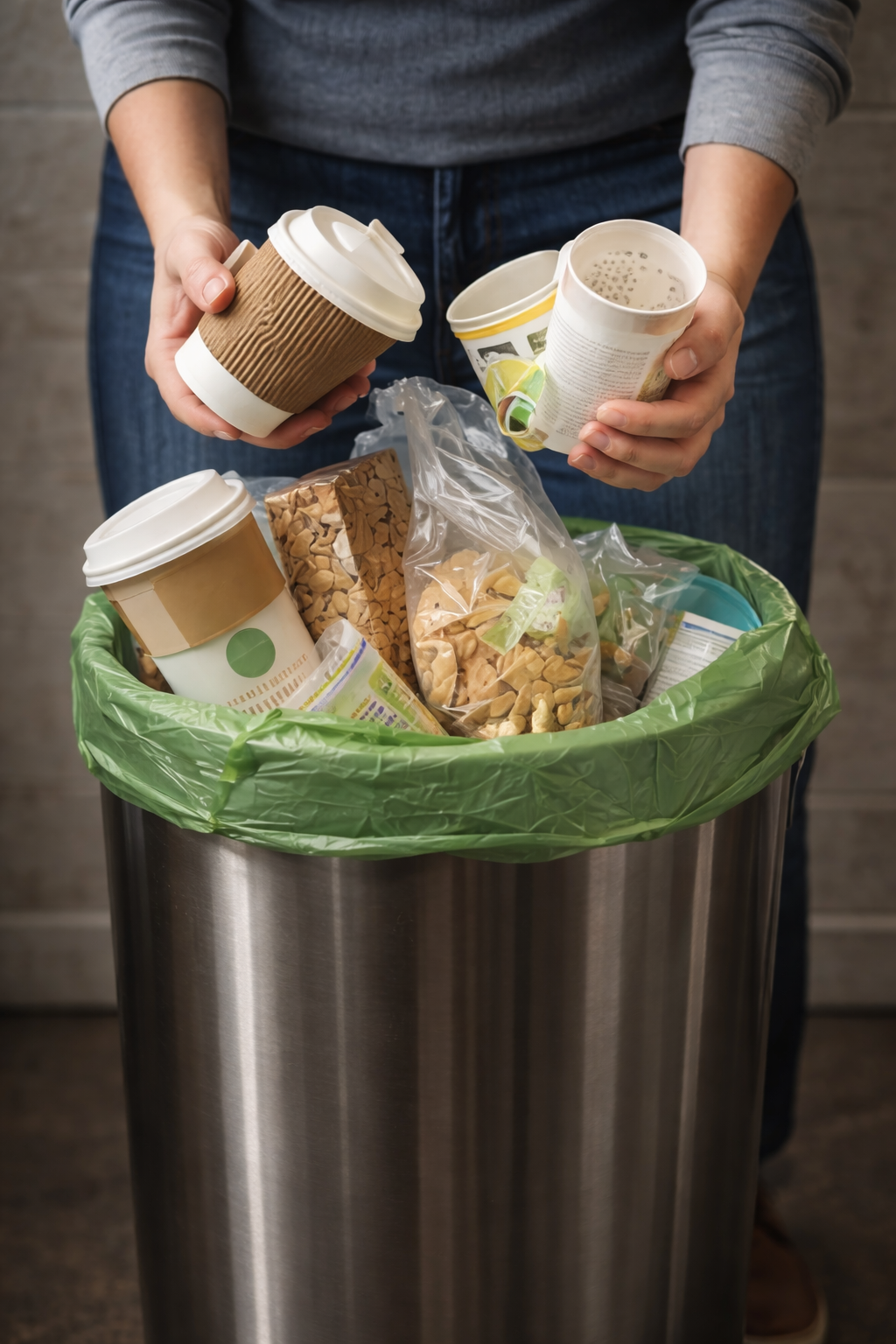
Most people measure their environmental contribution by the blue bin in their kitchen. In reality, the global recycling system is a documented failure where less than 9% of all plastic ever produced seeing a second life. You are likely participating in a ritual of “wish-cycling” that eases your conscience while doing nothing to slow the extraction of fossil fuels. Sustainable living is not a shopping category. It is a fundamental renegotiation of your relationship with materials, energy, and time.
The standard industrial economy currently demands that you generate 4.5 pounds of municipal solid waste every day. Most beginners believe they can solve this by buying “greener” products. This is a fallacy. You cannot consume your way out of a consumption crisis. True sustainability starts with a metabolic audit of your household. You must analyze the invisible flows of electricity, the chemistry of your water supply, and the lifecycle of every object you bring across your threshold. This article provides the authoritative framework for that transition, supported by industrial data and economic reality.
The Psychological Barrier of Convenience
The modern economy treats convenience as a virtue. In reality, convenience is a tax on the future. Every single-use item in your home represents a massive investment of “gray energy”—the energy used to extract raw materials, manufacture a product, and ship it across the globe. When you throw away a plastic bottle after fifteen minutes of use, you are discarding an object that required millions of years of geological pressure to create and hundreds of years of human engineering to distribute.
You must reintroduce friction into your life. Friction is the act of slowing down to care for an object rather than replacing it. It involves the effort of washing a cloth bag or the time required to research the repairability of a toaster. Does your current lifestyle value your time more than the stability of the biosphere? This is the central question of sustainability. When you switch to a low-waste lifestyle, you are not just saving resources. You are reclaiming your agency from a system designed to keep you on a treadmill of endless purchase and disposal.
The Energy-Water Nexus in Your Home
You likely view electricity and water as two separate utility bills. In environmental science, they are inextricably linked. It takes massive amounts of water to cool power plants and massive amounts of energy to treat and pump water to your tap. In the United States, the energy used to treat and transport water accounts for roughly 4% of total electricity consumption.
You should start your journey with a “thermal audit.” Roughly 90% of the energy used by your washing machine goes toward heating the water. By switching to cold water, you immediately reduce the carbon footprint of your laundry by nearly 85%. This single change is more effective than any “eco-friendly” detergent purchase you could make. Moreover, heat weakens synthetic fibers like polyester and nylon, causing them to shed microplastics. Cold water preserves your clothes and the water table simultaneously.
Why are you still using hot water for tasks that modern chemistry has solved? Modern detergents use enzymes that perform optimally in cold environments. Beyond the laundry room, you must address “vampire power.” Your microwave clock, your television on standby, and your phone charger left in the wall draw a continuous current. In the average home, standby power accounts for up to 10% of residential electricity use. Use power strips with physical switches. If a device is not in active use, it should not be connected to the grid.
The Metabolism of the Fridge
Food waste is the largest component of municipal landfills. When organic matter is trapped in a landfill without oxygen, it undergoes anaerobic decomposition and releases methane. This gas is 25 to 80 times more potent than carbon dioxide as a heat-trapping agent. You are currently throwing away the raw materials of the soil to poison the air.
You must adopt a “circular” kitchen. This starts with a total audit of your buying habits. Most beginners buy too much fresh produce without a plan for its use. You should shop for “metabolic meals” rather than “aesthetic shelves.” Buy only what you can eat in the next 72 hours. If you cannot finish something, you must compost it.
Composting is not a messy backyard chore. It is a biological requirement. Whether you use a Bokashi bin in an apartment or a worm farm in a yard, you must ensure that your organic waste returns to the soil. This closes the nutrient loop. When you compost, you turn a methane-producing liability into a carbon-sequestering asset. Have you considered that your food scraps are the most valuable resource in your house?
The Crisis of Fast Homeware and Textiles
The critique of “fast fashion” is well established, but “fast homeware” is an emerging ecological disaster. The rise of ultra-cheap, particle-board furniture and synthetic textiles has led to a 450% increase in furniture waste since the 1960s. These items are often held together by glues containing formaldehyde and finished with volatile organic compounds (VOCs) that degrade your indoor air quality.
You should prioritize materiality. Choose natural fibers like hemp, linen, and organic cotton for your bedding and towels. These materials are biodegradable and often require fewer pesticides to grow. For furniture, you should prioritize secondhand solid wood. A solid wood table can last for three generations. A particle-board desk will likely end up in a dumpster within five years.
The true cost of a 20 dollar shirt or a 50 dollar bookshelf is hidden in the labor exploitation and environmental degradation of the global south. You are not “saving money” when you buy cheap goods. You are merely shifting the cost onto someone else. Invest in durables. If you cannot afford a high-quality item new, buy it used. The most sustainable object is the one that has already been manufactured.
The Digital Footprint and Data Sovereignty
As you transition to a low-waste physical life, you must not ignore your digital waste. Data centers are the factories of the 21st century. They consume massive amounts of water for cooling and enormous amounts of electricity. Every unread newsletter in your inbox, every blurry photo in your cloud storage, and every high-definition video you stream has a physical footprint.
Digital hoarding is a form of waste. When you store 10,000 emails, you are demanding that a server stays powered and cooled to protect that data. Practicing “digital sobriety” is a core component of a modern sustainable life. Delete old cloud backups. Unsubscribe from retail emails that tempt you to consume. Stream in standard definition on small screens where the human eye cannot perceive the difference in pixel density.
Are you treating the “cloud” as an infinite resource? It is not. It is a physical infrastructure that rivals the aviation industry in carbon emissions. By reducing your digital load, you reduce the demand for new server farms and the extraction of rare earth minerals required to build them.
The Financial Resilience of Sustainability
One of the most pervasive myths is that sustainable living is more expensive. This is a mistake of short-term accounting. While a stainless steel safety razor or a high-quality water filter has a higher upfront cost, the long-term savings are staggering. You must stop looking at the “purchase price” and start looking at the “cost per use.”
A single safety razor blade costs ten cents and provides a superior shave to a 5 dollar plastic cartridge. A high-quality water filter eliminates the need for bottled water, saving the average household hundreds of dollars a year. The sustainable lifestyle is, by definition, an anti-inflationary lifestyle. You are withdrawing your participation from a system designed to make you pay for the same thing over and over again.
Consider your “subscription to trash.” How much do you spend on paper towels, plastic wrap, disposable wipes, and cheap cleaning sprays? By replacing these with rags, silicone lids, and vinegar, you give yourself an immediate annual raise. Sustainability is the ultimate financial hedge against a volatile global economy.
The Myth of Personal Responsibility vs. Systemic Change
Corporate marketing often pushes the “carbon footprint” narrative to shift the blame from industrial giants to individual consumers. British Petroleum popularized the personal carbon calculator in the early 2000s for this exact reason. They wanted you to worry about your lightbulbs so you wouldn’t worry about their drilling.
You must reject this false choice. Your personal actions are the prerequisite for systemic change. When you stop buying single-use plastics, you are not just reducing waste. You are signaling to the market that the current model is obsolete. Your spending is a vote for a specific type of supply chain.
However, your individual efforts must be matched by civic engagement. Use the time you save by consuming less to advocate for better policy. Support laws that mandate “Extended Producer Responsibility,” where companies are legally responsible for the end-of-life disposal of their packaging. Demand that your city implements community composting and better public transit. Individual action without policy is a drop in the ocean. Policy without individual action is a law without a culture. You must be both a conscious consumer and an active citizen.
The Chemistry of the Bathroom and Personal Care
Your bathroom is likely the most chemically saturated room in your house. From shampoo in plastic bottles to synthetic fragrances in soap, you are being sold a version of “clean” that is actually a toxic load for your body and the water supply.
You should transition to solid bars for your personal care needs. Modern shampoo and conditioner bars offer the same professional results as bottled versions without the plastic housing or the need for synthetic preservatives. By removing the water from the formula, manufacturers can ship the product in simple compostable paper. This eliminates millions of plastic bottles from the waste stream.
Look for the “fragrance” loophole on your labels. This term allows companies to hide hundreds of synthetic chemicals, including phthalates, under a single word. These chemicals act as endocrine disruptors. They mimic hormones in your body and have been linked to reproductive issues and metabolic disorders. Cleanliness should not have a smell. If your soap smells like “ocean breeze,” it is a chemical cocktail, not a cleaning agent. Switch to unscented or essential oil-based products. Your health and the fish in the local river will both benefit.
Designing the Circular Household
To move from a beginner to a practitioner, you must redesign the “flow” of your home. Most houses are designed as “pass-through” entities. Materials enter through the front door and exit through the trash can. You must disrupt this flow.
- The Refill Audit: Identify the five products you buy most frequently. Can you find a refill station for them? If not, can you buy them in bulk to reduce the surface-area-to-volume ratio of the packaging?
- The Repair Kit: Do you own a basic tool kit and a sewing needle? If something breaks, your first instinct should be to fix it, not to browse for a replacement.
- The Energy Scan: Are your windows drafty? A 5 dollar roll of weatherstripping can save you more energy in a single winter than a dozen smart home gadgets.
Sustainability is an engineering challenge. You are the chief engineer of your domestic life. When you design for circularity, you remove the “waste” from the system entirely. Waste is merely a resource in the wrong place. By keeping resources in your home and in the economy for longer, you reduce the pressure on the planet.
The Logistics of the Supply Chain
Most people have no idea where their goods come from. This “disconnection” is what allows environmental destruction to persist. You should prioritize “short supply chains.” Buying a tomato from a local farmers’ market involves a chain of maybe 50 miles. Buying that same tomato from a supermarket might involve 2,500 miles of refrigerated trucking.
The carbon cost of transportation is only one factor. Local supply chains are also more transparent. You can talk to the farmer about their pesticide use or their soil health. You can see the labor conditions. When the supply chain is thousands of miles long, it becomes opaque. This opacity is where human rights abuses and ecological crimes are hidden.
Are you willing to pay slightly more for a product that you know was produced ethically and locally? This is the “transparency premium.” It is an investment in the resilience of your own community. When you support local makers and growers, you are building a buffer against the fragility of the global logistics network.
The Ethics of Materiality
We have become alienated from the physical world. We treat matter as if it were a digital file that can be deleted. Sustainable living is a return to materiality. It is an acknowledgment that every object has a history and a future.
This is a moral shift. It moves you from being an “extractant” to being a “steward.” When you steward your belongings, you honor the labor of the person who made them and the integrity of the Earth that provided the raw materials. This shift in perspective reduces the anxiety of modern life. You no longer feel the need for “more” because you have a deep, meaningful relationship with what you already have.
Ask yourself: do you own your things, or do they own you? Most people are burdened by the weight of their possessions. By choosing quality over quantity, you free your mind and your space. This is the “minimalism” of sustainability. It is not about deprivation. It is about the luxury of space and the peace of mind that comes from knowing your life is not a burden to the biosphere.
The Geography of Deception: Greenwashing
As you begin your journey, you will be targeted by “greenwashing.” This is the corporate practice of using deceptive marketing to make a product appear more sustainable than it is. A plastic bottle with a green leaf on it is still a plastic bottle. A shirt labeled “natural” can still be produced using toxic dyes and forced labor.
You must become a clinical reader of labels. Look for third-party certifications like “B Corp,” “Global Organic Textile Standard,” or “Cradle to Cradle.” If a brand uses vague terms like “eco-friendly” or “earth-loving” without providing specific data, they are likely lying. Transparency is the only metric of sustainability. If a company hides its ingredient list or its factory locations, it is not sustainable.
Do you know who owns the brands you buy? Many “boutique” sustainable brands are actually owned by massive conglomerates with terrible environmental records. Your purchase might be sustainable, but your money is still funding the parent company’s destructive practices. Research the corporate hierarchy. Spend your money with independent companies that are mission-driven rather than profit-only.
The Timeline of the Transition
You do not need to be perfect by next week. Sustainability is a process of “iterative improvement.” If you try to change everything at once, you will experience “eco-burnout” and return to your old habits.
Start with your “trash audit.” What is the most common item in your bin? Focus on that one thing for a month. If it is plastic water bottles, buy a filter and a steel bottle. Once that habit is locked in, move to the next item. Over the course of a year, these small shifts will result in a 70% to 80% reduction in your household waste.
We are living through a period of planetary instability. The choices we make in the next decade will determine the viability of human civilization for the next thousand years. This is not hyperbole. It is the consensus of the global scientific community. You are not just “recycling a can.” You are participating in the most important transition in human history.
The Social Mechanics of Change
Sustainability is socially contagious. When you bring your own container to a deli or refuse a plastic bag at the store, you are performing a silent act of education. You are showing everyone around you that a different way of living is possible.
You will face social friction. Friends might mock your safety razor or your compost bin. This friction is a sign that you are challenging a deeply ingrained cultural norm. Stay firm. Your health, your finances, and the planet are more important than the temporary discomfort of being “the weird one.”
As you become more confident, share your journey. Not through “preaching,” but through “showing.” When people see how much money you are saving and how much better you feel, they will naturally become curious. This is how movements are built. It starts in your kitchen and spreads through your community.
The Future of Consumption
The era of “infinite disposability” is coming to an end because the physical limits of the Earth are non-negotiable. We are moving toward a “circular economy” where waste is designed out of the system. By starting your sustainable journey now, you are merely getting ahead of the curve. You are developing the skills and the infrastructure you will need in the 2030s and 2040s.
What happens when you switch to sustainable living? You stop being a parasite and start being a participant. You regain your health by removing synthetic chemicals from your home. You secure your finances by investing in durables. You reclaim your time by moving away from the treadmill of convenience.
This is the authoritative guide to your new life. It is hard, friction-heavy, and intellectually demanding. It is also the only rational response to the data. You have the facts. You see the timeline. The only thing left is for you to decide: will you continue to fund the waste economy, or will you start building a resilient future today?
Actionable Roadmap for Beginners
To implement this framework immediately, perform these five tasks this week:
- The Thermal Audit: Set your washing machine to “Cold” for all standard loads. This is the single highest-impact energy move you can make.
- The Trash Audit: Look into your bin. Identify the top three items and research one durable alternative for each.
- The Standby Scan: Walk through your home. Unplug any device that has a clock or a remote control that you do not use daily.
- The Bulk Transition: Find the nearest store that offers bulk grains, nuts, or detergents. Refill one container instead of buying a new one.
- The Digital Purge: Unsubscribe from ten retail newsletters and delete 50 old cloud photos.
Sustainable living is the act of aligning your daily life with the physical limits of the planet. It is a journey from unconscious consumption to conscious stewardship. The secret is that this transition doesn’t just save the planet. It saves you.
References
United States Environmental Protection Agency: National Overview of Municipal Solid Waste
Science Advances: Production, Use, and Fate of All Plastics Ever Made
http://www.science.org/doi/10.1126/sciadv.1700782
International Energy Agency: Energy Consumption of Data Centers and Data Transmission Networks
http://www.iea.org/reports/data-centres-and-data-transmission-networks
The American Cleaning Institute: Cold Water Wash Benefits and Energy Savings
http://www.cleaninginstitute.org/cleaning-tips/clothes/energy-savings-cold-water-wash
Carbon Majors Report 2017: The 100 Companies Responsible for 71% of Global Emissions
Silent Spring Institute: Impact of Synthetic Fragrances on Indoor Air Quality and Health
http://www.silentspring.org/project/indoor-air-quality-and-chemical-exposure
Project Drawdown: Solutions to Reverse Global Warming – Composting and Food Waste
http://www.drawdown.org/solutions/composting
Ellen MacArthur Foundation: The Circular Economy Explained
http://www.ellenmacarthurfoundation.org/topics/circular-economy-introduction/overview
Natural Resources Defense Council: The Vampire Power Problem and Energy Efficiency
http://www.nrdc.org/stories/vampire-power-electronics-are-sucking-you-dry
World Resources Institute: The Environmental Footprint of Food and Agriculture
http://www.wri.org/insights/sustainable-food-future-explained
Author bio
Julian is a graduate of both mechanical engineering and the humanities. Passionate about frugality and minimalism, he believes that the written word empowers people to tackle major challenges by facilitating systematic progress in science, art, and technology. In his free time, he enjoys ornamental fish keeping, reading, writing, sports, and music. Connect with him here https://www.linkedin.com/in/juliannevillecorrea/
About The Author


