
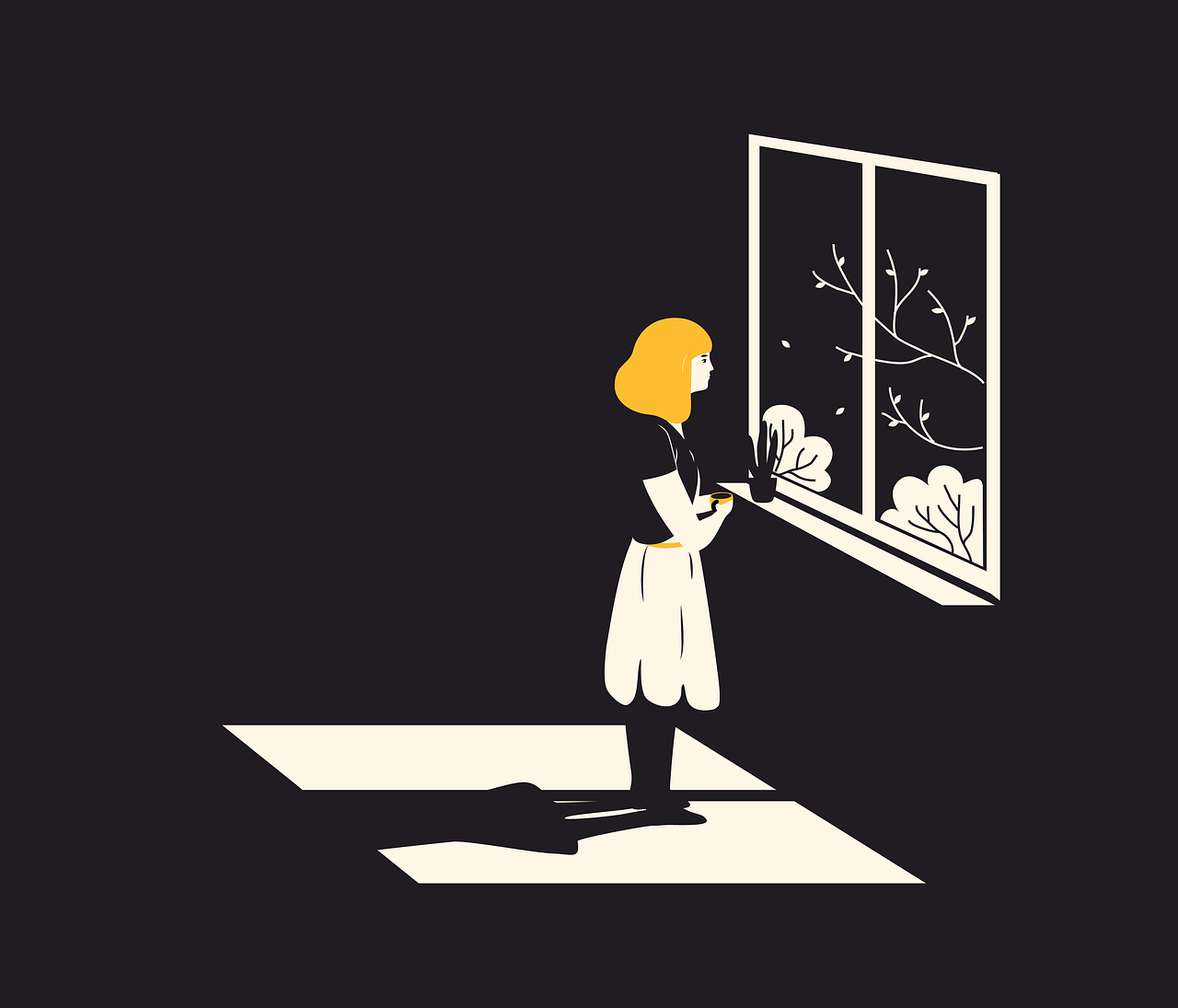
Mental strength does not emerge where popular culture insists it does. It rarely appears in moments of confidence, victory, or public validation. It forms earlier, quieter, and under pressure. Films that endure understand this distinction. They do not package resilience as inspiration. They expose it as a process shaped by confusion, resistance, silence, and conflict.
In 2023, the World Health Organization reported that one in seven adolescents globally lived with a diagnosable mental health condition. Rates of emotional distress among young people began climbing well before the pandemic, driven by academic pressure, social comparison, and shrinking emotional support systems. Public conversations responded by reframing mental strength as composure and productivity. Cinema offered a more accurate counterpoint long before the data caught up.
Three films continue to generate debate because they refuse simplification. The Edge of Seventeen, Dead Poets Society, and The Perks of Being a Wallflower examine how mental strength actually develops. They focus on psychological survival before psychological growth. They challenge the assumption that strength looks calm, articulate, or socially acceptable.
If your understanding of mental strength still centers on control, these films dismantle it.
Mental Strength Starts Before Emotional Clarity
Mental strength does not begin with insight. It begins with endurance.
Adolescents experience intense emotional states before they develop the language or neurological capacity to regulate them. Neuroscience explains why. The limbic system, which governs emotional response, matures earlier than the prefrontal cortex, which manages impulse control and long-term reasoning. This gap persists into the mid-twenties.
In The Edge of Seventeen, Nadine Franklin operates entirely inside this imbalance.
She reacts quickly.
She escalates conflict.
She pushes people away while craving closeness.
Viewers often label her as immature or self-absorbed. That reaction mirrors how society responds to emotional dysregulation. Emotional volatility gets framed as a character flaw rather than a developmental reality.
Mental strength for Nadine does not involve calming down. It involves staying engaged with life long enough to develop better tools. Her growth begins when she admits confusion instead of defending her reactions.
Mental strength often appears before emotional competence. The two do not arrive together.
Ask yourself:
- Do you value emotional honesty or emotional neatness?
- Do you reward regulation or awareness?
Silence Can Imitate Strength While Eroding Identity
The Perks of Being a Wallflower presents a quieter version of psychological survival.
Charlie does not explode.
He listens.
He observes.
He absorbs.
Teachers praise him. Friends describe him as gentle. Inside, his emotional system fragments.
Clinical research on trauma shows that dissociation and emotional numbing function as adaptive responses. They protect the mind from overwhelming experiences. Over time, they also prevent integration.
Charlie’s stability does not represent recovery. It represents containment.
Key observations from trauma psychology align with the film:
- Symptoms often intensify when safety increases
- Emotional collapse can follow periods of connection
- Suppressed memory resurfaces when the nervous system permits it
Charlie’s breakdown does not signal weakness. It signals readiness.
Mental strength does not mean holding yourself together indefinitely. It means tolerating disintegration long enough to rebuild honestly. The film makes a deliberate point by placing Charlie’s breakthrough in a clinical setting, not a friendship montage.
Endurance without truth carries a cost.
Systems Shape Mental Strength More Than Individuals Admit
Dead Poets Society remains unsettling because it exposes a structural reality. Individual resilience cannot compensate for emotionally restrictive systems.
Set in 1959, the film reflects an educational model built on obedience, hierarchy, and achievement. Emotional literacy does not appear on the curriculum.
Neil Perry’s collapse does not originate from fragility. It originates from constrained autonomy.
Psychological autopsy studies of adolescent suicide cases identify recurring risk factors:
- Perceived parental pressure
- Lack of personal agency
- Emotional invalidation
Neil experiences all three simultaneously.
The film avoids easy villains.
- Mr. Keating promotes independent thought without accounting for institutional rigidity
- Neil’s father equates control with care
- The school values reputation over emotional negotiation
Mental strength cannot develop where emotional expression invites punishment. Systems that reward silence produce psychological fractures.
This raises a necessary question:
- Do the structures you operate within allow emotional disagreement without retaliation?
Emotional Conflict Fuels Development, Not Damage
Modern wellness culture frames calm as the benchmark of mental health. These films reject that standard.
Each character responds to stress through imperfect strategies:
- Nadine uses anger and sarcasm
- Charlie withdraws and dissociates
- Neil compartmentalizes and hides
None of these responses qualify as pathology in isolation. They represent adaptive attempts under constraint.
Longitudinal research on emotional development supports this interpretation. Exposure to manageable emotional conflict builds coping capacity. Overprotection delays regulation. Overcontrol produces brittleness.
Growth begins when conflict gets acknowledged rather than suppressed.
- Nadine develops insight by confronting her role in her isolation
- Charlie heals by naming trauma rather than minimizing it
- The students in Dead Poets Society form moral identity through challenge
Mental strength does not eliminate discomfort. It extracts information from it.
Loneliness Functions as Feedback, Not Failure
Loneliness appears across all three narratives. Its impact depends on interpretation.
Charlie’s loneliness deepens empathy.
Nadine’s loneliness intensifies resentment.
Neil’s loneliness dissolves self-concept.
Research from Harvard links chronic adolescent loneliness to increased depression risk, sleep disruption, and cognitive fatigue. The determining factor lies in meaning.
When loneliness becomes identity, mental strength erodes.
When loneliness signals unmet needs, growth follows.
These films ask you to reconsider how you interpret isolation.
- Do you treat loneliness as proof of inadequacy?
- Or as information about connection gaps?
Mental strength grows when discomfort becomes data.
Creativity Acts as Emotional Regulation
Each film uses creative expression as a stabilizing mechanism rather than escapism.
- Nadine’s sarcasm creates emotional distance
- Charlie’s letters externalize internal experience
- Poetry in Dead Poets Society provides shared emotional language
Psychological research supports this portrayal. Studies by James Pennebaker show that expressive writing improves emotional clarity and immune function. Creative output regulates emotion by converting internal chaos into structure.
Art does not resolve psychological distress. It prevents stagnation.
Mental strength includes knowing when to externalize internal experience.
Growth Requires Witnesses, Not Self-Reliance
None of the characters grow in isolation.
- Nadine encounters a teacher who challenges without indulging
- Charlie benefits from adults who notice withdrawal
- The boys in Dead Poets Society form a validating peer group
Attachment theory emphasizes attuned relationships as foundational to emotional regulation. Mental strength does not equal independence. It requires selective reliance.
Achievement culture celebrates self-sufficiency. These films expose its limits.
Consider this:
- Who notices when you retreat?
- Who challenges you without dismissing your experience?
Moral Alignment Protects Psychological Stability
Mental strength extends beyond emotional regulation. It includes ethical coherence.
Dead Poets Society centers moral courage rather than rebellion. Standing on desks signals alignment with internal values. The consequences prove severe. The psychological cost of misalignment runs deeper.
Research on moral injury shows that violating personal values produces long-term distress even among high-functioning individuals. Upholding values preserves internal stability under pressure.
Parallel moments appear across the films:
- Nadine abandons cruelty as defense
- Charlie names abuse rather than protecting normalcy
- Students choose integrity over compliance
Mental strength demands congruence between belief and behavior.
These Films Reject Performative Positivity
None of these narratives promise happiness. They promise awareness.
Recovery appears partial.
Progress unfolds unevenly.
Ambivalence remains.
Clinical outcomes improve when individuals maintain realistic expectations. Unrealistic optimism increases distress when progress stalls. These films normalize psychological ambiguity.
Mental strength tolerates unresolved questions.
What These Films Demand From You
These films do not invite admiration. They demand examination.
They challenge you to reconsider:
- Emotional control as a proxy for health
- Silence as resilience
- Authority without accountability
- Independence without support
- Success without agency
Mental strength rarely looks impressive while forming. It appears reactive, withdrawn, uncertain, and slow. Cinema captures that truth when it resists tidy endings.
If your definition of strength prioritizes performance over presence, these films quietly dismantle it. They insist that resilience begins with psychological honesty under pressure.
That message unsettles. That discomfort explains why these films endure.
References:
World Health Organization. Adolescent Mental Health
https://www.who.int/news-room/fact-sheets/detail/adolescent-mental-health
American Psychological Association. Developing Adolescents: A Reference for Professionals
https://www.apa.org/pi/families/resources/develop.pdf
National Institute of Mental Health. Teen Depression and Suicide
https://www.nimh.nih.gov/health/topics/child-and-adolescent-mental-health
Pennebaker, J. W., Chung, C. K. Expressive Writing and Health
https://www.apa.org/monitor/jun06/writing
Harvard Graduate School of Education. Loneliness and Social Isolation in Adolescence
https://www.gse.harvard.edu/news/uk/20/05/loneliness-adolescents
Substance Abuse and Mental Health Services Administration. Trauma-Informed Care
https://www.samhsa.gov/trauma-violence
Author Bio:
Elham is a psychology graduate pursuing an MBA, with a strong interest in mental health, human behavior, and how culture shapes emotional resilience. Their writing explores the intersection of psychology, media, and real-world experience, translating complex ideas into clear, practical insights for modern readers. Connect with her here: https://www.linkedin.com/in/elham-reemal-273681250/
About The Author


