
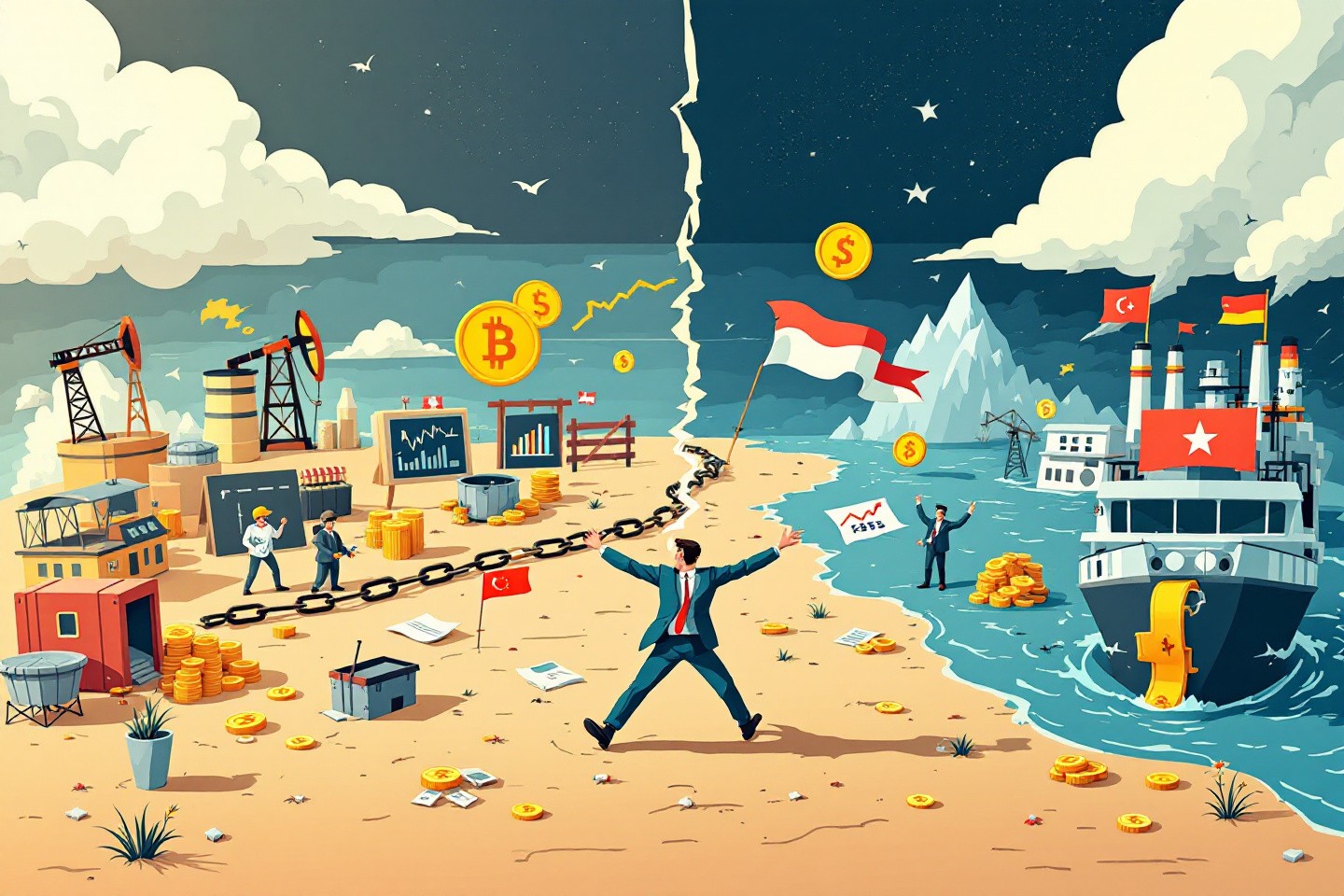
You are entering 2026 with more data, more forecasts, and more warnings than at any point in modern history. Yet the world feels less prepared, not more. Governments publish risk reports. Corporations run scenario models. Intelligence agencies issue briefings. Still, the same pattern repeats. Leaders react late. Institutions move slow. Citizens assume threats will stay abstract until they don’t.
The most dangerous risks in 2026 will not arrive as surprises. They will arrive as escalations of trends you already see but may underestimate. The mistake many make is ranking threats by drama rather than probability, or by visibility rather than impact. You should care less about what dominates headlines and more about what quietly reshapes power, stability, food, money, and trust.
Below are the ten biggest global threats experts, policymakers, and security analysts increasingly converge on for 2026. This list does not rely on fear. It relies on evidence, momentum, and incentives. Ask yourself as you read. If this accelerates, are you prepared.
1. Geopolitical Fragmentation and the End of Cooperative Global Order
You live in a world built on post-World War II assumptions that no longer hold. Multilateral institutions weaken. Trade blocs fracture. Strategic trust erodes.
By 2026, geopolitical fragmentation will not look like a single war. It will look like permanent instability across regions. Competing power centers will pursue parallel rules for trade, technology, currency settlement, and security. Cooperation will exist only when interests align briefly.
Key pressure points include Eastern Europe, the Middle East, the South China Sea, and the Taiwan Strait. None operate in isolation. Each escalation raises insurance costs, disrupts supply chains, and forces countries to pick sides even when neutrality once worked.
You should watch for:
-
Regional alliances replacing global ones
-
Trade restrictions justified by national security
-
Diplomatic paralysis at international forums
-
Rising military budgets even in non-conflict states
Fragmentation increases miscalculation risk. When communication channels thin, small incidents escalate faster. The threat here lies less in intentional conflict and more in systemic failure to de-escalate.
2. AI-Driven Misinformation and the Collapse of Shared Reality
The information environment will cross a critical threshold in 2026. Artificial intelligence already generates convincing text, images, audio, and video. By next year, real-time deepfakes will become cheap, fast, and scalable.
This does not threaten truth in an abstract sense. It threatens decision-making. Elections, financial markets, social cohesion, and crisis response depend on shared facts. When you cannot trust what you see or hear, response time slows and manipulation thrives.
Governments struggle to regulate AI-generated content without infringing speech. Platforms lack incentives to slow virality. Malicious actors face near-zero entry barriers.
Expect:
-
Election interference using AI-generated personas
-
Market manipulation through fabricated executive statements
-
Fake military announcements triggering panic
-
Erosion of trust in legitimate journalism
The danger does not come from believing falsehoods alone. It comes from believing nothing at all. A society that doubts every signal becomes easy to destabilize.
3. Cyber Warfare Targeting Critical Infrastructure
Cyber conflict has shifted from espionage to disruption. By 2026, attacks will target infrastructure you rely on daily. Power grids. Water systems. Hospitals. Logistics networks.
States and non-state actors already probe these systems. The cost to attack stays low. The cost to defend keeps rising. Attribution remains slow and politically constrained.
A single coordinated cyber incident can shut down cities without firing a shot. Recovery takes weeks. Public trust collapses in hours.
Warning signs include:
-
Increased ransomware attacks on public utilities
-
Government acknowledgment of cyber incidents without details
-
Rising cyber insurance premiums
-
Emergency legislation expanding digital surveillance powers
Cyber warfare rewards ambiguity. Attackers exploit delays in response and hesitation to escalate diplomatically. You may never know who attacked, only that systems failed when you needed them most.
4. Climate-Driven Food and Water Insecurity
Climate change will stop being a future problem in 2026. It will become a supply problem. Extreme heat, droughts, floods, and shifting rainfall patterns already reduce agricultural output.
Food insecurity does not need global famine to destabilize societies. Price spikes suffice. Water stress does not require complete scarcity. Unequal access triggers unrest.
Countries dependent on food imports face the highest risk. Urban populations suffer fastest. Governments respond with export bans that worsen global shortages.
Watch for:
-
Rising food inflation even in stable economies
-
Water disputes between neighboring states
-
Migration driven by agricultural collapse
-
Increased military involvement in disaster response
Climate stress amplifies every other threat on this list. It weakens states, fuels conflict, and erodes trust in leadership.
5. Economic Shock from Unsustainable Debt Levels
Global debt now exceeds levels seen before major financial crises. Governments, corporations, and households carry obligations that rely on low interest rates and continued growth.
By 2026, debt sustainability will face its hardest test. Central banks cannot stimulate endlessly without fueling inflation. Fiscal space shrinks. Defaults become politically unavoidable.
The risk lies not in one collapse but in cascading failures. A sovereign default triggers banking stress. Banking stress hits employment. Unemployment fuels political extremism.
Indicators to track:
-
Rising bond yields in emerging markets
-
Emergency IMF negotiations
-
Cuts to social programs
-
Capital controls reappearing
Debt crises undermine legitimacy. Citizens accept austerity only briefly. When trust breaks, political systems fracture.
6. Pandemic Resurgence and Biosecurity Failures
You learned from COVID that pandemics do not require high mortality to cause chaos. Disruption suffices.
By 2026, biosecurity risks will grow due to urban density, global travel, weakened surveillance, and geopolitical secrecy. Natural outbreaks and laboratory accidents both remain plausible.
Public tolerance for restrictions stays low. Governments hesitate to act early. Delays cost lives and economies.
You should expect:
-
Faster spread due to resumed travel
-
Slower compliance with health measures
-
Politicization of scientific guidance
-
Supply chain disruptions in pharmaceuticals
The greatest risk comes from underreaction. Systems built after COVID face budget cuts and fatigue. The next outbreak may not wait.
7. Energy Insecurity During the Transition Period
The global energy transition remains uneven. Renewables grow fast but not fast enough. Fossil fuel investment declines faster than demand.
This mismatch creates volatility. Energy shortages trigger inflation, political unrest, and industrial slowdowns. Countries dependent on imports face leverage pressure.
In 2026, energy will act as both weapon and vulnerability. Infrastructure sabotage, export restrictions, and price manipulation will remain common tools.
Signals include:
-
Rolling blackouts
-
Emergency subsidies for fuel
-
Delayed climate targets
-
Strategic reserve releases
Energy insecurity punishes the poor first and destabilizes governments next.
8. Democratic Backsliding and Authoritarian Consolidation
You may notice fewer coups but more legal erosion of democracy. Leaders consolidate power through courts, media control, and emergency laws.
By 2026, democratic backsliding will accelerate in fragile states and mature democracies alike. Elections continue, but competition weakens.
This matters because accountability declines. Corruption rises. Policy mistakes persist longer. Public trust erodes.
Watch for:
-
Extended states of emergency
-
Restrictions on civil society
-
Disinformation framed as national security
-
Criminalization of dissent
Authoritarian systems appear stable until they fail suddenly. The risk lies in delayed correction.
9. Mass Migration and Border Instability
Migration pressures will rise due to conflict, climate stress, and economic collapse. Receiving countries struggle to integrate newcomers while managing domestic backlash.
Borders harden. Humanitarian norms erode. Political polarization intensifies.
Migration itself does not destabilize societies. Poorly managed migration does.
Expect:
-
Stricter asylum policies
-
Militarized borders
-
Rise of anti-immigration parties
-
Strain on urban services
Migration flows expose governance capacity. States that fail to manage them lose legitimacy fast.
10. Technological Concentration and Loss of Economic Agency
A small number of corporations and states control critical technologies including AI, semiconductors, cloud infrastructure, and data.
By 2026, technological dependence will translate into political leverage. Countries without domestic capacity face strategic vulnerability. Workers face displacement without safety nets.
You will see:
-
Export controls on advanced technologies
-
Nationalization debates
-
Workforce disruption without retraining
-
Increased surveillance capabilities
Technology shapes power. When access concentrates, inequality deepens.
What This Means for You
The biggest threat in 2026 does not sit on this list. It sits between them. Interconnected risks amplify one another. Climate stress worsens migration. Migration fuels political extremism. Extremism weakens institutions. Weak institutions mishandle pandemics, debt, and cyber threats.
Preparedness no longer means stockpiling supplies. It means understanding systems, incentives, and fragility. It means asking hard questions about resilience, governance, and trust.
You should demand leaders who think beyond election cycles. You should invest time in media literacy. You should understand where your food, energy, and information come from.
The future does not arrive all at once. It accelerates when you ignore the warning signs.
References
Global Risks Report 2024 – World Economic Forum
https://www.weforum.org/reports/global-risks-report-2024
World Energy Outlook – International Energy Agency
https://www.iea.org/reports/world-energy-outlook-2023
Global Debt Monitor – Institute of International Finance
https://www.iif.com/Research/Capital-Flows-and-Debt/Global-Debt-Monitor
Climate Change and Food Security – FAO
https://www.fao.org/climate-change
Artificial Intelligence and Disinformation – Brookings Institution
https://www.brookings.edu/articles/artificial-intelligence-and-disinformation
Cybersecurity Threat Landscape – ENISA
https://www.enisa.europa.eu/topics/threat-risk-management/threats-and-trends
Pandemic Preparedness Monitoring Board Annual Report
https://pandem-icmonitor.org/reports
Freedom in the World Report – Freedom House
https://freedomhouse.org/report/freedom-world
Global Migration Trends – International Organization for Migration
https://www.iom.int/global-migration-trends
Semiconductor Supply Chain Report – OECD
https://www.oecd.org/industry/semiconductors-supply-chains
About The Author


