
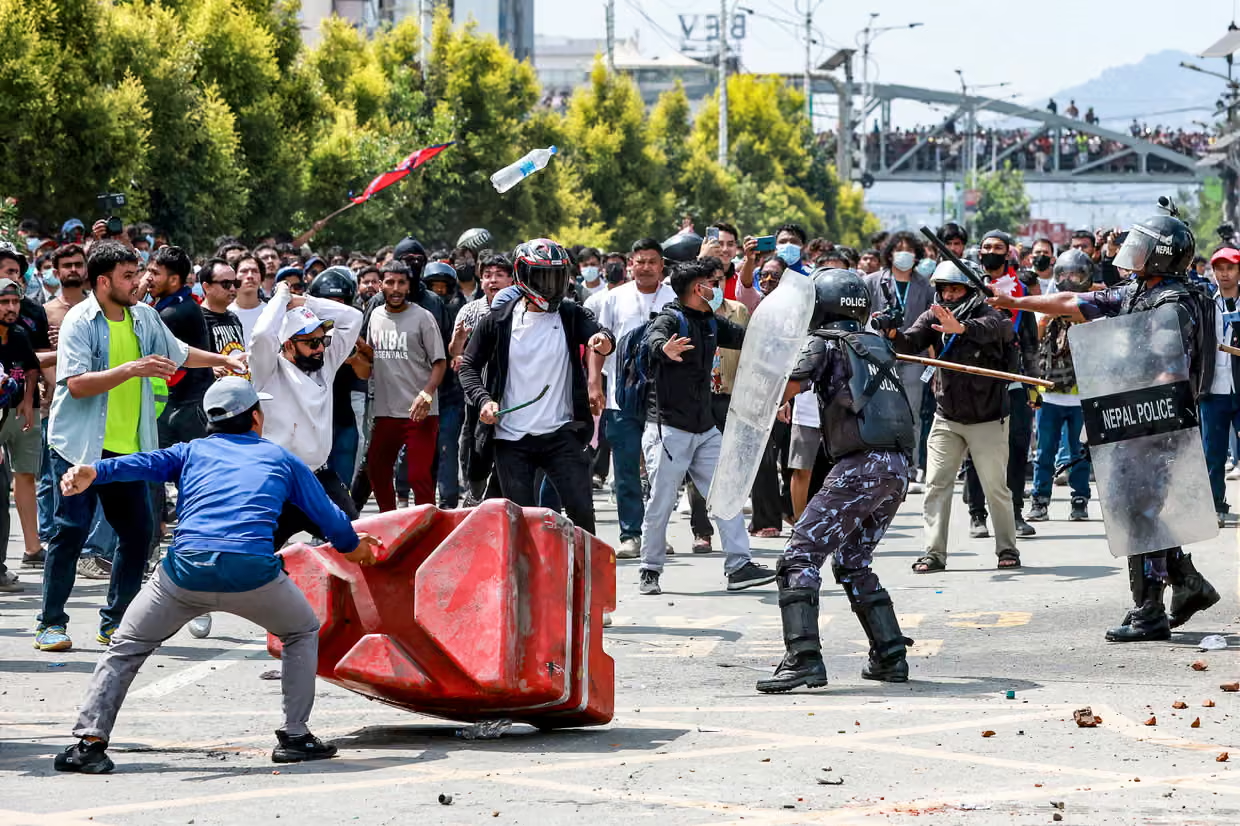
“Gen Z Revolution” fueled by anger over corruption and economic stagnation, security forces try to quell protests.
By Namith DP | Sept 08, 2025
The sound of tear gas canisters echoed through Kathmandu’s streets as at least 14 people were killed in clashes with security forces after thousands of young people in Nepal took to the streets on Monday. What began as a peaceful demonstration against government censorship has transformed into the most significant youth-led uprising Nepal has witnessed in decades.
The catalyst? Prime Minister KP Sharma Oli’s decision to ban 26 major social media platforms, including Facebook, YouTube, X (formerly Twitter), and WhatsApp. But experts say the digital blackout merely ignited simmering frustrations over corruption, economic stagnation, and political accountability that have plagued Nepal’s youth for years.
The Social Media Crackdown That Sparked a Revolution
Timeline of Digital Censorship
Nepal’s government implemented the social media ban on September 4, 2025, after platforms failed to meet a seven-day registration deadline with the Ministry of Communication and Information Technology. The government said social media users with fake IDs have been spreading hate speech and fake news, and committing fraud and other crimes.
The banned platforms include:
- Facebook and Instagram (Meta platforms)
- YouTube (Google-owned)
- X (formerly Twitter)
- TikTok
- Discord
- 19 additional messaging and social platforms
Government’s Justification Falls Short
Nepal on Thursday banned social media sites such as Facebook, Instagram and YouTube among others for failing to register with the Ministry of Communication and Information Technology within the given deadline. Prime Minister Oli defended the action, stating that any attempt to undermine the nation cannot be tolerated.
However, digital rights advocates and journalists immediately condemned the move as an attack on free expression. Scores of Nepali journalists took to the streets against the social media ban in the capital Kathmandu imposed by the government since last week.
The Gen Z Response: From Hashtags to Street Protests

Organizing Despite Digital Restrictions
Young Nepalis quickly mobilized through alternative communication channels and word-of-mouth networks. From 9am on Monday, demonstrators gathered at Maitighar in Kathmandu to voice their dissent. In recent days, hashtags such as ‘Nepo Kid’ and ‘Nepo Babies’ have been trending online, gaining momentum after the government decided to block unregistered platforms.
The protests, dubbed the “Gen Z Revolution,” drew inspiration from successful youth movements in neighboring countries. Protests in Sri Lanka and Bangladesh — which led to the removal of governments in the South Asian countries in 2022 and 2024, respectively — served as inspirations.
Violence Escalates Across Multiple Cities
What began as peaceful demonstrations rapidly deteriorated into violent confrontations with security forces:
Kathmandu: Police in Kathmandu opened fire on protesters demonstrating against a government ban on social media, killing at least 11 and wounding dozens more on Monday.
Jhapa District: In Damak, Jhapa, protesters marched from Damak Chowk toward the municipal office, burning an effigy of Prime Minister KP Sharma Oli and attempting to break municipal gates. Police intervened with rubber bullets, leaving one critically injured.
Nationwide Impact: Thousands of youths took to the street to protest against rampant corruption in the KP Sharma Oli government and its recent move to restrict social media platforms. The demonstrators clashed with police near Parliament.
Beyond Social Media: Deep-Rooted Corruption Concerns
Systemic Issues Fuel Youth Anger
Analysts say the anger is not just about access to apps but stems from deeper disillusionment with corruption, inequality and lack of accountability. The ban, they argue, became the final spark.
Nepal’s corruption challenges have reached crisis levels. Many people in the Himalayan nation think corruption is rampant, and the government of Prime Minister K.P. Sharma Oli has been criticised by opponents for failing to deliver on its promises.
Economic Frustrations Drive Protests
Young Nepalis face significant economic challenges:
- High unemployment rates among educated youth
- Limited economic opportunities in the domestic market
- Brain drain as educated professionals seek opportunities abroad
- Rising cost of living without corresponding wage increases
- Lack of transparency in government spending and contracts
Government Response: Escalation Through Force
Security Measures Intensify
Authorities have implemented increasingly harsh measures to control the demonstrations:
- Shoot-at-sight orders issued in some areas
- Curfews imposed in major cities
- Internet restrictions beyond social media platforms
- Mass arrests of protest organizers
- Deployment of additional security forces
According to the order, public gatherings of more than five persons has been banned including hunger strikes, demonstrations, protests and rallies.
International Condemnation Grows
Human rights organizations have strongly criticized Nepal’s heavy-handed response. Reacting to emerging reports of at least nineteen dead and over 100 injured during a crackdown on the youth-led protests against corruption and social media ban in Nepal, Nirajan Thapaliya, Director of Amnesty International Nepal, said: “Amnesty International strongly” condemns the excessive use of force.
Regional Context: Part of Global Censorship Trend
International Precedents
Nepal’s social media shutdown comes as governments worldwide, including the U.S., EU, Brazil, India grapple with regulating digital platforms. However, Nepal’s approach represents one of the most comprehensive social media bans implemented by a democratic government in recent years.
Digital Rights Implications
The Committee to Protect Journalists has raised concerns about press freedom implications. The Committee to Protect Journalists warns that the Nepali government’s decision to block access to social media platforms threatens media independence and public discourse.
Economic and Political Ramifications
Immediate Economic Impact
The social media ban has created immediate economic disruptions:
- Small businesses reliant on social media marketing face revenue losses
- Digital payment systems using WhatsApp and similar platforms disrupted
- Tourism sector communications hampered during peak season
- Remote work capabilities compromised for international collaborations
Political Stability Concerns
The violent crackdown raises questions about Nepal’s democratic trajectory. Political analysts warn that the government’s response could:
- Further alienate young voters who represent Nepal’s largest demographic
- Damage Nepal’s international reputation as a stable democracy
- Create long-term political instability
- Undermine trust in democratic institutions
International Response and Diplomatic Pressure

Embassy Warnings
Foreign diplomatic missions have issued safety advisories for their citizens. The U.S. Embassy has previously warned about protest activities, highlighting the volatile security situation.
Regional Powers Monitor Situation
Neighboring India and China, both major stakeholders in Nepal’s stability, are closely monitoring developments. Any prolonged instability could affect regional trade routes and geopolitical balance.
Looking Forward: Paths to Resolution
Potential Solutions
Experts suggest several approaches to de-escalate the crisis:
Immediate Measures:
- Lift the social media ban to restore digital communications
- Investigate allegations of excessive force by security personnel
- Release peaceful protesters from custody
- Engage in dialogue with youth representatives
Long-term Reforms:
- Address corruption through transparent governance mechanisms
- Create economic opportunities for young people
- Strengthen democratic institutions and accountability
- Develop comprehensive digital governance policies
Youth Demands
Protesters have articulated specific demands beyond lifting the social media ban:
- Investigation of government corruption cases
- Accountability for economic mismanagement
- Youth representation in government decision-making
- Transparent governance and budget allocation
Conclusion: A Generation’s Stand for Democracy
The ongoing protests represent more than opposition to digital censorship—they embody a generation’s demand for accountable governance, economic opportunity, and democratic rights. Thousands of Nepal’s Generation Z have taken to the streets of Kathmandu in a large-scale protest called the “Gen Z Revolution” against rampant corruption in KP Sharma Oli’s government.
The government’s violent response has only intensified international scrutiny and domestic opposition. As Nepal’s youth continue to challenge authoritarian tendencies, the nation stands at a crossroads between democratic progress and authoritarian regression.
The resolution of this crisis will determine whether Nepal can address legitimate youth concerns through democratic dialogue or will face prolonged instability that could undermine its democratic foundations. The international community watches closely as this Himalayan nation navigates one of its most significant political challenges in recent years.
For Nepal’s future stability and democratic development, finding peaceful solutions that address both immediate grievances and systemic corruption issues remains paramount. The courage displayed by young Nepalis in demanding accountability deserves a measured, democratic response—not bullets and tear gas.
See also –
About The Author


Hope this situation is resolved soon