
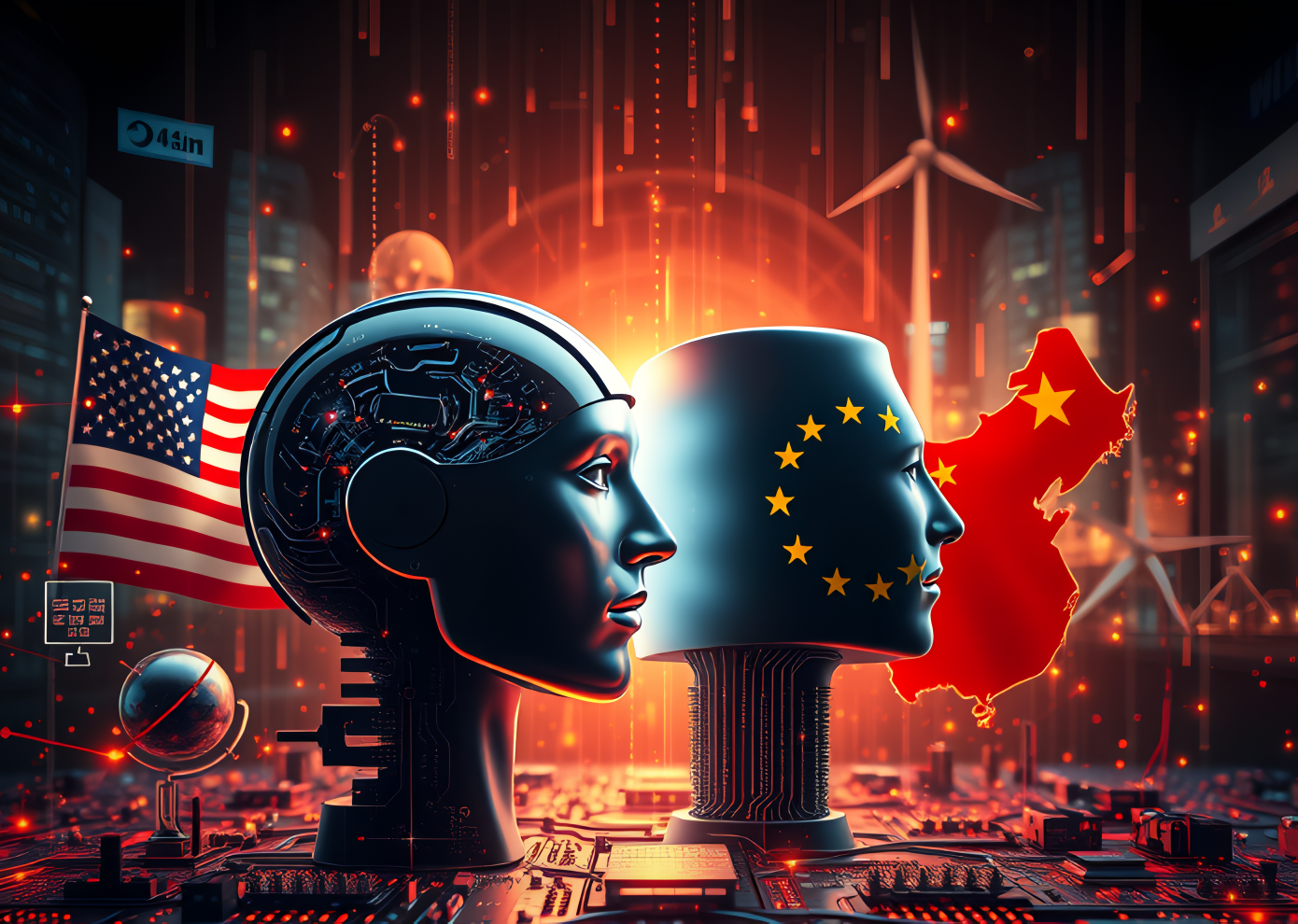
Technology innovation has emerged as one of the most decisive forces in global geopolitics. Once dominated by military strength, natural resources, and economic size, power in the 21st century increasingly hinges on leadership in fields like artificial intelligence (AI), quantum computing, biotechnology, semiconductors, and renewable energy. Nations that control these cutting-edge technologies not only secure economic competitiveness but also reshape global influence and strategic alignments.
For the United States, China, the European Union, and other rising powers, the race for technological innovation has become a central arena of competition. Technology no longer operates in isolation from politics—it is the backbone of economic security, military strategy, and international diplomacy. This article explores how technology innovation acts as a geopolitical game-changer, transforming alliances, power balances, and the global order.
Technology as the New Geopolitical Currency
- Shift from Resources to Innovation: Historically, nations competed for oil, coal, and other critical resources. Today, access to advanced semiconductors or AI capabilities holds equal, if not greater, strategic weight.
- Dual-Use Technology: Many innovations—like drones, 5G infrastructure, or satellite networks—serve both civilian and military purposes, blurring traditional boundaries.
- National Security Linkages: Governments increasingly frame innovation as essential to sovereignty, leading to investment in domestic R&D and protectionist policies.
- Cybersecurity Imperatives: As digital systems become integral to national infrastructure, the need for robust cybersecurity measures has escalated, prompting governments to prioritize tech innovation.
- Data Sovereignty Debates: The control of data is now viewed as a national asset, influencing debates around privacy, surveillance, and the impacts of globalization on local economies.
- Global Supply Chain Redundancy: The pandemic revealed vulnerabilities in global supply chains, driving nations to invest in local production capabilities for critical technologies.
Key Arenas of Technological Competition
Artificial Intelligence (AI)
AI is central to military strategy, economic growth, and societal management.
- The U.S. leads in foundational research and private-sector investment.
- China leverages state-driven initiatives like its “Next Generation AI Plan.”
- AI regulation debates in the EU shape global standards for safety and ethics.
- The integration of AI in healthcare improves diagnostics and patient outcomes.
- Investment in AI research aims to enhance cybersecurity measures.
- Collaborations between tech companies and academic institutions drive innovation.
- AI-driven automation is reshaping the manufacturing landscape.
- Ethical considerations influence AI deployment in sensitive areas like law enforcement.
Semiconductors
Semiconductors are the backbone of digital economies and defense industries.
- Taiwan’s TSMC dominates advanced chip manufacturing, making the Taiwan Strait a flashpoint in geopolitics.
- The U.S. CHIPS and Science Act (2022) seeks to boost domestic production.
- Export controls on advanced lithography equipment highlight tech’s strategic role.
- Global semiconductor supply chains are increasingly vulnerable to political tensions.
- Investment in semiconductor research is seen as vital for national security.
- Countries are competing to attract chip manufacturers with incentives and subsidies.

Quantum Technologies
Quantum computing and encryption will redefine communications and intelligence.
- U.S. firms lead in commercial prototypes.
- China has invested heavily in quantum communication networks.
- Alliances like AUKUS include quantum collaboration as a core pillar.
- Europe is increasing funding for quantum technology research.
- Private sector involvement is growing in the quantum computing space.
- Quantum technology is seen as crucial for national security.
- Research institutions worldwide are expanding their quantum programs.
- Countries are competing to develop the first quantum internet.
Biotechnology
- CRISPR and genetic engineering open opportunities in health, agriculture, and biosecurity.
- Biotechnology can be weaponized, making governance critical.
- U.S. and China are leading investors, but Europe seeks to establish ethical norms.
- The ethical implications of gene editing require robust public discourse.
- Global collaboration is essential to manage biotechnology risks and benefits.
- The potential for biodiversity loss in agriculture raises concerns.
- Educational programs are necessary to inform the public about biotechnology.

Renewable and Clean Tech
- Nations competing for leadership in green hydrogen, batteries, and renewables.
- Energy transition technologies tie directly to climate commitments and economic influence.
- China dominates rare earth minerals, while the U.S. is reshoring clean tech supply chains.
- European Union emphasizes sustainable energy policies to reduce carbon footprint.
- Japan invests in advanced nuclear technology to supplement renewable energy.
- India focuses on solar power and aims to become a global manufacturing hub for solar panels.
- Australia leverages its natural resources for hydrogen production and storage.
- Brazil advocates for bioenergy and sustainable forestry practices to enhance energy diversity.
Technology and Global Power Shifts
U.S.-China Rivalry
- The central axis of global tech geopolitics.
- U.S. focuses on innovation ecosystems powered by private-sector leaders like Google, Microsoft, and OpenAI.
- China deploys state-backed funding and a “whole-of-nation” approach.
- European Union emphasizes regulatory frameworks to ensure competition and innovation.
- Russia prioritizes self-sufficiency in technology and cybersecurity measures.
- India aims to become a global hub for technology startups and innovation.
- Japan invests heavily in AI and robotics to maintain its industrial edge.
- South Korea focuses on semiconductor manufacturing and digital transformation initiatives.
Europe’s Strategic Autonomy
- The EU emphasizes regulation and standard-setting, especially in data privacy and AI ethics.
- Europe seeks independence from U.S. and Chinese platforms while aligning selectively with both.
- The EU promotes digital sovereignty and innovation within Europe.
- Europe advocates for open standards to support interoperability.
- The EU focuses on fostering a competitive digital market to benefit consumers.
- Europe pushes for the ethical use of emerging technologies through guidelines.
- The EU emphasizes the importance of user data protection in digital services.
Emerging Markets
- India, Brazil, and African states are investing in digital economies to avoid dependency.
- South Korea and Japan act as critical nodes in semiconductors and advanced manufacturing.
- Germany and France are enhancing their technological infrastructures to promote European digital sovereignty.
- China is focusing on advancing its capabilities in artificial intelligence and big data analytics.
- The United States is leading in cloud computing and cybersecurity innovations.
Alliances and Innovation Diplomacy
- QUAD: Prioritizes supply chain resilience and tech cooperation.
- AUKUS: Goes beyond submarines to include AI, quantum, and cyber.
- U.S.-EU Trade and Technology Council (TTC): Aligns democratic standards for digital governance.
- BRICS: Pushes alternative payment systems and digital currencies as counterweights to the U.S.-led order.
- G7: Addresses global economic challenges and fosters international collaboration.
- ASEAN: Promotes regional stability, economic growth, and cultural exchange in Southeast Asia.
- NATO: Strengthens military alliances and collective defense among member countries.
- CPTPP: Enhances trade relationships and economic integration in the Asia-Pacific region.
These alliances show how technology has become a diplomatic tool, with partnerships focusing on standards, research, and secure supply chains.
Technology and Military Transformation
- AI enables autonomous drones, predictive logistics, and enhanced surveillance.
- Space technologies—satellite constellations and anti-satellite weapons—define future battlefields.
- Cyber warfare tools blur the line between peacetime competition and conflict.
- Quantum computing innovations enhance cryptography and data security.
- Advanced robotics improve military readiness and operational efficiency.
- Biotechnology applications create enhanced soldiers and medical support systems.
- Integrated command systems enhance real-time decision-making in operations.
- 5G networks facilitate faster communications and data transfer in combat zones.
- Machine learning algorithms improve threat detection and response times.
- Virtual reality training programs develop soldier skills in simulated environments.
- Energy weapons provide new methods of engaging enemy targets without collateral damage.
- Military applications of nanotechnology enhance materials for better durability and effectiveness.
- Autonomous vehicles increase logistical capabilities and reduce the risk to human personnel.
Military dominance in the 21st century is increasingly tied to digital superiority rather than sheer numbers.
Governance and Standards as Power Tools
- Nations compete not just to invent technologies but to set the rules for their use.
- The EU’s General Data Protection Regulation (GDPR) became a global benchmark for data privacy.
- AI governance debates in the UN and OECD reflect attempts to shape ethical frameworks.
- Standard-setting determines whose technologies dominate global markets.
- International treaties on technology transfer influence global innovation patterns.
- Intellectual property rights shape competition in emerging tech sectors.
- Public-private partnerships drive the development of new technological standards.
- Bilateral agreements between countries can establish tech leadership roles.
- National security concerns can lead to technology export controls.
- Collaborative research initiatives often create shared technological advances.
- Digital trade agreements aim to facilitate cross-border technology flows.
- Cybersecurity regulations help to protect national interests in technological infrastructure.
- Innovation hubs and clusters can enhance competitive advantage in technology sectors.
Challenges in the Geopolitics of Innovation
- Fragmentation of the Internet: Competing digital ecosystems—U.S.-led, China-led, and regional models.
- Supply Chain Vulnerabilities: Concentration of rare earths and semiconductor chokepoints create risks.
- Ethical Concerns: AI bias, genetic manipulation, and surveillance raise questions of human rights.
- Cybersecurity Threats: State-sponsored hacking campaigns undermine trust in digital systems.
- Digital Divide: Unequal access to technology exacerbates socioeconomic disparities.
- Data Privacy Issues: Personal information is often collected, analyzed, and sold without consent.
- Regulatory Challenges: Governments struggle to keep pace with rapid technological advancements.
- Environmental Impact: E-waste and energy consumption of data centers contribute to ecological damage.
- Misinformation: Spread of false information undermines democratic processes and public trust.
- Automation and Job Displacement: Technological advancements pose risks to employment in multiple sectors.
- Digital Literacy: Lack of education and skills regarding technology use limits participation.
- Intellectual Property Concerns: Issues surrounding copyrights and patents in the digital age.
- Algorithmic Accountability: Need for transparency and fairness in decision-making algorithms.
- Consumer Rights: Protection against misleading advertising and poor product quality online.
- Censorship and Free Speech: Struggles between content regulation and freedom of expression.
- Health Data Security: Vulnerability of sensitive health information in digital health systems.
- Remote Work Challenges: Implications of increased remote work on work-life balance and productivity.
- Digital Mental Health: Rising concerns about the impact of screen time and social media on mental well-being.
Future Outlook
- Multipolar Tech Order: Instead of one hegemon, we may see regional “tech blocs.”
- Innovation Diplomacy: Countries will compete to export digital infrastructure (5G, AI cloud, fintech).
- AI and Quantum Race: Breakthroughs will define strategic advantages.
- Climate-Tech Nexus: Nations that lead in clean energy tech will shape global economic futures.
- Cybersecurity Alliances: Collaborative efforts to secure digital spaces.
- Ethical AI Norms: Establishing guidelines for responsible AI deployment.
- Data Sovereignty: Countries will enforce laws to maintain control over their data.
- Biotechnology Advances: Investments in biotech will impact health and agriculture.
- Tech Education Initiatives: Focus on building tech-savvy workforces globally.
- Space Innovation: Competition in satellite tech and space exploration will grow.
Conclusion
Technology innovation is not just about progress—it is about power. In the 21st century, states that innovate and control technology ecosystems hold the keys to global influence, shaping not only their own futures but also the trajectory of international relations. From AI and semiconductors to biotech and clean tech, innovation determines national security, economic prosperity, and diplomatic leverage, becoming a vital component in a nation’s strategy. As countries invest heavily in research and development, the competition intensifies, with each nation vying for technological supremacy. The rapid advancements made in fields such as quantum computing and renewable energy are not merely economic endeavors; they are strategic moves that can shift the balance of power on the world stage. As the U.S., China, and other players race ahead, the geopolitics of innovation will define the contours of global order for decades to come, influencing alliances, trade agreements, and conflicts, ultimately reshaping the dynamics of global governance.
Sources
https://weforum.org
https://csis.org
https://brookings.edu
https://foreignpolicy.com
https://oecd.org
https://wto.org
About The Author


