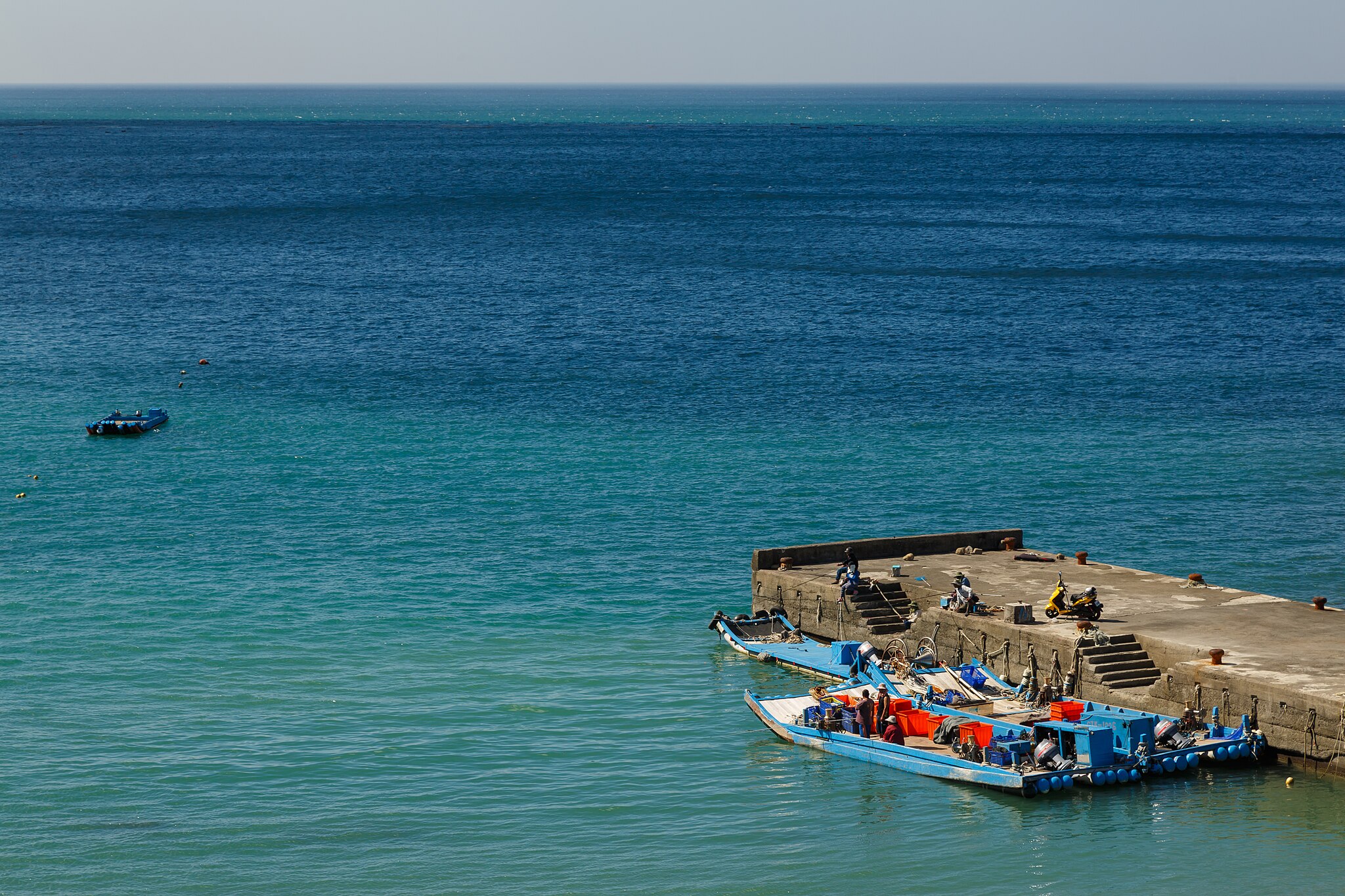
The Taiwan Strait is one of the most strategically important maritime corridors in the world in 2025. At just 130 kilometers wide at its narrowest point, it separates the island of Taiwan from mainland China. This narrow body of water holds disproportionate significance for international trade, high-tech supply chains, and military balance in East Asia.
The strait’s shipping lanes carry close to half of the world’s container fleet annually. Crude oil and liquefied natural gas tankers bound for Japan, South Korea, and Taiwan rely on its accessibility. Taiwan itself dominates the global supply of leading-edge semiconductors, producing over 90% of chips at advanced nodes of 5 nanometers and below. At the same time, China views Taiwan as a core sovereignty issue and demonstrates military pressure through air and naval activities around the strait.
Tensions in this corridor are not new. The strait has been a flashpoint since the 1950s. However, by 2025, the convergence of military exercises, technology supply chain reliance, and alliance strategies has intensified its global importance. The following sections examine Taiwan Strait geopolitics with data and hard evidence, organized under strategic, military, economic, legal, risk, and policy headings.
I. Strategic Importance: Facts and Context
1. Historical Perspective
- First Taiwan Strait Crisis (1954–1955): Triggered by artillery duels and U.S. commitments to Taiwan’s defense, this conflict marked a pivotal moment in the Cold War, reflecting the tension between the communist and nationalist forces in the region and showcasing the strategic importance of Taiwan in U.S. foreign policy during this era.
- Second Crisis (1958): Intense bombardments of offshore islands, testing U.S. resolve and Taiwan’s military capacity, which ultimately heightened tensions in the region and led to increased military presence and strategic maneuvering by both superpowers involved in the conflict.
- Third Crisis (1995–1996): In a tense escalation of military tensions, China fired missiles near Taiwan after the U.S. allowed President Lee Teng-hui to visit. This move was perceived as a significant diplomatic signal that angered Beijing. In response to these aggressive actions, U.S. aircraft carriers were deployed to the region, showcasing America’s commitment to its allies and deterring further escalation of hostilities in the Taiwan Strait.
These episodes shaped today’s security posture. By 2025, PLA military activity around the strait far exceeds Cold War levels, while Taiwan has modernized its defenses.
2. Maritime Trade Volume
- Estimates suggest that nearly 50% of the global container fleet transits the Taiwan Strait annually, highlighting the strategic importance of this maritime passage in global trade routes and the economic implications it has for international shipping industries.
- Northeast Asia—China, Japan, South Korea, and Taiwan—depends on this corridor for essential energy imports and the significant export of finished goods, which are critical for their economic stability and growth. This reliance underscores the importance of maintaining secure and efficient transportation routes, as disruptions could potentially have widespread ramifications on trade and energy prices across the region.
- A reroute around the Philippine Sea adds 3 to 7 days to voyages and increases costs by 10–15%, significantly impacting overall logistics and supply chain efficiency, which can lead to additional delays in delivery times and potential loss of customer satisfaction.

3. Semiconductor Supply Chain
- Taiwan produces about 92% of advanced semiconductors under 10 nm.
- Taiwan Semiconductor Manufacturing Company (TSMC) alone controls over 50% of the total global foundry market, significantly influencing the production and supply of semiconductors worldwide, which are essential components in a variety of electronic devices and technologies, from smartphones to automotive systems.
- Chips from Taiwan underpin smartphones, cloud infrastructure, defense systems, AI processors, and automotive electronics, playing a pivotal role in the advancement of technology that drives global connectivity, enhances security measures, improves machine learning capabilities, and supports the evolution of smart vehicles in an increasingly digital economy.
4. Security Architecture
- The U.S. maintains freedom of navigation operations through the strait several times each year, ensuring that maritime routes remain open and accessible for international trade and protecting the rights of all nations to navigate freely in these vital waters.
- Japan has strategically positioned missile defense units on its southern islands in response to regional threats, enhancing its national security measures and ensuring readiness to address potential military challenges.
- The Philippines, after the 2023 basing agreements, provides additional sites for U.S. aircraft and naval assets, which are strategically significant for enhancing regional security, facilitating joint military exercises, and improving logistical support for operations in the Asia-Pacific region.
II. Military Dynamics in 2025
1. People’s Liberation Army (PLA) Operations
- From January to June 2025, over 100 PLA aircraft crossed the Taiwan Strait median line.
- PLA Navy conducted three large-scale live-fire drills, simulating blockades with coordinated air, surface, and missile units, involving extensive coordination among different military branches and showcasing enhanced operational readiness and tactical capabilities in various maritime scenarios.
- Submarine patrols increased significantly, suggesting a heightened state of readiness for a prolonged denial of sea access in order to enhance maritime security and strategic deterrence.
These activities signal that China’s immediate operational option would more likely be blockade pressure rather than amphibious invasion.
2. Taiwan’s Defense Posture
- Taiwan adopted an asymmetric defense strategy to deny PLA dominance, focusing on innovative and unconventional military capabilities to effectively counterbalance the overwhelming size and resources of the People’s Liberation Army, ensuring greater security and resilience in the face of potential threats.
- Deployment of Hsiung Feng III anti-ship missiles and mobile coastal artillery along the western shoreline.
- Hardened command centers designed to withstand missile strikes, ensuring operational continuity and safety for personnel during intense military conflicts and hostile engagements.
- Expanded reserve training cycles—from once every 2 years to annual mandatory training.
- Investment in civil defense drills, including evacuation exercises in Taipei, Kaohsiung, and Taichung.
3. U.S. and Allied Responses
- Arms sales (2024–2025): Patriot PAC-3 missile interceptors, ASW helicopters, and F-16 upgrades.
- U.S.–Japan exercises: Integrated ballistic-missile defense simulations in Okinawa.
- U.S.–Philippines coordination: New basing rights used for logistics and refueling hubs.
- Allied naval deployments: Carrier strike group patrols near the first island chain increased to five deployments in the first half of 2025, compared to two in 2020.

III. Economic Stakes
1. Semiconductor Market Implications
- Leading electronics companies maintain 3–4 months of chip inventory but cannot withstand longer disruptions.
- Alternate capacity in the U.S. (Arizona fabs) and Japan (Kumamoto fabs) remains limited to under 10% of global leading-edge production.
- A six-month blockade could erase $500 billion in global electronics market capitalization.
2. Shipping and Logistics
- Insurance premiums include war-risk surcharges on vessels entering the strait.
- Singapore and Penang ports can handle rerouted traffic, with Singapore claiming 20% spare throughput capacity.
- Shipping delays would disrupt just-in-time supply chains in automotive and consumer electronics sectors.
3. Regional Economic Impact
- China: Export hubs like Guangdong rely on uninterrupted shipping lanes.
- Japan: 90% of crude oil imports pass near or through the strait.
- South Korea: Semiconductor exports depend on stable sea lines of communication.
- Taiwan: Semiconductor exports represent over 35% of GDP, magnifying exposure.
IV. Legal and Normative Frameworks
1. Maritime Law
- The Taiwan Strait qualifies as an international strait under UNCLOS, guaranteeing freedom of navigation for all vessels, thereby facilitating international trade and enhancing regional stability in maritime activities.
- China disputes some interpretations of international laws and agreements but has not imposed formal legal restrictions on the activities related to those interpretations, allowing for a degree of flexibility and negotiation in diplomatic relations.
- No adjudicating body has ruled on exclusion zones in the corridor as of now, leaving the question of their legality and implementation unresolved.
2. Crisis Management
- Hotlines: U.S.–Taiwan defense hotlines were officially reopened in 2023 in a significant move aimed at reducing the risk of miscalculation and misunderstanding between the two nations, fostering better communication and cooperation in defense matters.
- Japan’s role: In 2024, Japan successfully integrated into multilateral communication frameworks for naval incidents, enhancing regional security cooperation and contributing to the establishment of a more collaborative maritime environment among participating nations.
- Track-2 diplomacy: Taiwan participates in semi-official dialogues with ASEAN, Australia, Japan, and the U.S. on maritime safety, aiming to foster mutual understanding and collaborate on issues of common interest, including regional security, environmental protection, and sustainable fishing practices in the contested waters.
V. Risk Assessment and Scenarios
1. Scenario: Short-Term Blockade
- PLA declares exclusion zones and enforces them with missile tests and naval patrols.
- Duration: One to two weeks.
- Impact:
- Container trade delays raise shipping costs by 10–20%.
- Oil and gas prices increase 5–7% regionally.
- Tech firms run down inventories, causing component shortages.
2. Scenario: Armed Skirmish
- Trigger: An accidental collision that may unexpectedly arise or a deliberate escalation that is strategically planned.
- Engagement: PLA patrols clash with Taiwan’s coastal batteries or patrol ships, resulting in heightened tensions in the region and provoking responses from international observers and allied nations.
- Response: The U.S. Navy intervenes with escort missions to provide security and support in international waters, ensuring safe passage for commercial vessels during times of heightened tension or conflict.
- Market impact:
- Global equities drop 10% in a week.
- Insurance rates spike.
- Civilian casualties heighten international condemnation.
3. Scenario: Sustained Pressure Campaign
- PLA maintains high-tempo drills without direct clashes, ensuring that their forces remain agile, well-coordinated, and consistently prepared for various operational scenarios that may arise during training exercises or potential real-world engagements.
- Taiwan experiences psychological and economic pressure, which affects both its domestic stability and international relations, causing challenges for its citizens and government alike.
- Firms shift R&D to Southeast Asia, the U.S., and Europe as they seek to capitalize on emerging markets, enhance innovation capabilities, and leverage regional expertise in various sectors.
- Outcome: A slow structural diversification of the global chip ecosystem over a span of 5–10 years may lead to increased competition, innovation, and ultimately a more resilient industry, but the gradual pace could also pose challenges in terms of meeting rapidly evolving technological demands and market needs.
VI. Policy and Corporate Recommendations
For Governments
- Expand real-time satellite and unmanned surveillance across the strait.
- Strengthen joint crisis-management drills among U.S., Japan, Taiwan, and the Philippines.
- Provide financial incentives for semiconductor diversification, especially in Japan and the U.S.
- Support infrastructure investment in ports like Singapore and Batangas to handle rerouting.
- Expand civil defense training in Taiwan through allied funding and expertise.
For Corporations
- Diversify supply chains by securing contracts with non-Taiwan fabs.
- Maintain strategic semiconductor inventories equal to 6 months of demand for critical products.
- Develop logistics redundancy, with routes via East China Sea and South Pacific.
- Conduct annual stress-testing to evaluate revenue loss from Taiwan disruptions.
- Engage with Track-2 forums to shape business-friendly maritime safety norms.
VII. Conclusion
The Taiwan Strait is not simply a regional flashpoint; it is a central node of global commerce and technology. By 2025, it carries nearly half of global container traffic and underpins the semiconductor industry with Taiwan’s unrivaled chip output. PLA activity in the strait has escalated, Taiwan has hardened defenses, and U.S. allies have built coordination frameworks.
Hard data shows the stakes: shipping delays of 10–20%, semiconductor concentration of over 90% in Taiwan, and trade dependencies across East Asia. The risks are measurable and immediate. Governments must coordinate deterrence and crisis management, while firms must secure supply chain resilience and alternative capacity.
Stability in the Taiwan Strait will shape not only the Indo-Pacific security order but also the resilience of global technology, trade, and finance. The path forward requires clear assessment, diversified investments, and sustained diplomatic effort.
Sources
About The Author