
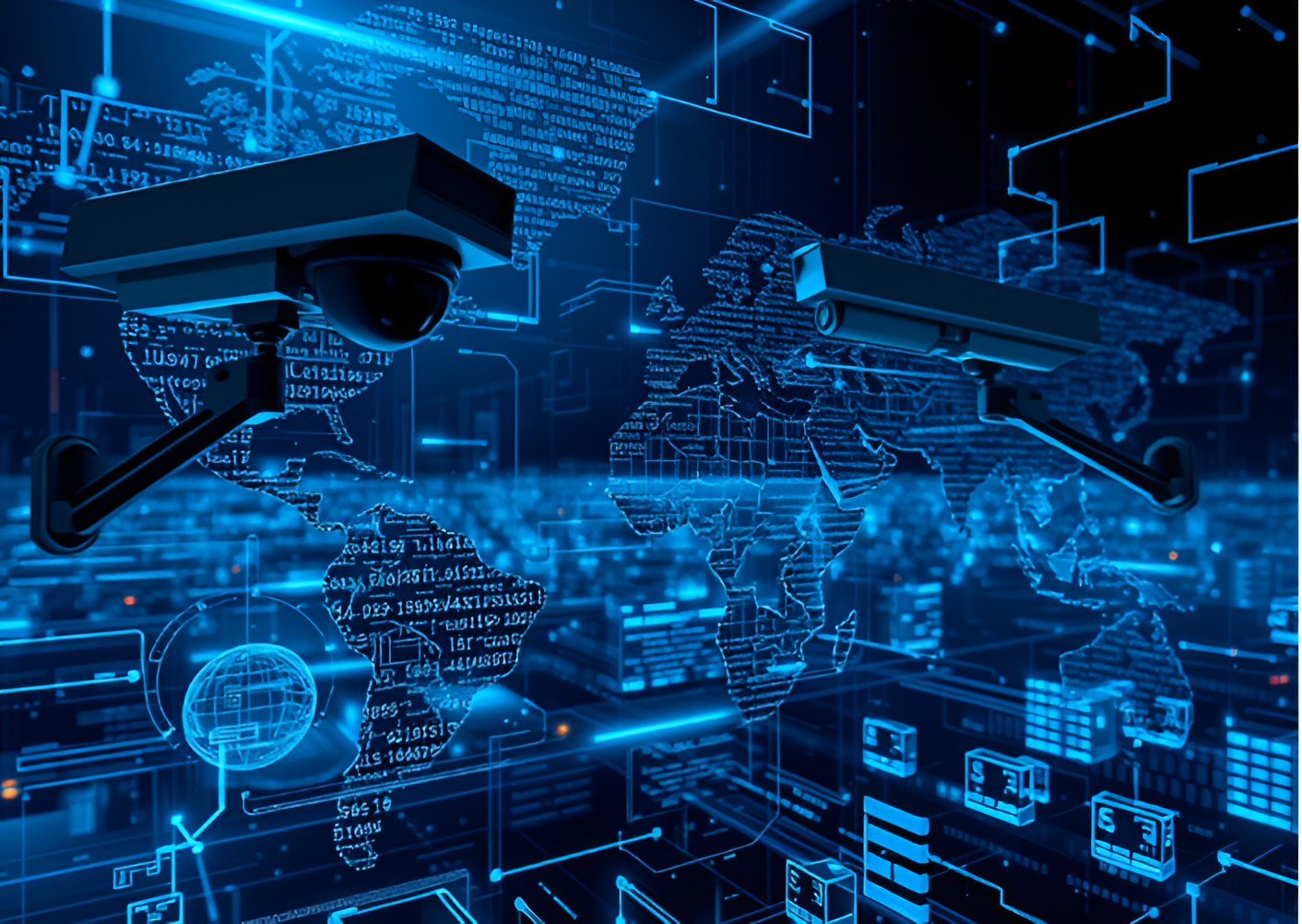
In 2025, nations invest billions in artificial intelligence to gain strategic edge. Governments frame AI as central to military modernization, economic resilience, digital diplomacy, and alliance posture. Surveillance systems, defense command platforms, and cloud-based regulation become nodes of influence. The U.S., EU, Japan, Australia design aligned AI governance; China exports AI infrastructure across Asia and Africa; India champions domestic generative AI under regulatory sovereignty. AI powers intelligence gathering, climate modeling, election integrity, and economic forecasting. Leaders view AI talent, compute infrastructure, and platform control as pillars of national security. This article explores ten critical dimensions of AI geopolitics today—including defense integration, regulation, alliances, supply chain power, platform dynamics, ethical norms, escalation risk, talent mobility, infrastructure resilience, and strategic policy. Each section provides detailed analysis grounded in factual developments, structured in subheadings and bullets to deliver clarity and expertise.
1. Military Integration and AI-Enabled Defense
- Leading nations field AI-enhanced weapon systems. The U.S. allocates US $5.2B to AI-guided systems, China deploys autonomous naval drones, India expands AI surveillance along disputed borders, Pakistan develops AI-assisted radar filtering.
- AI enables predictive maintenance of military hardware, reducing downtime, enhancing readiness, and minimizing resource strain.
- Nations conduct joint military-AI simulations to rehearse scenarios such as automated target engagement, sabotage defense, or decision support in naval conflict.
- AI merges cyber domain actions with kinetic operations. Forward bases run AI-driven threat detection; traffic patterns and logistics optimize across terrain sensors.
- Autonomous or semi-autonomous systems accelerate military tempo, necessitating revised escalation protocols and legal clarity.
- Military think-tanks now include AI threat modules in defense white papers; higher education trains personnel in AI military ethics and technical command systems.
- Battlefield AI integration accelerates cross-domain operations: integrating ground force sensors, aerial drones, and digital command centers for cohesive strategy.
- Intelligence agencies use AI to detect adversary force posture, including troop movements, supply chain flows, satellite imagery anomalies, and speech analytics targeting defense messaging.

2. Regulation and National AI Standards
- Regulatory divergence defines pattern: EU enforces the AI Act requiring high-risk classification and human oversight; China demands alignment to ideological standards and pre-deployment registration of models; India centralizes audit frameworks through its AI Authority.
- Countries place restrictions on foreign AI model deployments for sensitive applications like healthcare and urban management, citing digital sovereignty.
- These divergent frameworks force firms to maintain dual compliance systems: one for EU/Indo-Pacific zones; another for Chinese or Belt & Road-linked markets.
- Governments tie digital policy to export licensing and investment screening. Countries that adopt aligned standards gain advantages in AI platform access.
- Regulatory alignment agreements emerge among allied countries: joint certification protocols allow streamlined cross-border AI deployment within trusted blocs.
- Compliance breaches carry large fines—up to €30 million in EU; licenses suspended in India for data policy infractions; export access restricted in China for platform control concerns.
- Corporations map regulatory trajectories across blocs to guide strategic platform alignment. Platforms only operate in markets where regulated AI ecosystems exist.
3. Strategic AI Alliances and Governance Coalitions
- The G7 IT Summit in mid‑2025 formalized an AI governance pact emphasizing transparency, ethics, and cross-border exchange among democratic states.
- Quad nations (U.S., Japan, Australia, India) coordinate on AI supply chains, compute infrastructure, and cyber threat intelligence.
- China leads governance alliances across Africa and Southeast Asia, offering AI surveillance and bureaucratic platforms in exchange for trade and security alignment.
- Non-aligned countries choose regulatory adoption to access preferred AI coalitions—resulting in geopolitical blocs based on algorithm governance.
- AI coalition membership carries strategic access: early deployment of national-lab language models, shared compute resource pools, joint research grants, and talent workshops.
- Participating in an AI alliance involves alignment to open API standards, data transparency, and adversarial robustness evaluation.
- Platforms within alliances export AI toolkits, host policy dialogues, and provide diplomatic cover during crises.
- Tech-neutral states mediate between coalitions while evaluating commercial and strategic alignment pathways for AI integration.
4. Chip Supply Chains and Technological Leverage
- Advanced AI capability depends on high-end chips. Taiwan’s TSMC produces over 90% of global AI-grade silicon; U.S. and EU further subsidize domestic manufacturing.
- China invests heavily in capacity-building; India pursues chip fabrication partnerships in collaboration with Japan and SK.
- Nations use chip access as leverage in bilateral negotiations: export licenses pivot on partnership alignment and data access conditions.
- The U.S.–Japan co-funded fab network enforces alignment clauses: partnering countries must adhere to joint AI export control regimes.
- India mainstreams domestic chip sourcing to reduce reliance on external providers for governance-critical AI infrastructure.
- Corporate supply chains adopt multi-fab sourcing: split contracts across U.S., Taiwan, India, South Korea to mitigate geopolitical interruptions.
- Chip access influences foreign policy calibration: embargoes or restricted imports can force diplomatic shifts or trade realignment.
- Regional alliances based on chip dependencies solidify: supply agreements now include cross-border investment clauses and security vetting.
5. Economic Influence via AI Platforms
- AI platform providers drive digital economies. U.S.-based cloud providers capture global enterprise AI workloads; China exports AI platforms for city surveillance and judiciary deployments.
- India deploys domestic large-language models across local languages, embedding AI in telecom and government services.
- Governments tie AI procurement access to alignment: public tenders only include providers certified under aligned AI alliance frameworks.
- These platform dynamics shape digital soft power: platform exports become tools for influence in developing economies.
- New digital economic corridors form around AI platform ecosystems: partner countries host data centers and align regulation for shared cloud environments.
- Platform dominance affects trade negotiation outcomes: countries with aligned AI ecosystems enjoy easier access to cross-border digital services.
- Economic power now intersects with data infrastructure: digital standard-setting becomes as strategic as resource access.
- Corporations align platform use with trusted ecosystems to avoid regulatory friction or geopolitical sanction exposure.
6. Ethical Norms and Digital Trust
- Governments embed algorithmic transparency, fairness audits, and bias mitigation in national statutes: EU demands model interpretability; China mandates ideological alignment audits; India mandates inclusive AI governance.
- Non-aligned states adopt ethical frameworks aligned with major AI blocs to maintain digital trade compatibility.
- AI toxicity, facial recognition fairness, and generative content control become geopolitically regulated domains.
- Standards reinforce geopolitical trust: platforms certified by aligned digital regimes gain institutional trust across borders.
- Ethical rules drive AI procurement decisions: only providers with certified audit logs can supply public sector or critical infrastructure.
- Civil society groups gain observer roles in national AI ethics councils in India and EU; China maintains domestic ethics boards with state oversight.
- Failure to meet ethical norms triggers access denial to aligned AI alliances and platform ecosystems.
- Talent mobility and academic exchange tied to ethical accreditation, enhancing cross-border cooperation among aligned training institutions.
7. Cyber Threat Modeling and AI-Enabled Escalation
- AI enlarges cyber threat scope with automated phishing, adaptive deepfake disinformation, and sensor spoofing.
- Nations deploy AI-powered intrusion detection systems integrated into military and energy networks for rapid response.
- Attribution becomes faster. Allies publish multi-national AI attribution reports within hours to deter further intrusion.
- AI-enabled attacks on logistics, finance systems, or elections raise policy priorities.
- Governments conduct red-teaming AI vs AI simulations to anticipate escalation scenarios.
- Allies create incident response pacts that include AI-based forensics and threat collaboration tools.
- AI escalation raises legal questions: what constitutes act of war if an autonomous system disables critical infrastructure?
- Policymakers expand cyber deterrence doctrine to incorporate AI-first thresholds and coordinated alliance countermeasures.
8. Privatized AI Labs and Talent-Geopolitical Mobility
- U.S. and European labs actively recruit global AI talent, offering incentives in exchange for strategic relocation to allied regions.
- China channels tech-experts to Belt & Road partner states, funding academic centers in Africa and Southeast Asia.
- India invests in domestic AI talent pipelines aligned with public research labs and national language innovation.
- Talent distribution shapes global AI leadership: countries that attract diaspora become hubs of strategic IP development.
- National visa policy, academic collaboration, and cross-border patents influence long-term capability.
- Corporate teams align research hubs with regulatory stability zones to ensure uninterrupted planning.
- Talent competition affects bilateral relations: diplomatic ties can hinge on access to research programs and mobility.
- Strategic intellectual property bodies coordinate AI patents and innovation-sharing frameworks.
9. AI and Infrastructure Security
- Governments embed AI in public infrastructure: smart grids, water networks, telecom backhaul, transit systems with anomaly detection.
- In 2025, an AI-guided ransomware attack disrupted power delivery in multiple cities; governments responded with tiered protocol standards.
- Infrastructure planning mandates AI resilience: multi-layered logging, sandboxing, simulated fault injection testing.
- AI integrates climate risk management and critical services—governments mandate cyber-physical coordination.
- Alliances host cross-border infrastructure threat exercises to test coordinated responses.
- AI infrastructure partnerships come with trust clauses: only aligned technology vendors permitted for critical infrastructure deals.
- Corporate investors weigh AI infrastructure resilience as a criterion for project support and geographic viability.
- Failure to comply with shared AI-regulated infrastructure standards leads to trade access suspension in aligned blocs.

10. Strategic Foresight and Global AI Policy Recommendations
- Conduct national AI risk and resilience assessments across defense, infrastructure, and public services.
- Create aligned AI policy corridors through coalition frameworks, linking chip supply, compute, talent, and governance.
- Fund regional compute hubs in strategic partner nations to secure AI capacity and interoperability.
- Establish international AI auditing and transparency bodies for cross-border model sharing.
- Invest in corridor-linked AI infrastructure: compute nodes in trusted regions with joint access protocols.
- Support digital infrastructure resilience through AI-threat exchange agreements across aligned blocs.
- Form cross-sector advisory forums for AI-ethics, cyber threats, supply-chain friction, and protest response.
- Mandate dual-track strategy for AI deployment: aligned and fallback ecosystem models to avoid access denial.
- Introduce AI governance financing mechanisms to support equitable access and alignment interoperability.
Conclusion
By 2025, AI shapes global strategy. Governments embed AI in defense, regulation, infrastructure, and digital norms. National competitiveness no longer depends on geography alone but on alignment with trusted AI regimes. Corporations align platform use, chip sourcing, ethics compliance, and infrastructure access to avoid geopolitical exposure. Countries that integrate AI stewardship with transparent governance and allied coalitions gain technological and strategic influence. Those that ignore AI alignment risk isolation and disruption. AI competition demands integrated thinking across diplomacy, ethics, supply chains, and security. Nations that build interoperable, resilient, and principled AI ecosystems will define the rules of this technologically powered era.
Sources
- https://www.csis.org
- https://www.reuters.com
- https://ec.europa.eu
- https://www.worldbank.org
- https://www.brookings.edu
- https://www.iea.org
- https://www.un.org
- https://www.whitehouse.gov
About The Author


