
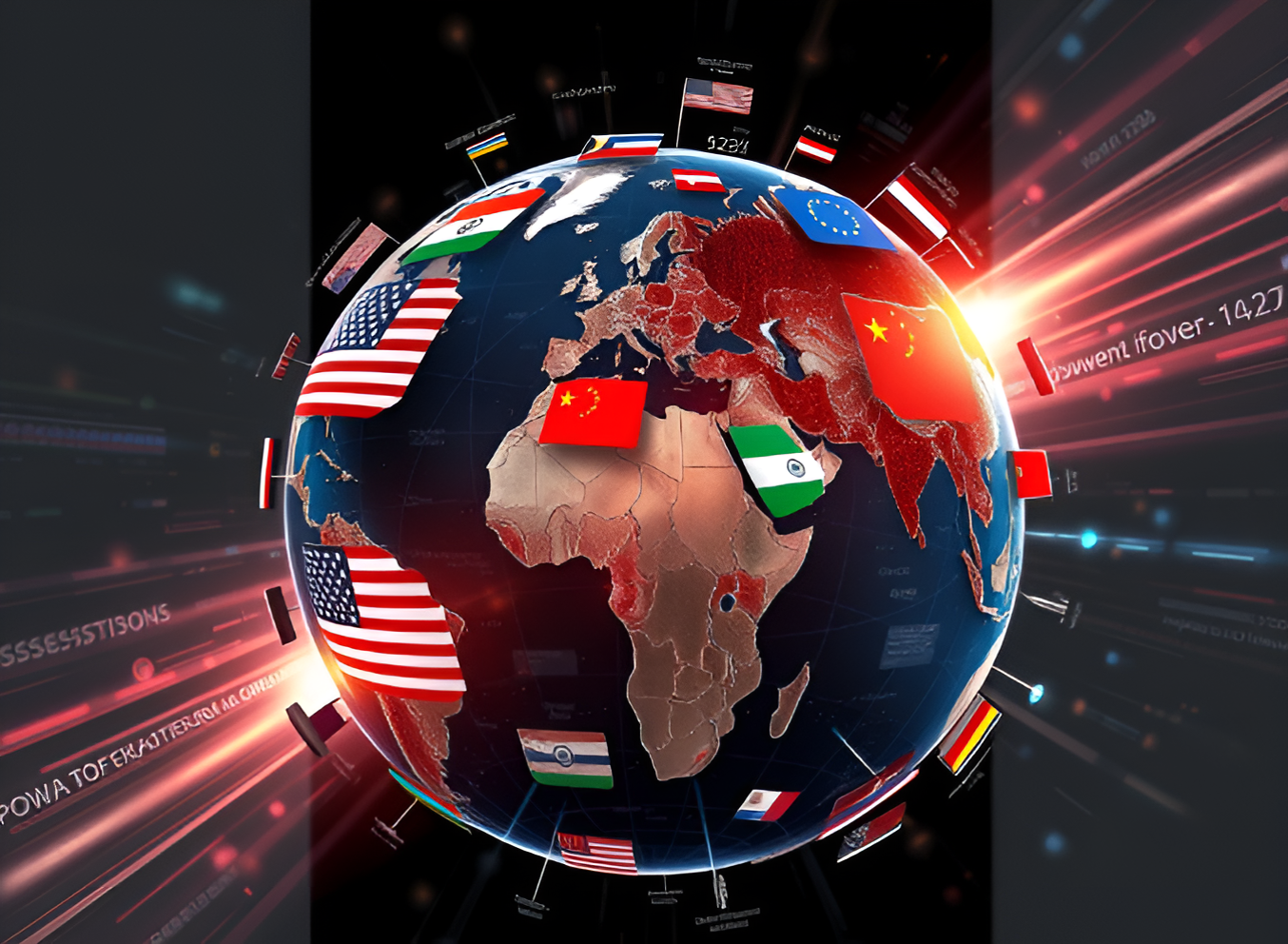
The 21st century is no longer defined by the unipolar dominance the United States enjoyed following the Cold War. Instead, the global order is increasingly shaped by a multipolar framework where multiple states exert significant influence across economic, military, technological, and diplomatic domains. This transformation is not merely transitional. It reflects structural shifts in power distribution, institutional frameworks, technological capabilities, and national ambitions.
Understanding these dynamics is essential not only for policymakers and business leaders but also for scholars, investors, and security analysts who must navigate a world where power is more contested, alliances are fluid, and national interests are sharply divergent.
1. Defining Multipolarity in the 21st Century
Key Characteristics of Multipolarity
- Multiple Power Centers: Unlike bipolar (U.S.–Soviet) or unipolar (U.S.-led) eras, multipolarity includes several influential actors—U.S., China, the European Union, India, Russia, and regional powers like Brazil and Turkey.
- Issue-Based Coalitions: Nations increasingly form temporary, interest-based coalitions rather than long-term alliances.
- Asymmetric Capabilities: Power is no longer just military. Economic leverage, technology leadership, control over data, and ideological influence also matter.
Global Indicators of Shifting Power
- GDP Share in PPP Terms: As of 2024, China accounts for 18.7% of global GDP (PPP), the U.S. 15.4%, and India 7.5%.
- Military Spending: U.S. leads with $877 billion (SIPRI 2024), followed by China at $292 billion and Russia at $109 billion.
- Technology Dominance: The U.S. and China lead in AI, 5G, semiconductors, and quantum computing, with the EU lagging behind in hardware capabilities.
2. The United States: Retaining Leadership Amid Fragmentation
Despite challenges, the U.S. remains the most capable global actor.
Strengths
- Global Military Reach: 750+ overseas military bases.
- Soft Power: Top universities, global media firms, cultural exports.
- Innovation Infrastructure: Silicon Valley, DARPA, and NIH contribute to tech and biotech supremacy.
Challenges
- Eroding Trust in Institutions: Both domestically and internationally.
- Polarization in Foreign Policy: Bipartisan gridlock hampers long-term strategy.
- Economic Competition: Trade deficits, industrial base erosion, and dependence on foreign manufacturing.
Strategic Adjustments
- Pivot to Asia: Strengthening alliances with Japan, Australia, and the Philippines.
- CHIPS Act: $280 billion investment to rebuild semiconductor manufacturing.
- AUKUS and QUAD: Counterweights to China’s Indo-Pacific ambitions.

3. China: Strategic Assertiveness and Global Ambition
China’s ascent is the defining element of current global power shifts.
Strengths
- Export-Driven Economy: World’s largest manufacturer and exporter.
- Digital Authoritarianism: Controls data flow and exports surveillance technology.
- Belt and Road Initiative (BRI): Over 150 countries involved, providing economic and political leverage.
Strategic Moves
- Military Modernization: Rapid PLA modernization with a focus on naval and missile forces.
- Space Program: Tiangong space station and lunar ambitions symbolize global leadership intent.
- Yuan Internationalization: Swap lines with 40+ central banks challenge dollar dominance.
Limitations
- Demographic Decline: Falling birth rates and aging population.
- Debt and Real Estate Crisis: Evergrande and Country Garden collapse exposed systemic risk.
- Global Pushback: U.S.-led export controls on semiconductors and growing EU skepticism.
4. The European Union: Normative Power vs. Strategic Autonomy
The EU plays a complex role in the global power structure.
Strengths
- Regulatory Influence: GDPR, Digital Markets Act shape global digital governance.
- Economic Power: Combined GDP of $18 trillion makes it a top three economy.
- Green Leadership: Leading the climate agenda through the European Green Deal.
Constraints
- Internal Divisions: Hungary and Poland frequently oppose broader EU consensus.
- Lack of Hard Power: NATO dependency persists; strategic autonomy remains aspirational.
- Technology Lag: Dependency on U.S. and Asian firms in AI and semiconductors.
Strategic Trends
- Defensive Trade Policy: CBAM and anti-subsidy probes target Chinese overcapacity.
- Expanded Diplomacy: Stronger engagement with Indo-Pacific and Africa.
- Joint Defense Funding: €8 billion in the European Defence Fund for indigenous capabilities.
5. India: The Emerging Balancer
India’s position as a swing state gives it disproportionate influence.
Strengths
- Demographics: World’s largest population with a median age of 28.
- Economic Growth: IMF forecasts 6.8% growth for 2025, highest among large economies.
- Tech Talent: Dominance in IT services and growing SaaS startup ecosystem.
Diplomatic Strategy
- Non-Alignment 2.0: Maintains ties with both the U.S. and Russia.
- South-South Partnerships: Focus on Africa, ASEAN, and Central Asia.
- Strategic Hedging: Participation in QUAD, BRICS, and SCO simultaneously.
Challenges
- Infrastructure Deficits: Logistics and energy limitations restrict manufacturing potential.
- Border Disputes: Continued tensions with China in Ladakh and Arunachal Pradesh.
- Civil Liberties Concerns: Internal democratic backsliding risks global perception.
6. Russia: Regional Disruptor and Strategic Opportunist
Russia no longer aspires to global dominance but acts to disrupt Western cohesion.
Strategic Posture
- Military Aggression: Ukraine war remains a key fault line in global politics.
- Energy Leverage: Gas exports to China and India rise as EU sanctions take effect.
- Cyber Capabilities: Engages in asymmetric warfare through hacking and disinformation.
Constraints
- Economic Isolation: Sanctions cut off access to Western capital and technology.
- Brain Drain: Post-war emigration affects skilled workforce.
- Dependence on China: Unequal energy trade terms signal reduced bargaining power.

7. The Role of Middle Powers and Regional Blocs
Multipolarity also includes key regional actors and coalitions:
Middle Powers
- Brazil: Leadership in climate diplomacy and South-South cooperation.
- Saudi Arabia: Oil market control and diversification through Vision 2030.
- Turkey: Geopolitical broker between NATO, Russia, and Central Asia.
Regional Groupings
- BRICS+: Expanded membership signals intent to challenge Western-led institutions.
- ASEAN: Economic integration remains, but consensus politics limit geopolitical weight.
- African Union: Institutional reforms aim for greater global representation.
8. Key Domains of Power Contestation
A. Technology and Cybersecurity
- Semiconductors: U.S. and allies control advanced lithography; China invests $100 billion to catch up.
- AI Race: OpenAI, Google, Baidu, and Tencent dominate the field.
- Cyberwarfare: SolarWinds, Hafnium, and Pegasus cases show state-linked vulnerabilities.
B. Economic Architecture
- Supply Chain Nationalism: U.S. reshoring and EU strategic autonomy seek resilience.
- De-Dollarization: Rising use of Yuan and Rupee in bilateral trade.
- Sovereign Digital Currencies: Over 130 central banks exploring or piloting CBDCs.
C. Climate and Energy Politics
- Energy Transition: Global shift toward renewables creates new dependencies (e.g., lithium, rare earths).
- Carbon Border Taxes: CBAM challenges WTO norms.
- Climate Financing: $100 billion annual target remains unmet by developed nations.
9. Institutional Adaptation and Multilateralism
The post-WWII institutional architecture struggles to reflect new power realities.
Institutional Imbalances
- UN Security Council: No permanent seats for India, Brazil, or Africa.
- IMF and World Bank: Voting shares heavily skewed in favor of G7 nations.
- WTO Paralysis: Appellate Body dysfunction weakens enforcement.
Reform Proposals
- G20 as Steering Forum: Inclusion of African Union reflects growing Global South assertiveness.
- Digital Governance: Calls for global AI treaties and cyber norms increase.
- Security Frameworks: New security pacts in Indo-Pacific and Eurasia challenge NATO’s exclusivity.
10. Forecasting the Future of Power
Key Trends to Watch
- Decentralized Globalization: The era of highly centralized global supply chains is fading. In its place, a more diversified and resilient network is emerging, as countries prioritize economic security over efficiency. Firms are increasingly pursuing “China +1” strategies, while governments invest in domestic manufacturing of critical technologies and rare earth materials. This decentralization improves resilience but introduces cost and coordination challenges.
- Technology-Driven Inequality: Countries leading in artificial intelligence, quantum computing, biotechnology, and green technologies will shape global standards and regulatory frameworks. This concentration of innovation widens the power gap between technologically advanced nations and those left behind, limiting the latter’s ability to influence governance norms in emerging domains.
- Geoeconomic Warfare: The use of economic tools as weapons will intensify. Sanctions, tariffs, and strategic export controls—especially in semiconductors, critical minerals, and defense technologies—will be deployed not only in conflicts but also in trade negotiations and political signaling. Control of chokepoints, like the Strait of Hormuz or South China Sea, will heighten risks of economic blackmail.
Risks
- Conflict in the Taiwan Strait: A military confrontation involving China and Taiwan, especially one that draws in the United States and Japan, could disrupt global trade flows, particularly in semiconductors. Taiwan’s TSMC alone accounts for over 50% of global chip manufacturing capacity, making any escalation a systemic global risk.
- Nuclear Proliferation: Tactical nuclear threats in Europe due to the Russia-Ukraine war, and continued nuclear ambitions by North Korea and Iran, raise the stakes for regional stability. The erosion of arms control treaties, such as New START, leaves fewer guardrails in place, increasing miscalculation risks.
- Climate-Driven Migration: Rising sea levels, prolonged droughts, and extreme heat will displace tens of millions, particularly in the Global South. Regions like the Sahel, South Asia, and Pacific Island nations face existential threats. Climate migration could overwhelm urban infrastructure, fuel civil unrest, and trigger cross-border tensions over water and food resources. Without effective mitigation and global burden-sharing, the resulting instability could reshape security agendas and aid policies worldwide.
Conclusion: Navigating Multipolar Complexity
Global power dynamics have irrevocably shifted away from unipolarity. This transition brings both opportunity and volatility. National strategies must adapt to an environment where influence is fragmented, challenges are transnational, and cooperation is conditional.
A deeper understanding of multipolarity is not optional—it is imperative. Power is no longer held by a single hegemon but by a web of states and non-state actors operating across multiple domains. Navigating this complexity requires data-driven policies, agile diplomacy, and adaptive institutions capable of withstanding both geopolitical shocks and technological disruptions.
Sources
https://www.imf.org/en/Publications/WEO
https://www.brookings.edu/articles/the-global-order-in-2024-a-fragmenting-world
https://www.csis.org/analysis/china-technology-leadership
https://www.oxfordeconomics.com
https://www.statista.com/statistics/273963/quarterly-gdp-of-the-european-union-eu
About The Author


