
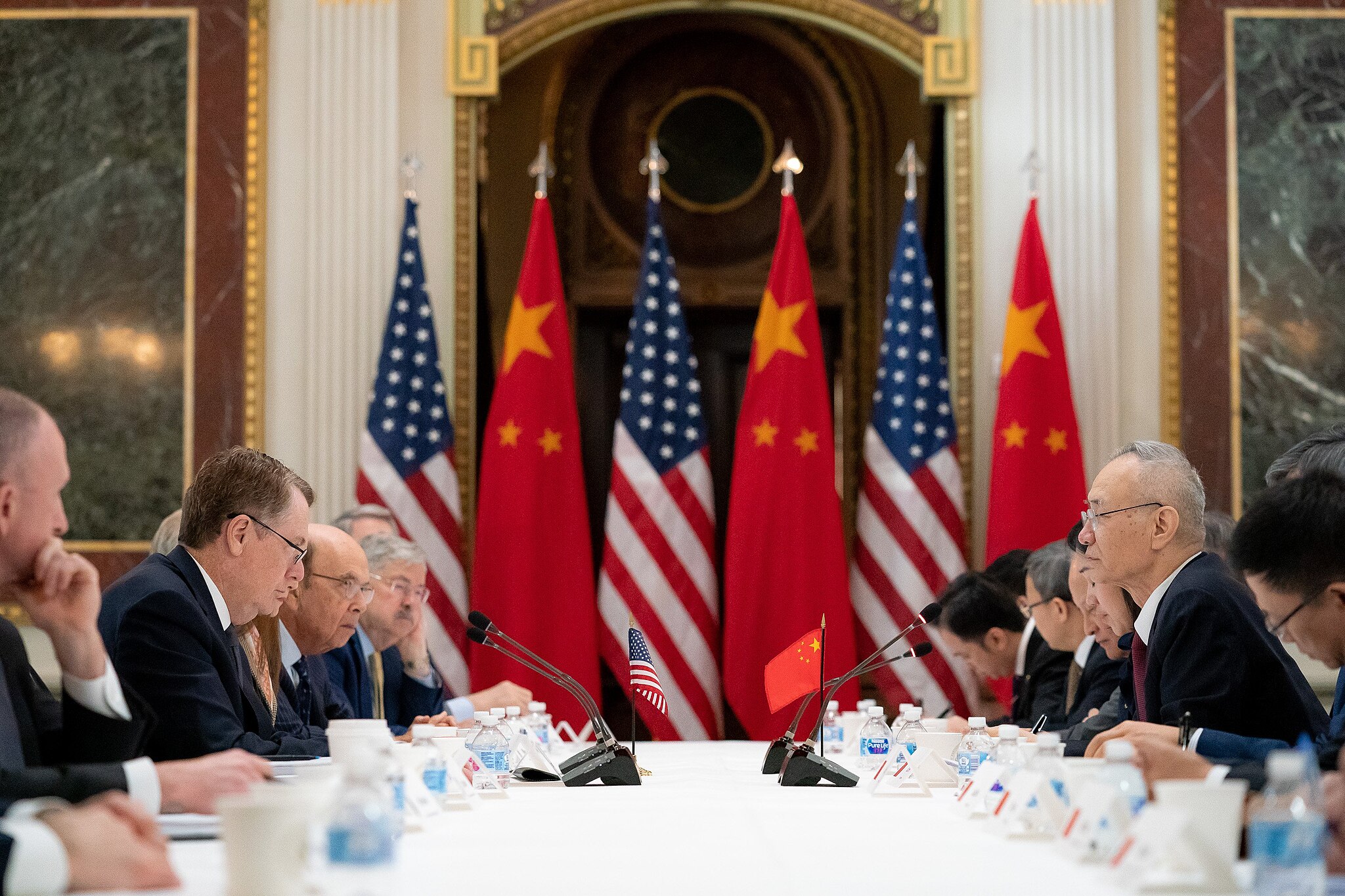
As the world moves deeper into the 21st century, the United States and China continue to shape global affairs with an intensity unseen since the Cold War. The competition between these two powers extends far beyond military strength or trade balances—it now encompasses digital infrastructure, semiconductors, AI regulation, green energy, and even the rules that govern the global order.
Unlike past hegemonic rivalries, the US-China dynamic unfolds in an interconnected and economically interdependent world. Yet, despite shared trade flows and mutual investments, both countries have fundamentally incompatible worldviews. In 2025, this rivalry has intensified in nearly every domain: defense, diplomacy, technology, supply chains, global institutions, and outer space.
This article unpacks the key factors shaping global influence in the context of the ongoing US-China rivalry, supported by hard data, expert analyses, and emerging developments. It offers a comprehensive, non-partisan, and clear-eyed view of what’s at stake—and where the world might be headed.
1. Competing Visions for Global Order
United States: Rules-Based International Order
- Promotes liberal democratic values and open markets.
- Supports freedom of navigation, free press, and international law.
- Advocates for reform but not rejection of global institutions like the UN, WTO, and IMF.
China: Sovereignty-First and Authoritarian Capitalism
- Prioritizes state sovereignty over international norms.
- Advocates for reforms to shift global governance toward “multipolarity” and non-Western leadership.
- Promotes alternatives like the Belt and Road Initiative (BRI), Global Development Initiative (GDI), and the Shanghai Cooperation Organisation (SCO).
While the US sees itself as the steward of the post-World War II system, China seeks to revise elements of that system to reflect its rising status. The contest is not about replacing democracy with autocracy but about redefining the terms of global engagement.
2. Strategic Military Competition
Indo-Pacific Militarization
- The Indo-Pacific remains the primary theater for US-China military confrontation.
- The US has increased deployments in Japan, Philippines, and Australia through agreements like AUKUS and EDCA.
- China has expanded military bases in the South China Sea, deployed aircraft carriers, and modernized its nuclear arsenal.
Taiwan as the Flashpoint
- US arms sales to Taiwan reached $20 billion from 2019 to 2024.
- China conducted record-breaking military drills around Taiwan in mid-2025.
- Both sides have increased naval and cyber posturing, raising fears of accidental conflict.

3. Economic Decoupling and Technonationalism
Semiconductors and Tech Sanctions
- The US imposed sweeping export bans on advanced chips and chip-making tools to Chinese firms.
- China launched its third-generation SMIC fabrication facility, but still lags behind in EUV capabilities.
- Tech titans like Huawei and Nvidia are now symbols of national pride and strategic concern.
De-risking, Not Full Decoupling
- Apple, Tesla, and Microsoft have diversified their supply chains into India, Vietnam, and Mexico.
- China remains the top exporter globally, but foreign direct investment fell by over 20% year-on-year in 2024.
- Both countries are creating parallel systems in payment technologies, app ecosystems, and cloud infrastructure.
4. Artificial Intelligence and Data Sovereignty
Regulatory Divergence
- The US encourages private-sector innovation, with guardrails introduced via the AI Executive Order and bipartisan regulation discussions.
- China’s Cyberspace Administration enforces AI model registration, content control, and algorithm audits.
Global Norms and Standards Battle
- The US and its allies formed the Global AI Forum to create interoperable standards.
- China launched its Digital Silk Road to export AI governance models to Southeast Asia, Africa, and Latin America.
AI has become a proxy battlefield in the broader struggle for ideological leadership. Nations aligning with either model will define global digital ethics for the next decade.
5. Green Energy and Climate Diplomacy
Clean Energy Leadership
- The US passed the Inflation Reduction Act, allocating over $370 billion in climate investment.
- China dominates over 70% of global solar module production and over 80% of rare earth processing.
- Both countries now lead in electric vehicle battery innovation and carbon capture research.
Climate as a Soft Power Tool
- The US hosts climate summits, pushing for transparent emissions reporting.
- China partners with developing countries to build low-emission infrastructure under GDI.
- Climate diplomacy now determines bilateral ties, trade deals, and development financing.
6. Global Influence through Institutions
UN and Multilateral Bodies
- The US supports traditional alliances like NATO, G7, and OECD.
- China invests in alternative forums such as BRICS+, SCO, and the Asian Infrastructure Investment Bank (AIIB).
- In 2025, over 25 countries expressed interest in BRICS+ membership, reflecting dissatisfaction with the Western-led order.
Voting Power and Leadership Roles
- China increased its contribution to UN peacekeeping and leadership bids in global bodies.
- The US continues to back institutional reforms, particularly at the IMF and World Bank, to counter Beijing’s growing footprint.
The institutional landscape is now a proxy ground for legitimacy, narrative control, and leadership.

7. Cybersecurity and Information Warfare
Espionage and Cyberattacks
- US officials attributed recent critical infrastructure breaches in 2024 and 2025 to Chinese state-linked groups.
- China accused the NSA of planting malware in domestic telecom systems.
- Both sides expanded national cyber commands and tightened supply chain vetting.
Disinformation Campaigns
- China expanded global outreach via state media networks and social platforms like TikTok.
- The US countered with Open Information Initiatives and public-private collaborations to detect influence operations.
- Information dominance now shapes public opinion, policymaking, and election integrity worldwide.
8. Global South as the Battleground
Infrastructure vs. Conditionality
- China’s BRI has funded over 3,000 projects in 149 countries.
- The US and EU launched the PGII (Partnership for Global Infrastructure and Investment) as a rules-based alternative.
Vaccine Diplomacy, Debt Relief, and Digital Connectivity
- Both countries used vaccine exports and tech development programs to woo African and Latin American partners.
- The competition centers on trust, reliability, and long-term investment appeal, not just capital flows
9. Domestic Political Constraints
US Political Polarization
- Upcoming 2026 midterm elections may again influence foreign policy consistency.
- Congressional divisions impact funding for foreign aid, defense budgets, and tech regulation.
China’s Economic Slowdown
- Youth unemployment exceeded 20% in early 2025.
- The property sector remains in crisis, with Evergrande-like defaults still reverberating.
- These internal challenges could make Beijing either more assertive abroad or more cautious.
10. Outer Space Rivalry
Lunar and Orbital Competition
- The US Artemis program aims for a sustained lunar presence by 2030: NASA, with support from international partners under the Artemis Accords, is developing the Gateway lunar outpost and the Artemis III mission. The long-term goal is to establish a crewed presence on the Moon’s south pole, conduct scientific exploration, and enable future Mars missions. US collaboration with Japan, Canada, and the European Space Agency reinforces its leadership role in setting lunar governance norms.
- China and Russia jointly plan a lunar base by 2035 and expanded activity at Tiangong Space Station: The China-Russia International Lunar Research Station (ILRS) aims to be a rival to the Artemis effort, focusing on lunar exploration, resource extraction, and deep-space scientific missions. China’s Tiangong Space Station, now fully operational, hosts regular crews and autonomous experiments, establishing Beijing’s credentials as a sustained space power.
Satellite Infrastructure
- The US leads in commercial constellations (e.g., Starlink): American firms have deployed thousands of low-Earth orbit (LEO) satellites for broadband coverage, missile detection, and navigation. SpaceX’s Starlink supports not only commercial use but also secure military communication, as seen in its role during the Ukraine conflict.
- China builds BeiDou 3 and quantum communication satellites: Beijing’s BeiDou 3 navigation system offers full global coverage and is promoted as an alternative to the US GPS. China also leads in launching quantum communication satellites like Mozi, advancing secure, encrypted data transmission beyond terrestrial limits.
- Both nations view space as strategic high ground for surveillance, communications, and deterrence: Space is no longer a neutral domain. Both countries have tested anti-satellite (ASAT) capabilities and are investing in space domain awareness, debris mitigation, and secure satellite networks. As military reliance on space assets grows, the likelihood of orbital conflict increases—raising calls for a binding international space code of conduct.
11. The Risk of Miscalculation
Despite multiple communication hotlines and diplomatic exchanges, risks remain high:
- Accidental military confrontation in Taiwan or the South China Sea: Frequent naval and aerial encounters have increased the chance of unintended clashes. Chinese fighter jets regularly cross the Taiwan Strait median line, while US Navy patrols operate under Freedom of Navigation Operations (FONOPs). A single miscalculation or poorly handled incident could escalate into direct conflict, especially in contested waters.
- Escalation of cyber incidents mistaken for acts of war: State-sponsored cyber operations target critical infrastructure, finance, and defense networks. Given attribution challenges in cyberspace, a major breach could be misconstrued as an act of war. For example, a blackout triggered by malware might lead to hasty retaliation before facts are verified.
- Internal political instability influencing foreign behavior: US political polarization and China’s domestic economic headwinds can make each government more reactive. Nationalist sentiment, amplified by social media and state-controlled narratives, can pressure leaders to take harder stances in crises to maintain legitimacy.
- Crisis management mechanisms are inadequate relative to the speed and scale of today’s digital threats: Legacy diplomatic hotlines and traditional backchannels cannot keep pace with fast-moving digital, satellite, or cyber incidents. There is no binding multilateral agreement on conflict de-escalation in cyberspace, and coordination protocols in AI-triggered defense systems remain undefined. The risk of escalation from misunderstanding remains dangerously high.
12. What the World Can Expect
The rivalry between the United States and China will continue to evolve, but several outcomes are plausible:
- Coexistence with Guardrails: Through negotiated agreements in AI, climate, and crisis communication, tensions can be stabilized.
- Bloc Formation: Middle powers may be forced to align economically or politically with one side, fragmenting globalization.
- Military Confrontation: A misstep in Taiwan or maritime zones could trigger limited or large-scale warfare.
- Technological Bifurcation: The world may operate under dual systems in internet governance, finance, and standards.
How these outcomes unfold depends not only on Washington and Beijing but also on middle powers, multinational firms, and global civil society.
Sources
About The Author


