


		<div class="wpcnt">
			<div class="wpa">
				<span class="wpa-about">Advertisements</span>
				<div class="u top_amp">
							<amp-ad width="300" height="265"
		 type="pubmine"
		 data-siteid="173035871"
		 data-section="1">
		</amp-ad>
				</div>
			</div>
		</div>
<p class="wp-block-paragraph"><em>Cross-border shelling and airstrikes fuel escalation, over 130,000 displaced as diplomatic ties unravel.</em></p>


<p class="is-style-success wp-block-paragraph"><strong>By Namith DP | July 25, 2025</strong></p>


<h2 class="wp-block-heading">Border Fire Reignites Old Tensions</h2>


<p class="wp-block-paragraph">On <strong>July 24 and 25, 2025</strong>, the fragile peace between <strong>Thailand and Cambodia</strong> shattered as heavy artillery, rockets, and airstrikes turned parts of the shared border into a war zone. The renewed conflict left <strong>at least 15 dead</strong>, displaced <strong>over 130,000 civilians</strong>, and triggered <strong>international condemnation</strong>. Both countries accused each other of initiating the fighting, reigniting a <strong>long-standing territorial dispute</strong> rooted in colonial-era boundaries and fueled by modern nationalism.</p>


<hr class="wp-block-separator has-alpha-channel-opacity" />


<h2 class="wp-block-heading">1. Background: Century-Old Dispute, Modern-Day Flashpoint</h2>


<p class="wp-block-paragraph">The Thailand–Cambodia border dispute is not new. It dates back to the early 20th century, when French colonial authorities drew territorial lines that Bangkok continues to contest.</p>


<ul class="wp-block-list">
<li><strong>Length of the border</strong>: 817 kilometers (508 miles), much of which remains <strong>undemarcated</strong>.</li>


<li><strong>Key flashpoint</strong>: The <strong>Preah Vihear Temple</strong>, a UNESCO World Heritage Site, sits atop a cliff near the Thai-Cambodian border. While the <strong>International Court of Justice (ICJ)</strong> ruled in 1962 that the temple belonged to Cambodia, the surrounding territory remains <strong>heavily contested</strong>.</li>


<li><strong>Historic clashes</strong>: Armed conflicts over the temple flared up in 2008, 2010, and 2011, with dozens killed and thousands displaced.</li>
</ul>


<p class="wp-block-paragraph">Despite ICJ rulings reaffirmed as recently as 2013, <strong>Thailand continues to reject external arbitration</strong>, favoring <strong>bilateral mechanisms</strong> under the <strong>2000 Memorandum of Understanding (MOU)</strong>, which Cambodia argues has failed to deliver results.</p>


<hr class="wp-block-separator has-alpha-channel-opacity" />


<h2 class="wp-block-heading">2. Recent Escalation: July 2025 Clashes</h2>


<h3 class="wp-block-heading"><strong>Timeline of Events</strong></h3>


<div class="wp-block-image">
<figure class="aligncenter size-large is-resized"><img src="https://theword360.com/wp-content/uploads/2025/07/1386-1024x819.avif" alt="" class="wp-image-23968" style="aspect-ratio:3/2;object-fit:cover;width:611px" /><figcaption class="wp-element-caption">Thai soldiers inspect a border area in Ubon Ratchathani province where they claim to have found two anti-personnel landmines. Photograph: AP</figcaption></figure>
</div>


<ul class="wp-block-list">
<li><strong>May 28, 2025</strong>: A <strong>Cambodian soldier is killed</strong> in a brief gunfight near the <strong>Chong Bok</strong> area. Each side blames the other for initiating fire.</li>


<li><strong>June 2025</strong>: Thailand closes <strong>multiple border checkpoints</strong>, citing troop mobilization and heightened tensions.</li>


<li><strong>July 24–25, 2025</strong>: Full-scale hostilities erupt near the <strong>Ta Muen Thom</strong> and <strong>Ta Kwai temples</strong> in Surin province. Thai fighter jets launch strikes on Cambodian positions. Cambodian BM-21 Grad rockets return fire.</li>
</ul>


<h3 class="wp-block-heading"><strong>Military Deployment and Civilian Impact</strong></h3>


<ul class="wp-block-list">
<li><strong>Thai forces</strong>:
<ul class="wp-block-list">
<li>Used <strong>F-16 fighter jets</strong>, heavy artillery, and surveillance drones.</li>


<li>Claimed the destruction of <strong>multiple Cambodian tanks</strong> and artillery units.</li>


<li>Evacuated more than <strong>130,000 civilians</strong> from four provinces: Surin, Si Sa Ket, Ubon Ratchathani, and Buriram.</li>
</ul>
</li>


<li><strong>Cambodian response</strong>:
<ul class="wp-block-list">
<li>Mobilized troops along the northern frontier.</li>


<li>Fired <strong>rockets and mortars</strong> into Thai positions.</li>


<li>Evacuated more than <strong>1,500 families</strong> in Oddar Meanchey and Preah Vihear provinces.</li>
</ul>
</li>
</ul>


<h3 class="wp-block-heading"><strong>Casualties and Damage</strong></h3>


<ul class="wp-block-list">
<li>Thai officials confirmed:
<ul class="wp-block-list">
<li><strong>15 fatalities</strong> (14 civilians, 1 soldier).</li>


<li>Over <strong>46 injured</strong>.</li>


<li>Shelling damaged a <strong>hospital, gas station</strong>, and <strong>residential homes</strong>.</li>
</ul>
</li>


<li>Cambodia reported:
<ul class="wp-block-list">
<li><strong>1 civilian death</strong> and <strong>5 injuries</strong>.</li>


<li><strong>Limited damage</strong> to military assets, but did not disclose full figures.</li>
</ul>
</li>
</ul>


<hr class="wp-block-separator has-alpha-channel-opacity" />


<h2 class="wp-block-heading">3. Root Causes: Geopolitics Meets Nationalism</h2>


<h3 class="wp-block-heading"><strong>Disputed Border Maps</strong></h3>


<ul class="wp-block-list">
<li>Cambodia relies on <strong>French-drawn colonial maps (1907)</strong> that place Preah Vihear and adjacent land under its control.</li>


<li>Thailand disputes these maps, citing <strong>natural watershed geography</strong> that places territory inside Thai boundaries.</li>


<li>The <strong>ICJ ruling</strong> in favor of Cambodia remains a sticking point. Thailand acknowledges the ruling but contests its enforcement.</li>
</ul>


<h3 class="wp-block-heading"><strong>Nationalist Sentiment on Both Sides</strong></h3>


<ul class="wp-block-list">
<li>Leaked recordings of a private call between <strong>PM Paetongtarn Shinawatra</strong> and <strong>Hun Sen</strong> sparked outrage in Thailand. Critics accused the Thai PM of undermining national interests.</li>


<li>Massive <strong>Cambodian government-organized rallies</strong> supported military readiness and sovereignty claims.</li>


<li>Thai protests called for stronger military retaliation and withdrawal from bilateral talks.</li>
</ul>


<h3 class="wp-block-heading"><strong>Military Conscription and Strategic Posturing</strong></h3>


<ul class="wp-block-list">
<li>Cambodia passed a new law requiring <strong>mandatory conscription for men aged 18–30</strong>, effective <strong>2026</strong>.</li>


<li>Thailand responded by reinforcing troops in northeastern provinces and initiating <strong>Operation Yuttha Bodin</strong>, a large-scale military maneuver.</li>
</ul>


<hr class="wp-block-separator has-alpha-channel-opacity" />


<h2 class="wp-block-heading">4. Diplomatic Fallout and International Reactions</h2>


<h3 class="wp-block-heading"><strong>Bilateral Tensions Escalate</strong></h3>


<ul class="wp-block-list">
<li>Thailand <strong>expelled Cambodia’s ambassador</strong> on July 25. Phnom Penh responded by expelling Thailand’s envoy within hours.</li>


<li>Both countries filed <strong>official complaints at the United Nations</strong> and <strong>ASEAN</strong>.</li>


<li>Cambodia requested an <strong>urgent UN Security Council session</strong>, citing cross-border aggression and civilian casualties.</li>
</ul>


<h3 class="wp-block-heading"><strong>UN and ASEAN Response</strong></h3>


<ul class="wp-block-list">
<li><strong>ASEAN</strong> called for immediate de-escalation and a return to negotiations under the Joint Boundary Commission.</li>


<li>The <strong>UN Office for the Coordination of Humanitarian Affairs (OCHA)</strong> mobilized emergency teams to assess damage and coordinate refugee aid.</li>


<li>The <strong>United States</strong>, <strong>China</strong>, and <strong>Malaysia</strong> urged both countries to exercise restraint and avoid actions that could trigger wider instability in the region.</li>
</ul>


<hr class="wp-block-separator has-alpha-channel-opacity" />


<h2 class="wp-block-heading">5. Humanitarian Crisis: Displacement, Infrastructure Damage, and Relief Efforts</h2>


<h3 class="wp-block-heading"><strong>Displacement Figures</strong></h3>


<div class="wp-block-image">
<figure class="aligncenter size-large is-resized"><img src="https://theword360.com/wp-content/uploads/2025/07/6362-1024x819.avif" alt="" class="wp-image-23969" style="aspect-ratio:3/2;object-fit:cover;width:611px" /><figcaption class="wp-element-caption">Thai residents who fled homes after clashes between Thai and Cambodian soldiers rest at an evacuation centre in Surin province, Thailand. Photograph: Sakchai Lalit/AP</figcaption></figure>
</div>


<ul class="wp-block-list">
<li>Thailand: Over <strong>130,000 civilians</strong> displaced across four provinces.</li>


<li>Cambodia: More than <strong>1,500 families</strong> evacuated from high-risk border zones.</li>


<li>Emergency shelters, food distribution centers, and medical camps set up by local governments and NGOs.</li>
</ul>


<h3 class="wp-block-heading"><strong>Infrastructure Hit</strong></h3>


<ul class="wp-block-list">
<li>Reports confirmed damage to:
<ul class="wp-block-list">
<li>One <strong>provincial hospital</strong>.</li>


<li>A <strong>fuel station</strong>, where <strong>two civilians</strong> were killed.</li>


<li>Schools and homes within <strong>2 km</strong> of artillery impact zones.</li>
</ul>
</li>
</ul>


<h3 class="wp-block-heading"><strong>Mines and Civilian Safety</strong></h3>


<ul class="wp-block-list">
<li>Thai military engineers launched operations to <strong>remove landmines</strong> laid during past conflicts that resurfaced during the fighting.</li>


<li>Human Rights Watch raised concerns about <strong>indiscriminate shelling</strong> and urged both parties to avoid civilian zones.</li>
</ul>


<hr class="wp-block-separator has-alpha-channel-opacity" />


<h2 class="wp-block-heading">6. What’s Next: Outlook and Recommendations</h2>


<h3 class="wp-block-heading"><strong>Immediate Priorities</strong></h3>


<ul class="wp-block-list">
<li><strong>Ceasefire</strong> and mutual withdrawal to <strong>pre-June 2025 positions</strong>.</li>


<li>Reactivation of the <strong>Thailand-Cambodia Joint Boundary Commission</strong>.</li>


<li>Joint investigation into civilian deaths and compensation mechanisms.</li>
</ul>


<h3 class="wp-block-heading"><strong>Diplomatic Pathways</strong></h3>


<ul class="wp-block-list">
<li>Cambodia insists on <strong>international arbitration</strong> via ICJ.</li>


<li>Thailand prefers bilateral negotiation, citing national law and constitutional sovereignty.</li>


<li>ASEAN, the UN, and third-party mediators like <strong>Indonesia</strong> or <strong>Vietnam</strong> could serve as credible facilitators.</li>
</ul>


<h3 class="wp-block-heading"><strong>Avoiding Future Conflict</strong></h3>


<ul class="wp-block-list">
<li>Clear demarcation of the remaining <strong>undemarcated 300+ km</strong> border.</li>


<li>Joint monitoring mechanisms, similar to the Thailand-Malaysia border patrol framework.</li>


<li>Cross-border community engagement to prevent misinformation-fueled escalation.</li>
</ul>


<hr class="wp-block-separator has-alpha-channel-opacity" />


<h2 class="wp-block-heading">Conclusion: A Conflict That Cannot Be Ignored</h2>


<p class="wp-block-paragraph">The July 2025 Thailand–Cambodia border conflict marks the most violent flare-up since 2011. It exposed the volatility of unresolved historical disputes and the dangers of political posturing over diplomacy. Both nations have much to lose—economically, diplomatically, and in human life—if escalation continues.</p>


<p class="wp-block-paragraph">The international community must stay engaged. Regional stakeholders must ensure that military missteps do not spiral into prolonged conflict. For Southeast Asia’s stability, a lasting resolution is not optional—it is urgent.</p>


<hr class="wp-block-separator has-alpha-channel-opacity" />


<h2 class="wp-block-heading has-vivid-red-color has-text-color has-link-color wp-elements-1">For more news on regional conflict read &#8211; </h2>


<figure class="wp-block-embed is-type-wp-embed is-provider-the-word-360 wp-block-embed-the-word-360"><div class="wp-block-embed__wrapper">
<blockquote class="wp-embedded-content" data-secret="k0sZpyWsBt"><a href="https://theword360.com/2025/06/24/the-iran-israel-ceasefire-of-2025-what-happened-why-it-matters-and-what-comes-next/">The Iran–Israel Ceasefire of 2025: What Happened, Why It Matters, and What Comes Next</a></blockquote><iframe class="wp-embedded-content" sandbox="allow-scripts" security="restricted" style="position: absolute; visibility: hidden;" title="&#8220;The Iran–Israel Ceasefire of 2025: What Happened, Why It Matters, and What Comes Next&#8221; &#8212; The Word 360" src="https://theword360.com/2025/06/24/the-iran-israel-ceasefire-of-2025-what-happened-why-it-matters-and-what-comes-next/embed/#?secret=iqNglSh2rJ#?secret=k0sZpyWsBt" data-secret="k0sZpyWsBt" width="600" height="338" frameborder="0" marginwidth="0" marginheight="0" scrolling="no"></iframe>
</div></figure>

Cambodia-Thailand Border Conflict: Military Clashes, Disputed Claims, and Regional Fallout
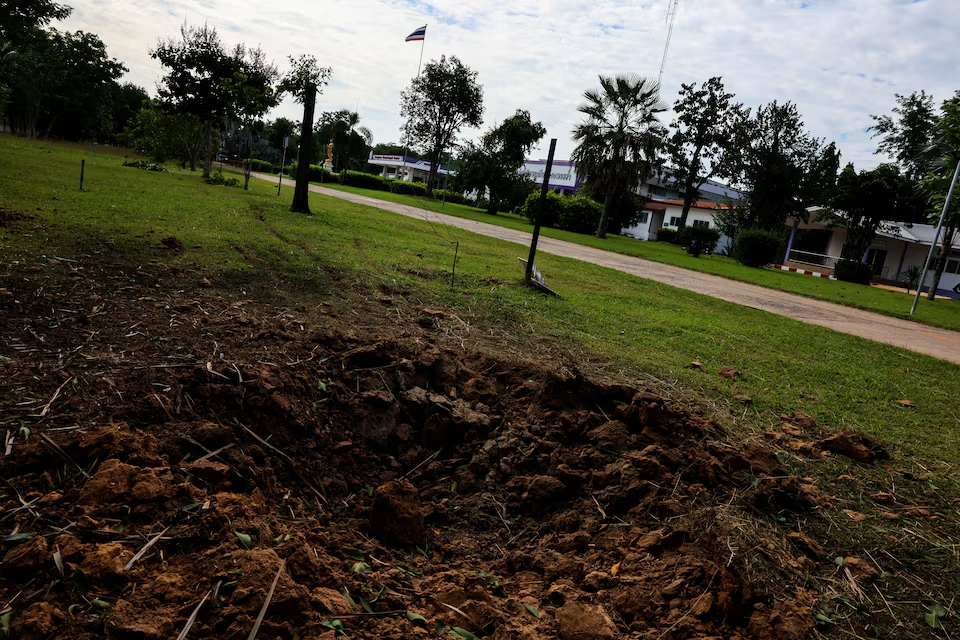
A view of a crater in the ground following an attack by Cambodia's artillery, after Thailand scrambled an F-16 fighter jet to bomb targets in Cambodia on Thursday after artillery volleys from both sides killed civilians, at the Phanom Dong Rak Hospital, in Surin, Thailand, July 25, 2025. REUTERS/Athit Perawongmetha