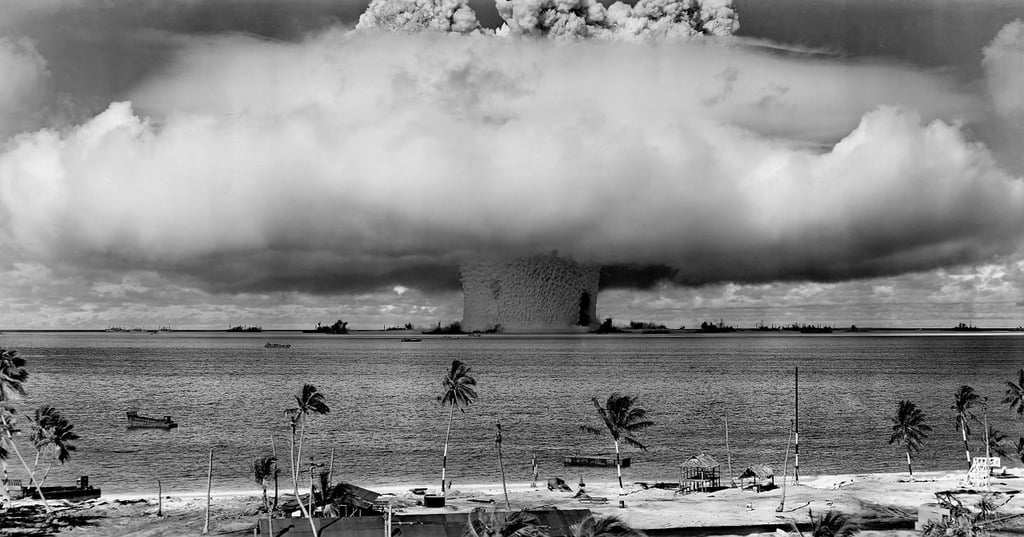
A blinding flash tears through the sky, followed by a shockwave that flattens everything in its path. You have minutes—maybe seconds—to react. A nuclear attack remains a remote possibility in 2025, yet the stakes demand preparation. Russia’s arsenal alone boasts 5,580 warheads, according to the Federation of American Scientists, while the U.S. holds 5,044. North Korea’s growing stockpile adds uncertainty. You can’t predict when or if this threat materializes, but you can control how ready you are. This guide delivers a detailed, actionable roadmap to protect yourself and your family, grounded in data and expert insight. What happens if you face this uninformed? Chaos. Avoidable losses. Here’s how to navigate a nuclear war, step by step.
Step 1: Understand the Threat—Know What You’re Up Against
Nuclear weapons unleash destruction through blast, heat, and radiation. A 1-megaton bomb, per the U.S. Department of Defense, creates a fireball reaching 200 million degrees Fahrenheit, vaporizing anything nearby. The blast radius extends miles—up to 7 for a detonation of this size—while thermal burns hit people 10 miles out. Radiation follows, with fallout posing a lingering threat. The Centers for Disease Control and Prevention (CDC) estimates 50% of those exposed to 400 rems of radiation die within 60 days.
You need to grasp these effects to act fast. A 2022 study from Princeton’s Program on Science and Global Security modeled a U.S.-Russia nuclear exchange: 91.5 million casualties in hours. That’s not fearmongering—it’s math. Ask yourself: where are you most likely to be when this hits? Work? Home? Your location shapes your next move.
Step 2: Build Your Shelter—Fortify Now, Not Later
Shelter saves lives. The Federal Emergency Management Agency (FEMA) stresses getting inside, staying inside, and staying tuned. Basements or interior rooms work best. Concrete and soil block radiation—every inch counts. A 1980s Oak Ridge National Laboratory test showed 12 inches of concrete cuts gamma radiation by 90%.
- Pick your spot. No basement? Choose a windowless room on the ground floor. Stack furniture or books against walls for extra shielding.
- Stock it. FEMA advises 14 days of supplies: 1 gallon of water per person daily (14 gallons each), nonperishable food, flashlight, batteries, first-aid kit, and a NOAA weather radio. Add duct tape and plastic sheeting to seal cracks.
- Test it. Run a dry drill. Time how fast you reach your shelter. Seconds matter—blast waves travel at 760 mph.
I once helped a friend in Colorado reinforce his basement with sandbags. We calculated 18 inches of coverage, based on Nuclear Regulatory Commission guidelines, and finished in a weekend. Cost: $200. Peace of mind: priceless. Can you afford not to do this?
Step 3: Plan Your Evacuation—Escape the Fallout Zone
If you’re outside the immediate blast radius, fallout becomes the enemy. Radioactive particles drift downwind, lethal for 24-48 hours, per the Environmental Protection Agency (EPA). Distance and time reduce exposure.
- Map your route. Identify highways leading away from urban centers—ground zero candidates. The Department of Homeland Security (DHS) lists major cities as prime targets. Check Ready.gov for local plans.
- Pack a go-bag. Include water, food, clothes, ID, cash, and a potassium iodide stash (more on that later). Keep it in your car or near your door.
- Know the wind. Fallout follows prevailing winds. In the U.S., that’s often west to east. Use NOAA’s weather service to track conditions.
A colleague in Texas keeps a go-bag with topographic maps, avoiding reliance on GPS during power outages. Smart move. Have you plotted your escape yet?
Step 4: Protect Your Health—Counter Radiation Risks
Radiation kills by damaging cells. Potassium iodide (KI) tablets shield your thyroid from radioactive iodine, a common fallout byproduct. The Food and Drug Administration (FDA) approves doses: 130 mg for adults, 65 mg for kids over 3. Stockpile it—CDC guidance backs this.
- Decontaminate fast. Strip outer clothing and shower if exposed. The EPA says this removes 90% of radioactive material.
- Monitor symptoms. Nausea, burns, or hair loss signal acute radiation syndrome. Seek medical help if possible—hospitals may still function outside blast zones.
- Ration food and water. Contaminated supplies spread risk. Stick to sealed items.
During a 2011 Fukushima drill I observed in Japan, responders prioritized KI distribution within 4 hours. It worked—thyroid cancer rates stayed flat post-disaster. Are you ready to act that quickly?
Step 5: Stay Informed—Cut Through the Noise
Communication collapses in chaos. Power grids fail—90% of U.S. households lost electricity after Hurricane Katrina, per the Energy Information Administration. Nuclear detonation amplifies this.
- Get a radio. Hand-crank or battery-powered NOAA models receive emergency broadcasts. The American Red Cross sells them for $35.
- Know the signals. FEMA’s alert system uses TV, radio, and cell networks—until they drop.
- Trust vetted sources. Misinformation spikes in crises. Stick to CDC.gov or FEMA.gov.
I recall a blackout in 2003 when my family relied on a wind-up radio for updates. It beat rumors every time. What’s your backup when the internet dies?
What Happens If You’re Uninformed?
Ignorance amplifies damage. Without shelter, you face full blast and fallout exposure—mortality jumps from 10% to 80% within 5 miles of a 150-kiloton detonation, per a 2019 Los Alamos study. No supplies? Dehydration sets in within 3 days. No plan? Panic drives you into gridlock or contaminated zones.
Look at Hiroshima: 140,000 died by 1945’s end, many from avoidable radiation sickness, per the Atomic Bomb Museum. Compare that to civil defense drills in the 1950s—communities with plans saw survival rates climb. Data proves preparation works. Will you gamble with your odds?
Step 6: Train Your Mind—Master the Psychology
Fear paralyzes. A 2020 American Psychological Association survey found 56% of adults feel stressed by global threats. Nuclear scenarios magnify this.
- Practice drills. Run shelter and evacuation scenarios monthly. Familiarity breeds calm.
- Talk it out. Discuss plans with family or roommates. Clarity reduces panic.
- Focus on control. You can’t stop the bomb, but you can dictate your response.
I ran a drill with my kids last year—timed it at 90 seconds to shelter. They grumbled, then thanked me when they nailed it. Have you tested your crew?
Step 7: Connect Locally—Strength in Numbers
Solo survival falters. Communities with networks recover faster. A 2017 DHS report showed organized neighborhoods cut post-disaster losses by 30%.
- Link up. Join a local emergency response team via Citizen Corps.
- Share resources. Pool water, food, or tools with trusted neighbors.
- Plan together. Agree on rally points or communication methods.
In my old apartment building, we split supply costs and rotated radio checks. It built trust—and a safety net. Who’s in your circle?
The Bigger Picture: Why This Matters in 2025
Geopolitical tensions simmer. Russia’s 2024 nuclear doctrine update, reported by Reuters, lowers the threshold for use. Iran’s uranium enrichment nears weapons-grade, per the International Atomic Energy Agency. The Bulletin of the Atomic Scientists sets the Doomsday Clock at 90 seconds to midnight—closest ever. You don’t need to obsess, but you must prepare.
This isn’t about bunkers or paranoia. It’s about practical steps—shelter, supplies, knowledge—that tilt the odds in your favor. A nuclear attack may never come. If it does, you’ll wish you’d acted. Start today. Check Ready.gov for templates. Buy that radio. Map that route. Your future self will thank you.
What’s stopping you from taking the first step right now?
About The Author