
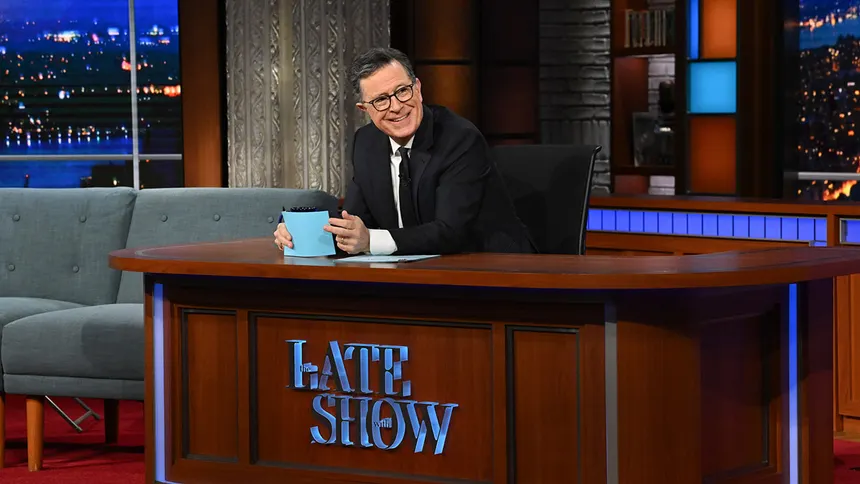
Although Colbert’s show remained the top-rated in late night, CBS confirmed its conclusion in May 2026, citing cost pressures and strategic realignment linked to the $8.4 billion Paramount–Skydance merger.
By Namith DP | July 18, 2025
Introduction: End of a Landmark Late-Night Era
On July 17, 2025, CBS confirmed that The Late Show with Stephen Colbert will end in May 2026, capping an influential 11-year run. The show, hosted by the former Colbert Report satirist, consistently led the late-night ratings race and played a central role in political and cultural discourse throughout the Trump, Biden, and early DeSantis years. The decision has sparked widespread industry and political debate, particularly due to its timing amid Paramount Global’s $8.4 billion sale to Skydance Media.
This is not just the end of a show—it’s the unraveling of a foundational pillar in American late-night programming.
Fast Facts
- Announcement Date: July 17, 2025
- Final Air Date: May 2026
- Seasons: 11
- Episodes: ~1,700
- Network Statement: Decision driven by “fiscal strategy,” not ratings or content
- Average Viewership (2024–25): 2.5 million—highest among late-night shows
Strategic and Financial Pressures at CBS
CBS emphasized that the decision to cancel The Late Show was purely financial. Industry sources linked the move to cost-cutting initiatives initiated during Paramount Global’s pending sale to Skydance Media. While the network denied political motivations, the broader context suggests multiple intersecting factors:
Paramount’s Cost Rationalization
- Paramount is slashing overhead in preparation for the Skydance acquisition.
- The sale, announced in early July, requires regulatory clearance and board-level restructuring.
- Late-night programming, especially high-production studio shows, carry significant costs—Colbert’s show alone employs over 200 staffers.
Genre-Wide Decline in Profitability
- Linear TV audiences are shrinking, especially among 18–34-year-olds.
- Advertisers increasingly favor streaming or short-form digital content.
- Network returns on late-night programming have been decreasing annually for five consecutive years.
Reactions from Colbert and Peers
During his July 17 taping, Colbert directly addressed his live audience:
“CBS has made the decision to end The Late Show next year. I’m honored to have had this platform. I love my team, and I love doing this every night. We’ll finish strong.”
Audience members booed. Colbert, composed, responded:
“Yeah, I share your feelings.”
Other hosts and public figures weighed in:
- Jimmy Kimmel: “Love you Stephen. CBS can go [expletive] itself.” (Instagram)
- Jon Stewart: Called the cancellation a “loss to satire, truth, and democracy” during The Daily Show.
- Sen. Elizabeth Warren: Urged CBS to release internal memos to clarify if political bias played a role.
- Sen. Adam Schiff: Demanded congressional scrutiny if editorial decisions were influenced by political settlements.
Political Backdrop: Timing Raises Questions
The cancellation came days after Colbert criticized CBS parent company Paramount for quietly settling a defamation lawsuit with Donald Trump. Trump had sued over a 60 Minutes segment in 2020. The network reportedly paid $16 million to resolve the case out of court.
Though CBS executives maintain that the show’s cancellation was unrelated to Colbert’s commentary, skepticism remains:
- Colbert’s July 15 monologue directly criticized the settlement as a “sellout of journalistic responsibility.”
- Internal sources suggest Paramount legal teams expressed concern over potential libel risks during high-profile satire.
The proximity of these events—legal settlement, merger proceedings, and show cancellation—has intensified scrutiny over corporate influence on editorial programming.
Broader Decline of Late-Night TV

The Late Show’s cancellation fits into a wider contraction across the late-night television industry:
| Network | Program | Status |
|---|---|---|
| CBS | After Midnight | Canceled earlier in 2025 |
| NBC | Tonight Show with Jimmy Fallon | Facing budget cuts; show band eliminated |
| ABC | Jimmy Kimmel Live! | Host contract up for renewal; future uncertain |
| Comedy Central | The Daily Show | Interim host format under review |
Traditional late-night programming—anchored around 11:30 p.m. time slots—is struggling to remain relevant in a post-streaming world. Viewer engagement has shifted to:
- YouTube clips: Most late-night segments gain traction via digital platforms.
- TikTok: Hosts increasingly rely on 60–90 second viral snippets.
- Streaming competition: HBO’s Last Week Tonight and Netflix specials draw top-tier talent without daily grind formats.
Colbert’s Legacy: Numbers & Influence
Colbert’s transition from Comedy Central to CBS in 2015 marked a rare case of cable satire successfully evolving into mainstream broadcast. Over a decade, he left a significant mark:
- Consistent Ratings Leader: No. 1 in late-night viewership since 2016.
- 33 Emmy Nominations: Including 5 wins.
- Peabody Award (2021): For political satire that “balanced truth and levity with civic urgency.”
- Viral Success: Dozens of monologues crossed 10 million views online—frequently cited by major news outlets.
Unlike his predecessors, Colbert blurred the lines between journalist and entertainer. His interviews—particularly during the pandemic and Trump-era crises—often made headlines in traditional news cycles.
What Comes Next for CBS—and Late-Night?
CBS has confirmed it will not replace Colbert with another host. The network will sunset The Late Show franchise entirely.
Potential implications:
- No Replacement Planned: CBS executives have ruled out grooming a successor.
- Cost-Effective Alternatives: Streaming recaps, news satire podcasts, and rotating digital content are being explored.
- Late-Night Real Estate Shrinks: This move leaves CBS with no late-night programming—a stark departure from decades of tradition.
Meanwhile, Paramount and Skydance have made no announcement about future comedy or satire-focused programming under the new structure.
Conclusion
Stephen Colbert’s exit marks not only the end of a single show but the dismantling of a genre that once defined American TV culture. With CBS walking away from late-night programming entirely, the industry stands at a pivotal juncture. Budget constraints, digital disruption, and political tensions are redrawing the lines of what late-night television looks like—and who gets to make it.
As the final season of The Late Show airs through May 2026, Colbert’s departure will leave both a creative vacuum and a business model under review.
For now, viewers, critics, and policymakers alike are left asking: What’s next for satire, and who—if anyone—will fill the void?
For more news on media read –
About The Author





Sad to see Colbert go
“Purely financial”, I’ll call it “petty and vindictively financial” 😁
Who knows, it might be politically influenced
😂 I thought that fact didn’t even need to be said. Call out your boss for running with rogues, get your show cancelled.