
By Namith DP | July 06, 2025
Introduction
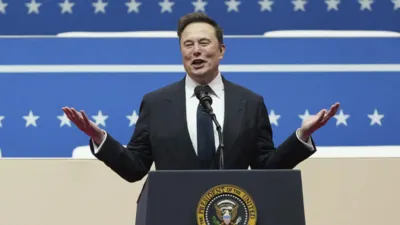
Elon Musk, the world’s richest person and architect of transformational industries—from EVs and private spaceflight to social media—has dropped a political bombshell. On July 5, 2025, via a decisive pulse-clocked poll on X (formerly Twitter), Musk announced the formation of the America Party. He justified it as a solution to a “one-party system, not a democracy,” one steeped in “waste & graft”. What began as a public protest against a trillion-dollar spending bill signed by Donald Trump has escalated into a strategic bid to remake the political landscape. This is not typical billionaire celebrity politics. It signifies a fundamental challenge to the entrenched two-party duopoly in America.
Part A: Elon Musk’s “America Party” Hits the U.S. Political Stage
1. The Trigger: Spending Bill Fallout

- Context matters. On July 4, 2025, President Trump signed the “One Big, Beautiful Bill” (OBBB), a $3.3 trillion legislative package featuring tax cuts and infrastructure investments.
- Musk pushed back. The Tesla and SpaceX CEO had publicly labeled the bill “utterly insane and destructive,” warning that it would push the nation toward unsustainable debt and described U.S. governance as effectively “bankrupting our country with waste & graft”.
- Poll-driven launch. On July 4, Musk conducted a poll on X, posing whether Americans wanted independence from the two-party system. Among more than 1.2 million voters, a decisive 65% responded “yes”.
Result: On July 5, 2025, Musk declared, “you want a new political party and you shall have it… the America Party is formed to give you back your freedom.”
2. America Party: Goals & Strategy
Musk frames the America Party as:
- Fiscal conservatism. He emphasizes deficit reduction and criticizes both major parties for enabling unchecked spending.
- Decentralized ballot access. Musk proposes a targeted strategy—running in 2–3 Senate and 8–10 House seats where margins are tight. The aim: establish a swing bloc capable of influencing critical votes.
- Technology-led governance. He recommends modernizing the military and promoting regulatory reforms to accelerate U.S. leadership in AI and high-tech sectors .
- Centrist appeal. Positioning the party to attract the “80% in the middle”—a base that grows frustrated with political extremes.
Strategic advantage
Musk draws on historical precedent: just as Greek general Epaminondas used concentrated attack to conquer Sparta at the Battle of Leuctra, his plan emphasizes focused electoral pressure for maximum influence.
3. Logistics & Legal Roadblocks
State-by-state hurdles
- Each of the 50 U.S. states enforces unique petitions, vote thresholds, and regulatory frameworks for party access.
- Example: California requires either 0.33% of registered voters (~75,000 names) or 1.1 million signatures—and to remain viable, must maintain these registration levels or win 2% in certain races.
Federal oversight
- National recognition triggers oversight by the Federal Election Commission (FEC).
- Before recognition, independent groups may operate without spending caps; post-recognition, donations become limited under national party finance laws.
Legal challenges ahead
- The Democratic and Republican parties are likely to initiate lawsuits over petition thresholds, signature authenticity, ballot language, and state-level regulations.
Timeline pressure
- Experts estimate full national ballot access requires a multi-year process, often aided by massive funding and extensive legal teams. Getting significant representation by the 2026 midterms would pose a monumental challenge.
4. Musk’s Political Record & Capacity
Previous political engagement
- America PAC: In 2024, Musk’s super PAC funded Trump’s campaign, investing roughly $277 million, making him the election’s top individual donor.
- Department of Government Efficiency (DOGE): Musk helmed this Trump administration body until late May 2025, implementing aggressive cost-cutting measures. Some sources report $190 billion saved, others argue cuts cost $135 billion.
Financial firepower
- Musk’s net worth remains above $350 billion, positioning him to underwrite both campaign and legal expenses in excess of hundreds of millions – an unmatched advantage in U.S. politics .
- Still, FEC rules limit individual donations once the party achieves formal status, meaning spending would need careful structuring .
5. Risks, Opportunities & Political Implications
Risks
- Duopoly inertia. Third parties historically struggle with limited access, media attention, and voter recognition.
- Legal friction. State challenges, litigation, and procedural delays could stall or fragment the campaign.
- Trump retaliation. The former president has already threatened to revoke federal support to Musk’s companies, demonstrating the personal stakes involved.
Opportunities
- Swing vote leverage. In an evenly divided Congress, even 2–3 Senators plus several House members could tilt legislative outcomes.
- Public appetite. Recent polling suggests nearly 40% of Americans would consider supporting Musk’s party, with 14% “very likely” and 26% “somewhat likely”.
- Media presence. Musk’s direct control over X ensures massive, unfiltered communication reach—unmatched by traditional third-party organizers.
6. What Comes Next
- Ballot access efforts will begin immediately in key battleground states. Musk must hire local teams, file petitions, and manage bureaucratic timelines.
- Candidate ID phase: identifying Senate and House hopefuls aligned with his fiscal and tech-centric agenda.
- Fundraising structural changes: transitioning from independent spending via super PACs toward formal party funding once legally recognized.
- Messaging and outreach to independents and moderate voters—leaning on themes of “freedom,” “efficiency,” and “innovation.”
Part B: America Party in Motion — Infrastructure, Allies, and Political Landscape
1. Building the Infrastructure: From Vision to Voter
State-Level Infrastructure
- Petition teams in battlegrounds
Musk faces a patchwork of ballot-access laws across states. For example, in California, the party needs 0.33% voter registration (~75,000 sign-ups) or 1.1 million petition signatures, then must either maintain registration or win 2% in statewide races. - FEC registration strategy
Before national party recognition, Musk can fund the effort as an “independent group.” Post-recognition, donations will fall under FEC limits—such as $44,300 yearly to a national party committee. - Legal teams and timelines
Veteran election lawyer Brett Kappel warns: “The process…range[s] from high to extraordinarily difficult to overcome”. Musk must spend significant legal resources across numerous jurisdictions to meet deadlines.
Grassroots and Digital Mobilization
- Data-driven outreach
Musk’s America PAC amassed voter data through petitions and multimedia ads in swing states like Wisconsin. They spent over $18 million in the Wisconsin Supreme Court election by March 2025. - Technology-enabled campaigns
Leveraging X (Twitter), Musk can coordinate real-time messaging and cross-promotion—an asset unmatched by traditional third parties.
2. Political and Organizational Alliances
Targeted Congressional Challenges
- Swing seat strategy
Musk plans to target “2–3 Senate seats and 8–10 House districts,” aiming for influence with razor-thin margins. - Incumbent challengers
He’s pledged to support opponents of lawmakers who backed the “One Big Beautiful Bill.” Congressman Thomas Massie (R-KY) has reportedly received backing.
Collaboration with Other Third Parties
- Engagement with Andrew Yang
Andrew Yang of the Forward Party has publicly welcomed Musk’s overture, emphasizing shared priorities like Universal Basic Income. - Libertarian interest
Libertarian leaders have discussed potential partnership with Musk, though formal alignment remains unspecified.
3. Messaging and Policy Priorities
Core Themes
- Fiscal responsibility
America Party promises strong deficit reduction—Musk cited the “uni-party” creating $2.5 trillion deficits, warning of economic collapse. - Tech-first mindset
The party plans to support deregulation, free trade, AI leadership, immigration of skilled workers, and defense modernization.
Centrist Appeal
- Reclaiming the “80%”
Musk positions the party as the voice of middle-ground voters frustrated with extremes on both parties. - Media vs. Message
While Musk holds dominant influence on X, traditional media might resist third-party legitimacy. The party must invest heavily in polling, town halls, and grassroots engagement.
4. Tactical and Legal Hurdles
Electoral System Challenges
- Winner-take-all constraints
Political scientists note U.S. electoral rules heavily favour the two-party system: third parties seldom win seats but can play spoiler. - Historical precedent
Green and Libertarian parties, despite longevity, still fight for ballot slots; path to presidential ballot requires state-by-state efforts spanning years.
Litigation Risks
- Battleground legal battles
State parties will challenge petitions on signature validity, submission processes, residency rules, and ballot language. The legal environment will likely be intense. - Federal campaign finance compliance
After recognition, the party becomes subject to federal donation caps. Musk must restructure funding mechanisms to comply.
5. Potential Scenarios: Spoiler, Kingmaker or Breakthrough?
| Scenario | Likely Outcome |
|---|---|
| Spoiler | America Party draws votes in tight races, altering results without winning seats. |
| Kingmaker | Wins a handful of House/Senate seats, leveraging bargaining power in narrowly split Congress. |
| Breakthrough | Gains major party status by 2028—unlikely without winning regional state elections first. |
Analyst Harry Enten says Musk’s party may mirror past third parties: “an expensive protest rather than a viable alternative”.
6. Trust, Leadership, and Sustainability
Leadership Structure
- Top-down leadership
Elon Musk remains the central figure—no formal leadership slate beyond his declaration. Critics warn centralized control may hinder local coordination. - Emerging voices
Figures like Thomas Massie and Andrew Yang may offer leadership depth. But their roles remain fluid pending formal announcements.
Funding Strategy
- Musk’s pocketbook
With a net worth over $350 billion, Musk can underwrite the foundational phases. - Diversified donations
Long-term viability will require expanding donor base, independent of Musk’s finances, especially once FEC rules apply.
7. Media Reaction and Public Reception
Media Landscape
- Polarized coverage
Conservative outlets highlight Musk’s fiscal critique; liberal media emphasise infrastructure challenges and political volatility. - Third-party skepticism
Analysts echo concerns: “No institutions exist that welcome a third party being super successful”.
Public Sentiment
Promising initial polling
Early surveys place America Party support at ~40% interest—14% “very likely,” 26% “somewhat”.
Mobilization matters
High nominal support may not translate into votes without robust ground operations, candidate vetting, and disciplined messaging.
8. What Lies Ahead
Short-Term Timeline (Next 6–12 Months)
- Launch petition drives in key states by Q3 2025
- Begin candidate recruitment and vetting processes
- Prepare for 2026 midterm congressional and possible state-level races
Mid-Term Prospects (by 2028)
- Fine-tune around regional successes; expand toward presidential ticket
- Formalize party infrastructure across districts and states
- Monitor polls for realignment of bipartisan resentments
Part C: Lessons from History, Expert Analysis, and the Road Ahead
1. Historical Precedents: What Third Parties Tell Us

The Legacy of Past Movements
American politics is historically inhospitable to third parties:
- The Reform Party, launched by Ross Perot in the 1990s, peaked at 8% of the vote in 1996 and failed to gain long-term traction despite a billionaire founder and populist agenda.
- The Libertarian Party, founded in 1971, remains the most enduring third party but has never held a federal office.
- The Green Party has succeeded in securing local offices but failed to meet the vote thresholds for federal recognition in most states.
These efforts demonstrate that visibility and initial support do not guarantee institutional sustainability without long-term infrastructure.
Duverger’s Law in Action
Political scientists consistently cite Duverger’s Law, which holds that plurality electoral systems (like the U.S.’s winner-take-all system) inherently produce two-party dominance. As a result:
- Votes for third parties often act as spoilers rather than viable alternatives.
- Structural barriers—like restrictive ballot access laws, debate exclusion, and low media coverage—further stifle competition.
“Third parties are forced to fight uphill in a system that wasn’t designed for them to succeed.” — Dr. Collin Anderson, University at Buffalo Political Science Department
2. Expert Evaluations: Viability and Constraints
Structural Barriers
Ballot access requirements vary widely by state. For example:
- Texas requires more than 83,000 valid signatures from voters who did not participate in party primaries.
- California demands a percentage of registered voters or statewide write-in victories to retain recognition.
This patchwork means Musk will need a dedicated legal, logistical, and field team to qualify in each state — all before 2026 if the party plans to run in the midterms.
“Ballot access is expensive, legally complex, and intentionally difficult.” — Brett Kappel, Federal Election Lawyer
Political Branding vs. Institutional Building
While Musk enjoys unparalleled name recognition, political analysts emphasize that building a functioning party requires more than popularity.
“The America Party needs more than Musk’s name — it needs operatives, candidates, local chapters, and sustained funding.” — Amy Walter, Cook Political Report
Without a formal leadership team, Musk remains the sole political voice. If he shifts attention, as he has in prior ventures (e.g., The Boring Company, Neuralink), the party risks losing focus.
3. America Party’s Ideological Footprint
Platform Overview
Musk’s public statements and campaign posts reveal the following positions:
- Fiscal Conservatism: Eliminate deficit spending and reduce government waste.
- Tech-forward Governance: Promote AI innovation, deregulate federal bureaucracy, and modernize defense tech.
- Immigration Reform: Support legal immigration for high-skilled workers, especially in STEM.
- Free Speech Absolutism: Oppose censorship and restore platform neutrality across social media.
These policies borrow from libertarian, conservative, and technocratic ideologies — a blend rarely found in one platform.
Centralized Leadership
Currently, Musk is the only identifiable leader. There is no party chair, spokesperson, or designated candidate recruitment team.
This differs from third-party efforts like Andrew Yang’s Forward Party, which set up national and state-level boards early on. Experts warn that lack of structure may hinder operational execution.
4. Forecasting: America Party in 2026 and Beyond
Best-Case Scenario
- By 2026: The party secures ballot access in 15–20 states and fields candidates in 2–3 Senate and 8–10 House races.
- Outcome: Wins 1–2 House seats or acts as spoiler in tight districts. If Congress remains divided, a few seats could provide leverage on major legislation.
Moderate Scenario
- Gains national attention and polling momentum, but fails to clear ballot access hurdles in most states.
- Candidates run as independents endorsed by the party, diluting the brand but preserving Musk’s influence.
Worst-Case Scenario
- Legal and financial barriers overwhelm organizational capacity.
- Musk shifts focus; candidates fail to materialize; public interest fades by 2027.
- Party dissolves or reverts to a Super PAC model, similar to Musk’s earlier America PAC.
Key Variables to Watch
- Candidate Recruitment: Will Musk attract credible House or Senate hopefuls?
- State Compliance: How many jurisdictions will grant official ballot status?
- Leadership Depth: Can the party function without Musk in the day-to-day?
5. Risks to Musk and His Businesses
Political Retaliation
Musk’s move into party politics draws new scrutiny:
- Tesla and SpaceX receive billions in federal contracts, subsidies, and regulatory approvals.
- As early as July 2025, former President Trump threatened to cut off support unless Musk drops his third-party plans.
Musk has acknowledged the risk: “Yes, it could affect Tesla and SpaceX. But the cost of not speaking up is higher.”
Regulatory Investigations
Heightened political activity could lead to:
- Closer scrutiny of campaign finance activity.
- Congressional hearings over influence, data use, or coordination with affiliated candidates.
Legal experts suggest that Musk may insulate himself through structural firewalls between his companies and the America Party — but this would require airtight compliance and disclosures.
6. Public Sentiment: Polling and Popularity
Recent polling from Ipsos and Morning Consult (July 2025):
- 40% of Americans say they would “consider voting” for a Musk-aligned candidate.
- 14% say they would be “very likely” to vote America Party.
- Support skews toward:
- Male voters under 50
- Independents and moderate conservatives
- Voters in Western states
Despite strong top-line numbers, experts caution that “considering” a party and actually voting for it are very different.
7. Strategic Alternatives
Even if the America Party fails to become a permanent third party, Musk may still influence outcomes by:
- Endorsing individual candidates as independents.
- Funding issue-specific ballot initiatives, such as government spending caps or tech deregulation.
- Shaping policy discourse through control of X and partnerships with aligned influencers.
These tools, already in Musk’s portfolio, could remain effective regardless of the America Party’s electoral performance.
Conclusion: Can the America Party Reshape U.S. Politics?
Elon Musk’s America Party is the most high-profile third-party venture in decades — possibly since Ross Perot in 1992. Unlike previous efforts, it has unprecedented assets:
- A founder with near-unlimited funding.
- Real-time media control via X.
- A motivated base of technocrats, independents, and political outsiders.
But major liabilities remain:
- No formal structure or leadership beyond Musk.
- High legal and ballot access barriers.
- Potential corporate and regulatory backlash.
The next 12 months will determine whether the America Party becomes a durable political force or a short-lived protest movement. If Musk commits to candidate development, regulatory compliance, and localized campaigning, the party could reshape swing districts and legislative dynamics by 2026. Otherwise, it risks becoming a political footnote—an ambitious, well-funded effort that never scaled.
About The Author






Good insight.
[…] Elon Musk Launches America Party: A New Era in Politics […]