
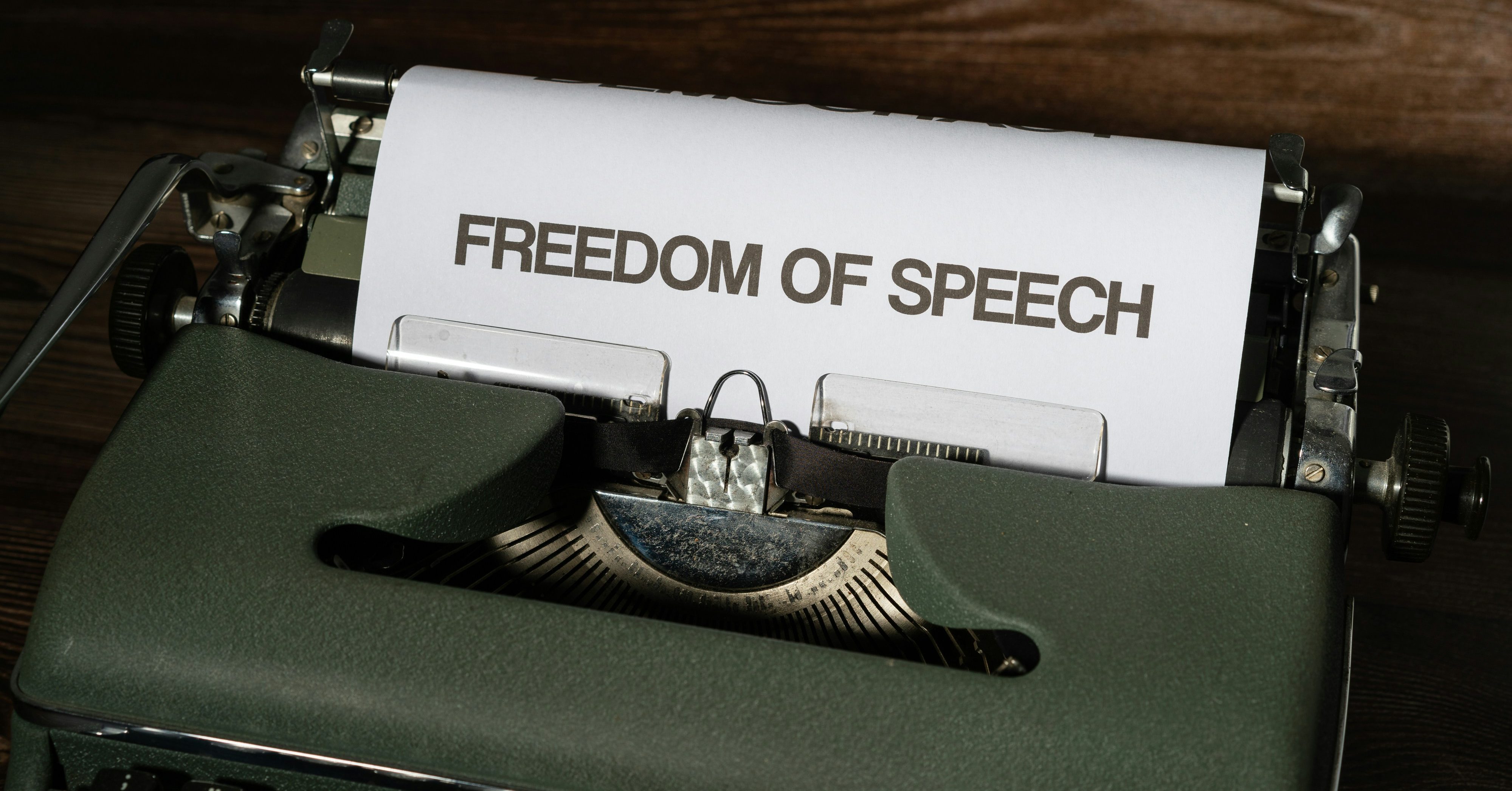
Introduction: Who Controls Free Speech in the Digital Age?
The internet is a celebrated equalizer—a digital space where people can express themselves freely, no matter where they are. As technology companies have become more involved, new chances for connection and conversation have emerged. Efforts for improved content moderation, along with the creativity of users and influencers, show how platforms like Meta, X (formerly Twitter), TikTok, and Google are working to create a more inclusive environment for diverse voices in the digital world.
Free speech norms, the informal rules and values that define what is acceptable expression, are no longer shaped solely by governments or courts. They are increasingly set by platforms whose content decisions operate outside traditional democratic scrutiny. This transformation raises urgent questions: Who gets to decide what constitutes hate speech or misinformation? What are the limits of expression in privately owned digital spaces? And how can societies balance platform accountability with the protection of civil liberties?
In this article, we explore how tech companies have become the de facto arbiters of modern free speech and what that means for democracy, dissent, and the future of online communication.
Section 1: Free Speech Is No Longer Just a Government Issue
In most democratic societies, free speech is protected by law, enshrined in constitutions, human rights declarations, and civil liberties frameworks. In the United States, the First Amendment protects against government censorship, not private moderation. That distinction, once clear, is now muddy in the digital realm.
Why? Most public discourse now happens on privately owned platforms, not in public parks or town halls. If Facebook decides to remove your post or TikTok buries your video, your legal options are limited. The result is a world in which:
- Private companies effectively decide what speech lives or dies.
- Terms of service—not constitutions—govern online expression.
- Free speech norms evolve based on corporate policy, not public deliberation.
This new reality demands a deeper understanding of how platform governance operates—and how it shapes global discourse in real time.
Section 2: The Rise of the Platform Sovereigns

A small number of companies now control the infrastructure of global speech. Consider:
- Meta (Facebook, Instagram, Threads) reaches nearly 4 billion users.
- YouTube (Google) hosts over 500 hours of video uploads every minute.
- X (Twitter), though smaller, remains a key platform for news, activism, and political discourse.
- TikTok, with its short-form video virality, influences youth culture and political awareness worldwide.
These platforms function like nation-states in the digital realm, complete with:
- Internal governance (community guidelines, moderation teams)
- Enforcement mechanisms (bans, suspensions, algorithmic downgrades)
- Appeals processes (often automated, rarely transparent)
- Policy arms (lobbying efforts and content regulation frameworks)
But unlike democracies, these digital empires are not accountable to voters. Their rules are crafted in boardrooms, driven by PR crises, market pressures, and opaque ethics reviews.
Section 3: Algorithmic Amplification and Silent Censorship
One of the most powerful yet invisible tools tech companies use to influence speech is algorithmic curation. Platforms like YouTube, Facebook, and TikTok decide what you see based on engagement metrics, not editorial judgment. The result?
- Content that sparks outrage, polarization, or sensationalism is more likely to trend.
- Nuanced or complex speech often gets buried.
- Minority voices are at risk of being marginalized by machine learning models that don’t understand cultural context.
Even when content isn’t removed, it can be de-amplified—a practice often called shadowbanning. Users aren’t informed; they simply notice their posts no longer reach their audience.
In essence, speech is not always suppressed, but silenced by invisibility.
Section 4: The Content Moderation Conundrum
Content moderation is the frontline of platform governance. It’s where free speech norms collide with real-world harms: hate speech, misinformation, incitement to violence, and harassment.
The challenge is complex:
- Platforms must remove harmful content to protect users and comply with laws.
- But over-moderation risks chilling legitimate speech, especially for marginalized communities.
Examples:
- Facebook’s content moderation mistakes have removed documentation of war crimes in Syria.
- TikTok has been accused of censoring LGBTQ+ content in conservative markets.
- Twitter’s policies on “misinformation” have been criticized both for laxity (allowing hate speech) and overreach (removing dissenting voices during COVID-19).
Moderation at scale is messy, inconsistent, and prone to political pressure.
AI systems, now responsible for the majority of takedowns, struggle with nuance. A sarcastic comment, a regional dialect, or a reclaiming of slurs by marginalized groups can be flagged as harmful by untrained algorithms.
Section 5: Global Speech, Local Censorship
Tech companies operate globally but must comply with local laws, many of which restrict speech. This creates ethical tensions:
- In India, Twitter has removed critical posts under pressure from the Modi government.
- In Vietnam, Facebook has been accused of censoring anti-government posts.
- In Russia, YouTube has blocked videos deemed illegal under the Kremlin’s censorship laws.
To maintain market access, companies often comply with authoritarian regimes, effectively exporting censorship. Free speech norms suffer in the process.
Meanwhile, speech standards differ vastly across countries. What’s acceptable in the U.S. may be banned in Germany or Pakistan. Tech companies are forced to navigate conflicting legal and cultural norms, often without public input or transparency.
Section 6: The Politicization of Platform Policy

In polarized societies, platform decisions quickly become political flashpoints.
- Conservatives in the U.S. claim they are disproportionately censored on platforms like YouTube and Facebook.
- Progressives argue that platforms don’t do enough to curb hate speech or disinformation.
- Elon Musk’s takeover of X reframed the company’s content moderation policies as a battleground between “free speech absolutism” and civic responsibility.
As a result, governments are increasingly intervening:
- The EU’s Digital Services Act (DSA) requires transparency in moderation and imposes fines for harmful content.
- In the U.S., congressional hearings regularly grill tech CEOs over their speech policies, without a clear consensus on what should be done.
Free speech online is now a partisan war zone, with tech companies caught in the middle.
Section 7: Platform Governance Is Not Democratic
Perhaps the most troubling issue is that platform rules are unaccountable to the public. Unlike governments, tech companies:
- They are not elected or beholden to a constitution.
- They are guided by commercial interests, not civic duties.
- Change policies rapidly, often in response to PR damage, not public consultation.
There’s no global “Digital Bill of Rights,” and no user vote on what counts as hate speech or misinformation. Content decisions are made by a combination of trust and safety teams, AI models, and outsourced moderators in low-wage countries.
The Facebook Oversight Board, launched in 2020, is a rare exception—an attempt at independent review. But its recommendations are non-binding, and its reach is limited.
We need stronger models of democratic governance in the digital space, ones that put power back in the hands of users and communities.
Section 8: Whose Speech Gets Protected?
Free speech is not experienced equally. Marginalized communities, Black, Indigenous, LGBTQ+, disabled, and Muslim, often face the dual burden of:
- Being disproportionately targeted by hate and harassment.
- Having their speech flagged as “violent” or “divisive” by moderation systems.
For example:
- Black activists have reported that posts calling out racism are removed more frequently than racist content itself.
- Palestinian voices are regularly censored on Meta platforms under vague content rules.
- Trans creators on TikTok face bans for discussing gender identity, even when following guidelines.
This reflects a larger issue: speech norms are shaped by power. Platforms claim neutrality, but their moderation reflects social and political biases.
Section 9: The Role of AI in Defining Speech

As platforms scale, AI-driven moderation has become the norm. These systems:
- Analyze text, images, and audio for policy violations.
- Flag content for removal or de-ranking.
- Learn from past decisions—but often without context.
While AI offers speed and efficiency, it lacks cultural literacy, emotional nuance, and ethical reasoning. Worse, it’s prone to reproducing the biases of its training data.
OpenAI, Meta, and Google all deploy AI systems that influence what billions of people can post or see. But the training data, design decisions, and failures of these systems are often shielded from public scrutiny.
As generative AI grows, blurring the line between authentic and synthetic speech, these issues will only intensify.
Section 10: Reclaiming Free Speech Norms in the Digital Age
So, where do we go from here? The solution is not to abandon moderation; platforms must curb hate, violence, and disinformation. But we need a new paradigm that:
- Centers transparency
- Clear content rules
- Public moderation reports
- Independent appeals mechanisms
- Strengthens user rights
- A digital free speech charter
- Due process for takedowns
- Tools to understand algorithmic curation
- Encourages democratic governance
- User councils and participatory policymaking
- Multistakeholder oversight boards
- Public accountability for moderation decisions
- Protects vulnerable communities
- Culturally competent moderation
- Support for targets of harassment
- Inclusive content policies
- Demand AI accountability
- Explainable algorithms
- Bias audits
- Human oversight in critical decisions
The future of free speech won’t be found in lawsuits or slogans. It will be built through collective negotiation, ethical design, and sustained pressure on tech companies to serve the public interest, not just shareholders.
Conclusion: Free Speech Needs a New Framework
The internet has changed everything, and so must our approach to free speech. In the digital era, rights are shaped less by laws than by platforms. And platforms are shaped not by ideals, but incentives.
We can no longer afford to treat tech companies as neutral conduits. They are editors, gatekeepers, and norm-setters. Their choices shape elections, influence public opinion, and determine who gets heard.
If we want a future where free speech thrives, without enabling harm, division, or manipulation, we must demand more from the platforms that host our lives. The stakes are not just digital. They’re democratic.
References
- Electronic Frontier Foundation (EFF). (2024). Who Has Your Back? Report. https://www.eff.org
- Pew Research Center. (2023). Social Media and Censorship Views. https://www.pewresearch.org
- Access Now. (2023). Content Moderation and Human Rights. https://www.accessnow.org
- Oversight Board (Meta). https://www.oversightboard.com
- Human Rights Watch. (2022). How Content Moderation Hurts Activists. https://www.hrw.org
- Brookings Institution. (2023). AI and Free Speech in the Age of Algorithms. https://www.brookings.edu
- EU Digital Services Act. https://digital-strategy.ec.europa.eu/en/policies/digital-services-act
- Knight First Amendment Institute. (2023). Free Speech in the Platform Era. https://knightcolumbia.org
Olivia Santoro is a writer and communications creative focused on media, digital culture, and social impact, particularly where communication intersects with society. She’s passionate about exploring how technology, storytelling, and social platforms shape public perception and drive meaningful change. Olivia also writes on sustainability in fashion, emerging trends in entertainment, and stories that reflect Gen Z voices in today’s fast-changing world.
Connect with her here:https://www.linkedin.com/in/olivia-santoro-1b1b02255/
About The Author


