
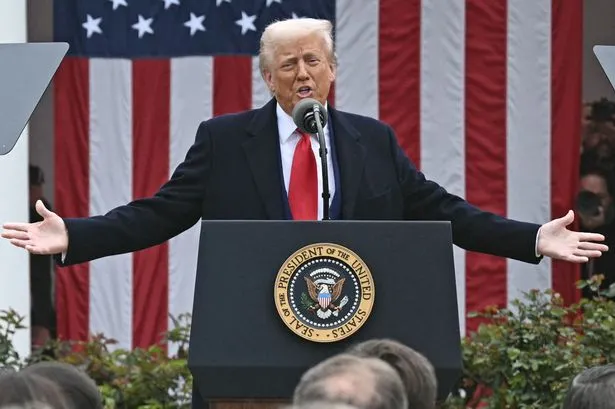
By Namith DP | June 25, 2025
This article examines Donald Trump’s conduct in office and post-presidency through documented legal records, executive actions, and verified statements. It focuses on his unprofessionalism and breaks from institutional norms. Drawing from DOJ transcripts, congressional hearings, court filings, and news coverage, the article aims to objectively highlight how Trump’s behavior diverged from all modern presidential standards.
Introduction
Donald Trump’s presidency and post-presidential behavior have presented an extraordinary challenge to the traditional expectations of U.S. executive conduct. Where prior presidents generally upheld standards of decorum and institutional respect, Trump’s approach—characterized by vulgar rhetoric, attacks on democratic institutions, and open disregard for legal boundaries—stands out in modern American history.
PART 1: Election Fraud Claims and Institutional Pressure
1.1 False Election Narratives
Donald Trump’s claims about widespread voter fraud in the 2020 election were among the most consequential and unprecedented behaviors by a modern president.
- Despite public assurances from the Cybersecurity and Infrastructure Security Agency (CISA) and the Department of Justice, Trump continued to assert fraud without verified evidence.
- On December 1, 2020, then-Attorney General William Barr stated: “To date, we have not seen fraud on a scale that could have affected a different outcome in the election.”
- Trump responded by publicly attacking Barr and pushing conspiracy theories involving foreign interference, ballot tampering, and algorithmic vote switching.
1.2 Attempts to Influence DOJ
Trump exerted sustained pressure on top officials at the Department of Justice:
- According to testimony before the Senate Judiciary Committee, Trump demanded DOJ leadership publicly declare the election “corrupt.”
- When Acting Attorney General Jeffrey Rosen and Deputy AG Richard Donoghue refused, Trump considered installing Jeffrey Clark—a DOJ official sympathetic to his claims—as AG.
- Rosen and Donoghue threatened mass resignations, halting the plan.
1.3 Calls to State Officials
1.3 Calls to State Officials
Trump personally reached out to state officials in an attempt to alter certified results:
- In a now-famous call on January 2, 2021, Trump told Georgia Secretary of State Brad Raffensperger to “find 11,780 votes.”
- According to the transcript, Trump insisted: “There’s nothing wrong with saying you recalculated.”
- Legal scholars have widely cited this call as a potential violation of Georgia election law.
1.4 Role of Misinformation
Trump’s behavior led to a flood of misinformation that undermined public trust
- Repeated claims of Dominion voting machine fraud, despite lack of evidence
- Promotion of the debunked “Sharpiegate” theory in Arizona
- Use of social media to amplify fringe content from sites like Gateway Pundit and OANN
These actions had direct consequences:
- Over 60 court cases were filed challenging the 2020 results—none resulted in evidence of widespread fraud.
- Judges appointed by both parties ruled against the Trump campaign.
- Polls showed that nearly 70% of Republican voters believed the election was stolen.
PART 2: Norm Violations, Public Vulgarity, and Executive Overreach

2.1 Abandonment of Professional Discourse
Trump’s language, both in office and after, broke dramatically with presidential standards:
- In a 2024 campaign rally in New Hampshire, Trump said: “I don’t give a F**K what they think.” This language was broadcast live and criticized by both Democrats and Republicans.
- Trump regularly used terms like “loser,” “scumbag,” and “rat” to refer to political opponents and career officials.
- No modern president had normalized such rhetoric in official speeches or public events.
2.2 Social Media and Targeting
Trump’s use of social media platforms was not just frequent—it was combative and retaliatory
- He used Twitter and later Truth Social to attack judges, journalists, and civil servants.
- During the Capitol riots, Trump tweeted that Mike Pence “didn’t have the courage,” escalating tensions.
- Trump’s social media behavior resulted in permanent suspension from Twitter in January 2021.
2.3 Undermining Institutions
- Trump removed inspectors general from key departments, often without cause. In 2020 alone, five IGs were dismissed.
- He called the FBI and DOJ “corrupt” when they didn’t align with his narrative.
- Trump undermined the CDC during the COVID-19 pandemic, promoting unverified treatments and contradicting scientific advice.
2.4 Loyalty over Competence
- Trump often selected appointees based on personal loyalty rather than qualifications.
- According to Axios and Politico, multiple Cabinet members were informed of their dismissal via tweets.
- Examples include the abrupt firing of Secretary of Defense Mark Esper and National Security Adviser John Bolton.
PART 3: The Capitol Riot, Legal Fallout, and Historical Comparisons
3.1 January 6 and Command Responsibility
- Trump held a rally near the White House on January 6, 2021, telling supporters to “fight like hell.”
- Despite warnings from intelligence agencies, Trump refused to activate the National Guard early.
- White House logs and communications showed Trump did not intervene for over 3 hours as the Capitol was attacked.
3.2 Legal Investigations and Indictments
- Trump has faced indictments in state and federal cases including:
- Interference in Georgia’s election
- Retention of classified documents at Mar-a-Lago
- Obstruction of justice
- Conspiracy to defraud the U.S. government
- These are ongoing, with significant legal ramifications for presidential accountability.
3.3 Break with Presidential Tradition
Historians point out that Trump violated post-Watergate reforms and traditions in nearly every category:
- No prior president attempted to overturn a certified election.
- Trump is the only president to be impeached twice.
- His refusal to participate in a peaceful transfer of power was condemned by former presidents of both parties.
3.4 The Institutional Response
- DOJ, courts, and state election boards resisted pressure.
- Congress issued bipartisan reports condemning Trump’s actions.
- The January 6 Committee’s final report described his conduct as a “multi-part plan to overturn the election.”
PART 4: Post-2025 Political Influence and International Behavior
4.1 Continued Political Mobilization
Following his 2024 defeat and ongoing legal entanglements, Donald Trump did not retreat from the political spotlight. Instead, he intensified his influence over the Republican Party:
- In 2025, Trump launched the “America First PAC 2.0,” which raised over $180 million by Q2 of the year, according to FEC filings.
- He continued holding rallies in battleground states, often drawing tens of thousands and repeating false claims about 2020 and 2024 elections.
- Trump-aligned candidates dominated GOP primaries in several states, including Arizona, Ohio, and Florida.
4.2 Role in Legislative Obstruction
Even without holding office, Trump’s influence shaped legislative priorities:
- Congressional Republicans closely aligned with his positions blocked bipartisan immigration and election reform packages.
- Trump’s endorsements served as litmus tests for Republican loyalty, with those who refused to echo his claims facing primary challenges.
4.3 Relationship with Foreign Authoritarian Leaders
Trump’s post-presidency international behavior has raised concerns among diplomatic and intelligence officials:
- In 2025, Trump met with Hungary’s Viktor Orbán in Budapest and praised his model of “strong national control.”
- He continued praising Russian President Vladimir Putin in interviews, calling him “smart” and “a strong leader,” even as bipartisan criticism of Putin’s actions in Ukraine intensified.
- Reports from Politico and Foreign Policy noted Trump’s continued communications with figures from Brazil’s far-right movement and India’s nationalist factions.
4.4 Undermining U.S. Foreign Policy
Trump’s parallel diplomacy has frequently contradicted official U.S. positions
- In June 2025, while the Biden administration coordinated with NATO allies, Trump criticized U.S. military aid to Ukraine during a speech in Texas, calling it “a waste of taxpayer money.”
- Trump claimed at a July rally that he “would have ended the Ukraine war in 24 hours” and labeled current foreign policy leaders “incompetent fools.”
- These remarks received attention in Russian state media and Chinese state outlets, according to Brookings research, undercutting American messaging abroad.
4.5 Social Media and Radicalization Abroad
Trump’s continued use of Truth Social has influenced right-wing populist movements internationally:
- Content from Trump’s platform is regularly amplified by far-right groups in Europe, as documented by the Digital Forensic Research Lab.
- In Canada, Australia, and parts of Germany, social media monitoring groups noted that Trump’s rhetoric is cited in anti-government forums as validation for resisting “globalist” agendas.
This international spillover is described by political scientists as a destabilizing trend fueled by what they call “executive demagoguery without borders.”
PART 5: Legal Defense Strategies and Public Fundraising Tactics
5.1 Coordinated Legal Defense
Facing multiple criminal and civil indictments, Donald Trump has assembled an expansive and loyal legal team:
- Key attorneys include Alina Habba, John Lauro, and Todd Blanche, who have defended him in cases ranging from classified documents to January 6-related charges.
- Trump’s legal team has pursued delay tactics, venue changes, and executive privilege defenses in federal court proceedings.
- Analysts at Just Security note that Trump’s legal filings are often synchronized with public communications to shape media narratives.
5.2 Fundraising Off Legal Woes
Rather than damaging his political capital, Trump has leveraged legal troubles to raise money
- His campaign and Save America PAC routinely send fundraising emails citing “witch hunts,” “deep state attacks,” and calls to “defend Trump.”
- The New York Times reported in early 2025 that Trump raised over $45 million in a single quarter, with more than 20% allocated to legal fees.
- Trump’s campaign store sells merchandise like “Not Guilty” hats and shirts, further blurring lines between political branding and legal defense.
5.3 Public Messaging and Legal Strategy Alignment
Trump’s courtroom strategy is often reflected in public appearances:
- He refers to prosecutors as “radical left lunatics” and judges as “biased,” including personal attacks on Judge Tanya Chutkan and Special Counsel Jack Smith.
- This messaging strategy helps position Trump as both a political martyr and a fighter against institutional overreach.
- Legal experts argue this could complicate jury selection and trial integrity in upcoming cases.
Conclusion
Donald Trump’s behavior from 2017 to 2025 represents a radical departure from established norms of U.S. executive leadership. From vulgarity and misinformation to unprecedented legal threats and attempts to retain power through coercion, Trump’s conduct was widely viewed by constitutional scholars and former officials as unprofessional and dangerous.
Despite repeated challenges to institutions, key agencies and democratic processes withstood the pressure. Yet the long-term damage to public trust, political discourse, and global perception remains ongoing.
About The Author





Good insight.
[…] Inside Donald Trump’s Unprofessional Behavior: A Comprehensive, Fact-Based Review of His Conduct i… […]