
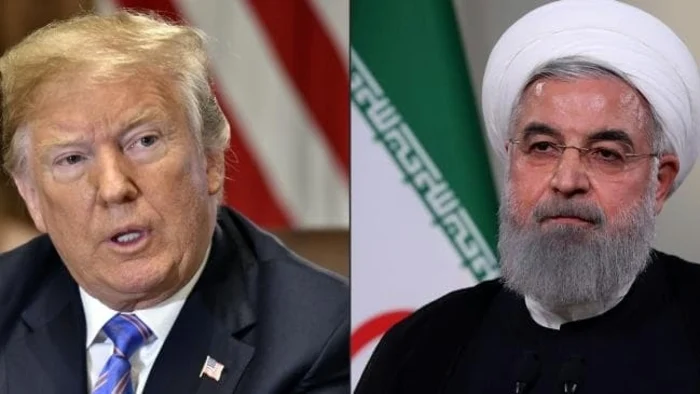
After a U.S. bombing of Iran’s nuclear facilities, the international system wouldn’t simply wait to see what happens next—it would brace for impact. The U.S. would have triggered not just a military action, but a chain reaction across the Middle East and beyond. Iran’s potential counter-responses would be calculated, asymmetrical, and likely span military, cyber, economic, and political arenas.
If you’re assessing what comes next, don’t look only at the missiles or speeches—follow the energy markets, militia movements, digital disruption, and backdoor diplomacy. Tehran is unlikely to rely on a single track. Instead, it would likely engage in a multi-pronged playbook designed to regain leverage, deter further aggression, and build strategic capital.
Below are five realistic paths Iran could take—and how it could execute them.
1. Escalation Through Proxy Forces
What Iran Could Do:
Iran has long avoided direct confrontation by using proxy groups to carry out attacks while maintaining plausible deniability. After a U.S. strike, Tehran could unleash or greenlight a wave of proxy operations across the region targeting U.S. forces, allies, and infrastructure.
Execution Mechanism:
- Hezbollah in Lebanon: Tehran could order Hezbollah to fire rockets into Israel, reigniting a northern front conflict that stretches Israeli defense resources.
- Houthis in Yemen: The Houthis, already aligned with Iran, could increase drone and missile strikes on Saudi Arabia and UAE oil facilities—targeting energy infrastructure critical to global supply.
- Shia militias in Iraq and Syria: Groups such as Kata’ib Hezbollah or Harakat al-Nujaba may attack U.S. bases in Iraq, using drones or roadside bombs (IEDs).
Precedents:
- In 2020, after the killing of Qassem Soleimani, Iran-backed militias increased attacks on U.S. troops in Iraq.
- Between 2019–2022, the Houthis carried out over 1,000 drone and missile strikes against Saudi targets.
Implication for the Region:
A regional proxy war would complicate U.S. military logistics, drag neighboring states into the conflict, and potentially lead to a broader Israel-Iran confrontation.
2. Mining the Strait of Hormuz
What Iran Could Do:
Iran controls the northern coastline of the Strait of Hormuz—a chokepoint through which roughly 20% of global oil passes. Tehran could disrupt or block commercial shipping, especially oil tankers bound for Western and Asian markets.
Execution Mechanism:
- Deploying naval mines, fast attack boats, and drone boats.
- Harassing or boarding commercial ships with the Islamic Revolutionary Guard Corps Navy (IRGCN).
- Using anti-ship missiles deployed from coastal batteries.
Precedents:
- In 2019, Iran was blamed for limpet mine attacks on tankers near Fujairah.
- The 1980s “Tanker War” during the Iran-Iraq War led to the mining of Gulf waters, prompting Operation Earnest Will by the U.S.
Impact on Global Markets:
- A disruption in Hormuz could spike oil prices above $120 per barrel within days.
- Insurance premiums for shipping in the Gulf would skyrocket, reducing tanker availability and slowing delivery times.
Strategic Leverage:
Iran doesn’t need to close the Strait entirely; merely threatening it injects enough volatility to force diplomatic attention and give it bargaining power.
3. Cyberattacks on Critical Infrastructure
What Iran Could Do:
Tehran has developed a strong cyber warfare capability and may use it to retaliate by targeting U.S. financial institutions, energy grids, or government infrastructure.
Execution Mechanism:
- Targeting banks, credit systems, or payment networks to cause financial panic.
- Attacks on U.S. water treatment facilities or power grids.
- Cyber espionage to leak sensitive information or embarrass policymakers.
Precedents:
- The 2012–2013 “Shamoon” attacks took down Aramco’s IT systems, deleting 30,000 hard drives.
- In 2021, the Boston Children’s Hospital reported a thwarted Iranian cyberattack, described by the FBI as one of the most “despicable” threats.
Operational Players:
- APT33 and APT34: Iranian-linked cyber units believed to be responsible for global espionage and attacks.
- Iranian hackers have previously targeted U.S. dams, casino networks, and even universities for research data.
Why This Matters:
Unlike conventional warfare, cyberattacks provide high-impact, low-cost, and deniable options. Iran could inflict significant economic and psychological damage without firing a shot.
4. Accelerating the Nuclear Program
What Iran Could Do:
After a physical attack on its nuclear facilities, Iran could retaliate by withdrawing completely from the Non-Proliferation Treaty (NPT) and rushing to build a bomb as a deterrent.
Execution Mechanism:
- Restart high-level uranium enrichment (above 60%, approaching weapons-grade).
- Expel International Atomic Energy Agency (IAEA) inspectors.
- Operate clandestine nuclear facilities in tunnels or protected military zones.
Precedents:
- After the U.S. exited the JCPOA (Joint Comprehensive Plan of Action) in 2018, Iran gradually increased enrichment from 3.67% to over 60%.
- North Korea withdrew from the NPT in 2003 and conducted its first nuclear test three years later.
International Fallout:
- Israel may launch further strikes to stop weaponization, escalating into direct war.
- Russia and China may shield Iran at the UN, complicating sanctions.
- Gulf nations might openly consider nuclear capabilities to match Iranian threat.
Strategic Calculation:
Tehran could argue that the U.S. attack invalidated all prior agreements and that only a nuclear deterrent ensures national sovereignty.
5. Launching Targeted Missile Strikes
What Iran Could Do:
Iran may choose overt retaliation by firing ballistic or cruise missiles at U.S. bases in Iraq, Syria, or Gulf states like Bahrain and Qatar.
Execution Mechanism:
- Using short-range ballistic missiles (SRBMs) like Fateh-110 or Zulfiqar (300–700 km range).
- Targeting bases such as Al-Udeid (Qatar), Ayn al-Asad (Iraq), or Al Dhafra (UAE).
- Coordinated attacks with drones to overwhelm air defenses.
Precedents:
- January 2020: Iran launched over a dozen missiles at Ayn al-Asad in Iraq in response to Soleimani’s killing, injuring more than 100 U.S. personnel.
Military Capabilities:
- Iran possesses over 3,000 ballistic missiles, the largest arsenal in the region.
- Precision of Iranian missiles has improved, with CEP (circular error probable) dropping below 10 meters in some variants.
Risk of Escalation:
- A direct missile strike could lead to a U.S. counterstrike, turning a tit-for-tat into full-scale war.
- Civilian casualties in host countries could shift local populations against U.S. bases, endangering regional alliances.
What Determines Iran’s Playbook?
Iran’s leadership is highly strategic. Its decisions are informed by internal pressures, regional alliances, and global diplomacy. Tehran’s response would likely be influenced by the following variables:
- Domestic sentiment: Hardliners may push for escalation, while moderates seek international sympathy.
- Energy leverage: Oil disruptions boost Iran’s revenues indirectly by raising global prices.
- Geopolitical backers: Russia and China may provide cover at the UN or accelerate arms transfers.
- Upcoming elections: Iranian leadership may use retaliation as a rallying point or to suppress dissent.
What Should Policymakers and Analysts Be Watching?
If you’re tracking what Iran might do next, focus on:
- Proxy movements in Iraq, Syria, Lebanon, and Yemen.
- IRGC naval deployment in the Gulf.
- State-controlled hacker activity in financial and infrastructure sectors.
- Uranium enrichment levels reported by the IAEA.
- Ballistic missile mobilization via satellite imagery.
Is There a Path to De-escalation?
Yes, but it will be narrow and rapidly closing. Diplomatic backchannels involving Oman, Switzerland, or Qatar could offer temporary off-ramps. Iran might be open to negotiations if it extracts some symbolic or economic concessions.
But Tehran will not respond passively. The risk isn’t just in what Iran chooses—it’s in how the U.S. and its allies react. Overreaction or miscalculation could make containment impossible.
Final Thought
You should consider one more question: Is the region prepared for another long-term destabilization, with oil markets on fire, cyber threats escalating, and militaries stretched thin across multiple theaters? If not, then every move from this point must be understood not just as military tactics, but as geopolitical chess. One wrong move and the board flips.
Citations:
- https://www.eia.gov/todayinenergy/detail.php?id=48756
- https://www.reuters.com/world/middle-east/iran-backed-militias-step-up-attacks-us-bases-2023-12-14/
- https://carnegieendowment.org/2022/01/25/iran-s-proxy-network-in-middle-east-pub-86294
- https://www.brookings.edu/articles/the-danger-of-a-spiral-in-the-gulf-if-iran-targets-hormuz/
- https://www.armscontrol.org/factsheets/IranNuclearProgram
- https://www.csis.org/programs/international-security-program/technology-and-national-security/iranian-cyber-threat
- https://www.rand.org/pubs/perspectives/PE342.html
- https://www.defense.gov/News/News-Stories/Article/Article/2069012/iranian-missile-attack-on-iraqi-base-injured-dozens-of-us-troops/
- https://www.iaea.org/newscenter/focus/iran
- https://www.washingtoninstitute.org/policy-analysis/irans-ballistic-missile-programs-and-regional-security
About The Author


