The serene meadows of Pahalgam in Indian-administered Kashmir turned into a scene of horror on April 22, 2025, when gunmen opened fire on a group of tourists, killing 26 people—25 Indian citizens and one Nepali national. This attack, the deadliest in the region in recent years, has reignited longstanding tensions between India and Pakistan, two nuclear-armed neighbors with a history of conflict over Kashmir. As accusations fly and retaliatory measures escalate, the world watches anxiously: Is war on the horizon, or will diplomacy and restraint prevail?
This article delves into the recent terrorist attack, its aftermath, the historical context of India-Pakistan relations, and the current state of affairs. It also analyzes the likelihood of war and offers practical insights for citizens of both nations on how to navigate this volatile period.
The Pahalgam Attack and Its Aftermath
On April 22, 2025, militants attacked a group of tourists in the Baisaran Valley near Pahalgam, a popular travel destination in Indian-administered Kashmir accessible only by foot or horseback. The gunmen fired at close range, targeting men specifically, with some victims accused of supporting Indian Prime Minister Narendra Modi, according to eyewitnesses. The massacre claimed 26 lives, marking it as one of the deadliest civilian attacks in Kashmir since 2000 (CNN).
The Resistance Front, believed to be a proxy for the Pakistan-based terrorist organization Lashkar-e-Taiba, initially claimed responsibility but later retracted its statement. Indian officials have pointed to “cross-border linkages” implicating Pakistan, while Pakistan has denied any involvement and called for an international investigation (The New York Times).
India’s response was swift and multifaceted:
- Suspension of the Indus Waters Treaty: India suspended its participation in the 1960 agreement governing water sharing, a move unprecedented in its history (The Hindu).
- Diplomatic Measures: India expelled Pakistani military advisers, downgraded diplomatic ties, and restricted visas for Pakistani citizens (The New York Times).
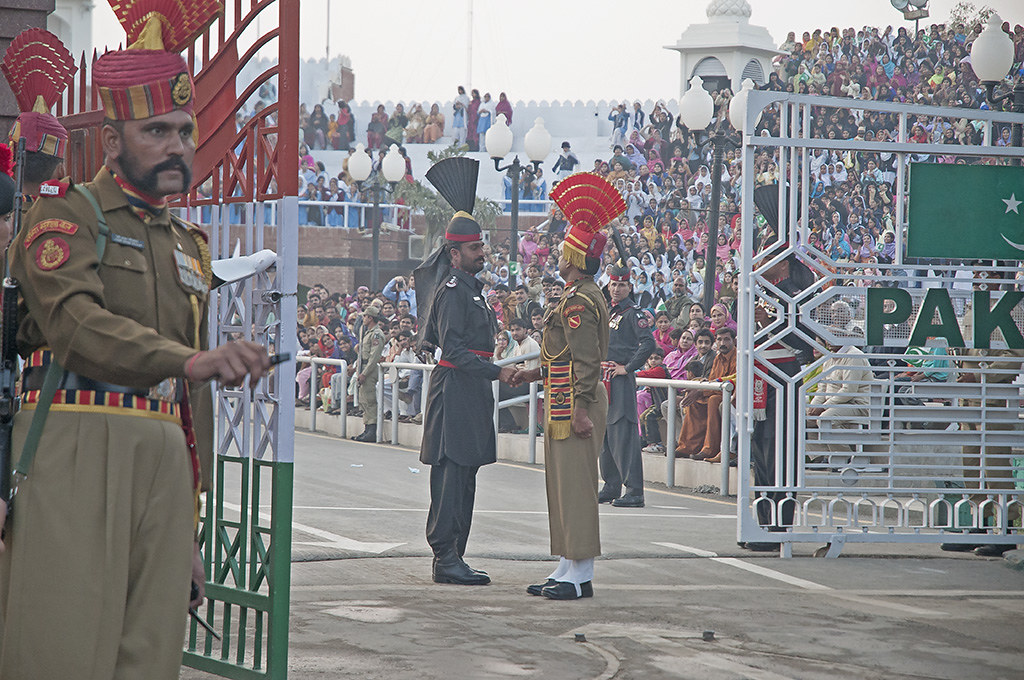
- Border Closure: The Attari-Wagah border crossing, a symbolic link between the two nations, was shut down (BBC).
- Military Posturing: Defense Minister Rajnath Singh emphasized a “zero-tolerance policy toward terrorism,” hinting at potential military strikes (Reuters).
Pakistan responded with its own retaliatory actions:
- Visa and Trade Suspension: Pakistan suspended visas for Indian nationals and halted all trade with India (Al Jazeera).
- Airspace Closure: Pakistani airspace was closed to Indian aircraft (NPR).
- Diplomatic Expulsion: Indian diplomats were expelled, with military advisers instructed to leave by April 30, 2025 (Wikipedia).
- Shimla Agreement Suspension: Pakistan suspended the 1972 Shimla Agreement, which aimed to normalize relations after the 1971 war (The Economic Times).
- Military Warnings: Defense Minister Khawaja Asif warned that any disruption to Pakistan’s water supply would be considered an act of war, promising “comprehensive retaliation” (The Guardian).
Both nations have engaged in intermittent gunfire exchanges along the Line of Control (LoC), escalating tensions further (Al Jazeera).
| Action | India | Pakistan |
|---|---|---|
| Diplomatic | Expelled Pakistani advisers, restricted visas | Expelled Indian diplomats, suspended visas |
| Economic | Suspended Indus Waters Treaty | Halted trade, closed airspace |
| Military | Increased LoC presence, hinted at strikes | Warned of retaliation, increased LoC presence |
| Symbolic | Closed Attari-Wagah border | Suspended Shimla Agreement, reduced border ceremony |
Historical Context of India-Pakistan Conflicts
The conflict over Kashmir traces back to the partition of British India in 1947, which created India and Pakistan as independent nations. The princely state of Jammu and Kashmir, with a Muslim majority but a Hindu ruler, became a flashpoint. The ruler’s decision to accede to India, following an invasion by Pakistani-backed tribesmen, triggered the first Indo-Pakistani War (1947-1948). The conflict ended with the region divided along the LoC, with India controlling the larger portion and Pakistan administering a smaller part (Council on Foreign Relations).
Since then, Kashmir has been a central issue in India-Pakistan relations:
- 1965 War: A second conflict over Kashmir ended in a stalemate with no territorial changes (Britannica).
- 1971 War: Focused on East Pakistan (now Bangladesh), but Kashmir remained a backdrop (Wikipedia).
- 1999 Kargil War: Pakistani-backed forces infiltrated Indian-controlled territory, leading to a brief but intense conflict (BBC).
- 2019 Airstrikes: Following a terrorist attack in Pulwama, India conducted airstrikes in Pakistan, escalating tensions but avoiding war (CNN).
Kashmir’s significance extends beyond territory. For India, it represents national integrity; for Pakistan, it symbolizes unresolved grievances from partition. The revocation of Article 370 in 2019, which stripped Jammu and Kashmir of its special autonomous status, further inflamed tensions, leading to protests and international scrutiny (BBC).
Current State of Affairs
As of April 30, 2025, the situation remains volatile. India accuses Pakistan of supporting terrorism in Kashmir, a charge Pakistan denies, pointing to its own history of combating militancy. The Pahalgam attack has intensified these accusations, with India taking unprecedented steps like suspending the Indus Waters Treaty, a move Pakistan has called “inappropriate” and a potential act of war (The Economic Times).
Both countries have bolstered military deployments along the LoC, with reports of gunfire exchanges continuing into late April (NPR). Pakistan’s Defense Minister Khawaja Asif has admitted to past support for militant groups under Western influence but denies current state involvement (India Today).
International actors, including the United States, China, and the United Nations, have urged restraint. The UN has a long history of involvement in Kashmir, with resolutions calling for a plebiscite to determine the region’s future, though these have never been implemented (AJK Government). The lack of mediation efforts, as noted by Pakistan’s Foreign Ministry, underscores the challenge of de-escalation (TIME).
Analysis of the Current Crisis
Experts are divided on the likelihood of war, but several factors suggest a full-scale conflict is unlikely:
- Nuclear Deterrence: Both India and Pakistan possess nuclear arsenals, with India becoming a nuclear power in 1974 and Pakistan in 1998. The risk of mutual destruction acts as a significant deterrent (Center for Arms Control).
- International Pressure: The U.S., China, and the UN have called for dialogue, emphasizing the global consequences of conflict between nuclear powers (Al Jazeera).
- Economic Costs: A war would be economically devastating for both nations, already facing domestic challenges like inflation and unemployment (BBC).
- Historical Precedents: Past escalations, such as the 2019 airstrikes following the Pulwama attack, have been contained without leading to war (CNN).
However, the risk of a limited military conflict remains. India’s hints at strikes and Pakistan’s warnings of retaliation suggest that a miscalculation could lead to localized engagements along the LoC. The suspension of key agreements like the Indus Waters Treaty and the Shimla Agreement signals a breakdown in diplomatic norms, raising the stakes (Al Jazeera).
Military analysts note that while both countries have increased readiness, neither appears prepared for a prolonged conflict. India’s recent military exercise, Exercise Aakraman, simulated strikes, while Pakistan has repositioned fighter jets closer to the border (India Today). These actions are seen as deterrence rather than preparation for war.
| Factor | Impact on War Likelihood |
|---|---|
| Nuclear Capability | Decreases likelihood due to mutual destruction risk |
| International Pressure | Encourages de-escalation through diplomacy |
| Economic Constraints | Limits appetite for prolonged conflict |
| Military Posturing | Increases risk of limited conflict if miscalculated |
What Should People from Both Nations Prepare For?
For citizens of India and Pakistan, the current situation underscores the importance of staying informed and prepared for potential disruptions. While an all-out war seems unlikely, localized conflicts or further diplomatic standoffs could have ripple effects.
- Stay Informed: Follow reputable news sources like The New York Times or BBC for updates. Avoid spreading unverified information on social media, which can exacerbate tensions.
- Prepare for Disruptions: Be ready for travel restrictions, trade disruptions, or internet shutdowns, especially in border areas. Stock up on essentials like food and medicine if you live in affected regions.
- Support Peace: Advocate for diplomatic solutions through community engagement or public discourse. Peaceful resolution benefits civilians, who bear the brunt of conflict.
- Mental Health: The stress of escalating tensions can take a toll. Seek support from community networks or mental health resources, such as local counseling services.
If you live near the LoC, follow local authorities’ guidance for safety, including evacuation plans if necessary. For those in urban areas, monitor government advisories for updates on travel or security measures.
Conclusion
The Pahalgam attack has brought India and Pakistan to a perilous crossroads. With accusations, retaliatory measures, and military posturing, the specter of war looms large. Yet, history shows that both nations have managed to step back from the brink, though each time with greater difficulty.
The nuclear threat, international pressure, and economic realities act as checks on escalation. However, the risk of a limited conflict remains, and the breakdown of key agreements signals a dangerous shift in bilateral relations.
For now, the world watches and hopes that reason will prevail. The leaders of India and Pakistan must choose diplomacy over destruction—not just for their own people but for the stability of the region and the world.
About The Author