You won’t find their names on stock exchanges, but their impact reverberates through economies, governments, and headlines. While most institutions grow by innovation, these groups grow by intimidation. The world’s most dangerous terrorist organizations don’t just challenge peace—they challenge the very structure of civil society.
Their influence extends far beyond regional borders. You’ve seen their names before. But do you know their operational budgets? Their deadliest attacks? Their current status?
This report breaks down the most lethal terrorist groups on Earth—how they function, how they’re funded, and how governments are tracking them.
1. Islamic State (ISIS/ISIL)
At its peak in 2015, ISIS controlled territory roughly the size of the UK. Its brutality shocked the world, but its digital propaganda machine posed a threat even more complex.
- Founded: 1999 (as Jama’at al-Tawhid wal-Jihad), became ISIS in 2013
- Estimated Fighters (Peak): 31,000+ (source: RAND Corporation)
- Territory Lost: 100% of its self-declared caliphate by 2019
- Primary Regions: Syria, Iraq; affiliates in Libya, Afghanistan, West Africa
- Tactics: Beheadings, mass executions, bombings, social media radicalization
- Financing: Oil smuggling, extortion, kidnapping, looting, foreign donors
- Notable Attacks: 2015 Paris attacks (130 killed), 2016 Brussels bombings (32 killed)
- Current Status: Weakened but active in decentralized cells
Governments underestimated its ability to weaponize social media. Are intelligence agencies doing enough today to stop the next iteration?
2. Boko Haram
Infamous for the 2014 kidnapping of 276 schoolgirls from Chibok, Nigeria, Boko Haram continues to destabilize West Africa.
- Founded: 2002
- Estimated Death Toll: Over 35,000 (source: Council on Foreign Relations)
- Primary Regions: Nigeria, Chad, Niger, Cameroon
- Tactics: Suicide bombings, raids, abductions, destruction of schools
- Financing: Looting, ransoms, taxation in occupied territories
- Ideology: Anti-Western education, Sharia law
- Affiliation: Pledged allegiance to ISIS in 2015 (ISWAP – Islamic State West Africa Province)
- Current Status: Splintered factions, still highly active
Despite billions in international aid, progress remains sluggish. What does this say about global counterterrorism coordination?
3. Al-Qaeda
Once synonymous with terrorism, Al-Qaeda has evolved. While its founder, Osama bin Laden, was killed in 2011, its ideology continues through affiliates.
- Founded: 1988
- Major Attack: 9/11 attacks (2,977 killed)
- Estimated Fighters (2023): 30,000 globally (source: CSIS)
- Primary Affiliates:
- Al-Qaeda in the Arabian Peninsula (AQAP)
- Al-Qaeda in the Islamic Maghreb (AQIM)
- Al-Shabaab in Somalia
- Tactics: Plane hijackings, coordinated bombings, ambushes
- Financing: Charities, drug trafficking, extortion, donations
- Current Status: Decentralized, active in the Sahel, Yemen, and Horn of Africa
Al-Qaeda thrives on geopolitical instability. Are international policies unintentionally enabling its survival?
4. Taliban
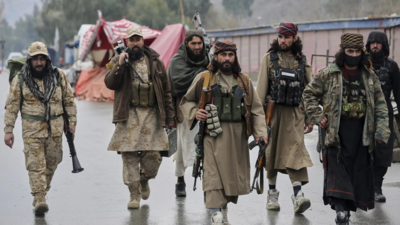
A regime turned insurgent group, the Taliban reasserted control over Afghanistan in 2021, effectively reversing two decades of Western military engagement.
- Founded: 1994
- Regained Control: August 2021
- Estimated Strength: 75,000 fighters (source: BBC)
- Tactics: Guerrilla warfare, suicide bombings, targeted assassinations
- Revenue Sources: Opium trade, illegal mining, foreign donations
- Impact on Civilians: Human rights abuses, education bans for girls, media suppression
- Current Status: De facto government of Afghanistan, designated terrorist by some nations
The Taliban now sits in a gray zone between insurgency and legitimacy. What precedent does this set for future militant groups?
5. Hezbollah
Often described as both a political party and a militant group, Hezbollah wields power in Lebanon’s parliament and its streets.
- Founded: 1982
- Primary Sponsor: Iran (estimated $700 million/year at peak, source: Congressional Research Service)
- Military Strength: 30,000–50,000 fighters
- Tactics: Rocket attacks, assassinations, drone strikes
- Global Reach: Active cells in Latin America, Europe, and Africa
- Major Conflicts: 2006 Lebanon War, Syrian Civil War involvement
- Current Status: Strong political influence, heavily armed
Is Hezbollah a state within a state? Its dual identity blurs the lines of conventional threat response.
6. Lashkar-e-Taiba (LeT)
This Pakistan-based group rose to global attention with the 2008 Mumbai attacks, which paralyzed India’s financial capital.
- Founded: 1987
- Notable Attack: 2008 Mumbai attacks (166 killed)
- Estimated Strength: 4,000–5,000 fighters
- Tactics: Urban terrorism, armed assaults, bombings
- Primary Base: Pakistan (reportedly under ISI protection)
- Financing: Charities, donations from Gulf countries
- Ideology: Islamist, anti-India, support for Kashmir jihad
- Current Status: Technically banned, but operational through proxies
LeT has faced limited internal suppression. Can a country truly combat terrorism while allegedly harboring its architects?
7. Al-Shabaab
Somalia’s most powerful insurgent group, Al-Shabaab, controls large portions of rural Somalia and continues to launch attacks across East Africa.
- Founded: 2006
- Affiliation: Al-Qaeda
- Notable Attacks:
- Westgate Mall (2013, 67 killed)
- Garissa University (2015, 148 killed)
- Estimated Revenue: $100+ million/year (source: UN Security Council)
- Tactics: IEDs, targeted assassinations, suicide bombings
- Current Status: Still active, expanding influence in Kenya and Ethiopia
Despite consistent drone strikes, Al-Shabaab remains a regional powerhouse. What does this say about the effectiveness of kinetic counterterrorism?
8. Tehrik-i-Taliban Pakistan (TTP)
The Pakistani Taliban has resurged in recent years following a brief lull, with increased attacks on both civilians and security forces.
- Founded: 2007
- Estimated Fighters: 6,000–9,000
- Tactics: Suicide bombings, targeted killings, cross-border raids
- Primary Targets: Pakistani police, military, schools
- Affiliations: Links with Al-Qaeda and Afghan Taliban
- Notable Attack: 2014 Peshawar school massacre (149 killed, mostly children)
- Current Status: Regrouping, especially in tribal regions
TTP’s revival reveals cracks in regional counterinsurgency. Are bilateral efforts between Pakistan and Afghanistan sustainable?
9. Jaish-e-Mohammed (JeM)
Another Pakistan-based group, JeM’s influence has grown through high-profile attacks in India and close ties to the Afghan Taliban.
- Founded: 2000
- Primary Focus: Kashmir
- Notable Attack: 2019 Pulwama suicide bombing (40 Indian paramilitary killed)
- Tactics: Car bombings, armed assaults, infiltration
- Funding: Foreign donations, madrassas, charitable fronts
- Current Status: Active, operating under new names
Despite bans, JeM continues operations. Is rebranding a loophole in international terrorism regulations?
10. Haqqani Network
Often described as a bridge between the Taliban and Al-Qaeda, the Haqqani Network is responsible for some of Afghanistan’s deadliest attacks.
- Founded: 1970s
- Leadership: Now part of the Taliban government
- Tactics: Suicide bombings, hotel and embassy attacks, kidnappings
- Support Base: Pakistan tribal regions
- Notable Attacks:
- 2008 Indian embassy bombing in Kabul
- 2011 US Embassy and NATO HQ attacks in Kabul
- Current Status: Integrated into Taliban leadership
With key Haqqani leaders now holding ministerial positions, has terrorism become institutionalized in Kabul?
Final Thought
You can’t defeat what you don’t define. Yet the world still struggles to agree on a universal definition of terrorism. That ambiguity allows these groups to evolve, recruit, and exploit the cracks in global policy.
Ask yourself:
- Are current counterterrorism efforts built for long-term disruption or short-term optics?
- Is the global community prepared for the digital evolution of terror networks?
- What happens when militants become states?
For governments, NGOs, and the public, the stakes have never been higher.
Sources for further reading:
- RAND Corporation on ISIS
- Council on Foreign Relations – Global Conflict Tracker
- Center for Strategic & International Studies
- BBC Afghanistan coverage
- UN Security Council Sanctions – Al-Shabaab
Let facts—not fear—shape your understanding of the world’s most dangerous actors.
About The Author