
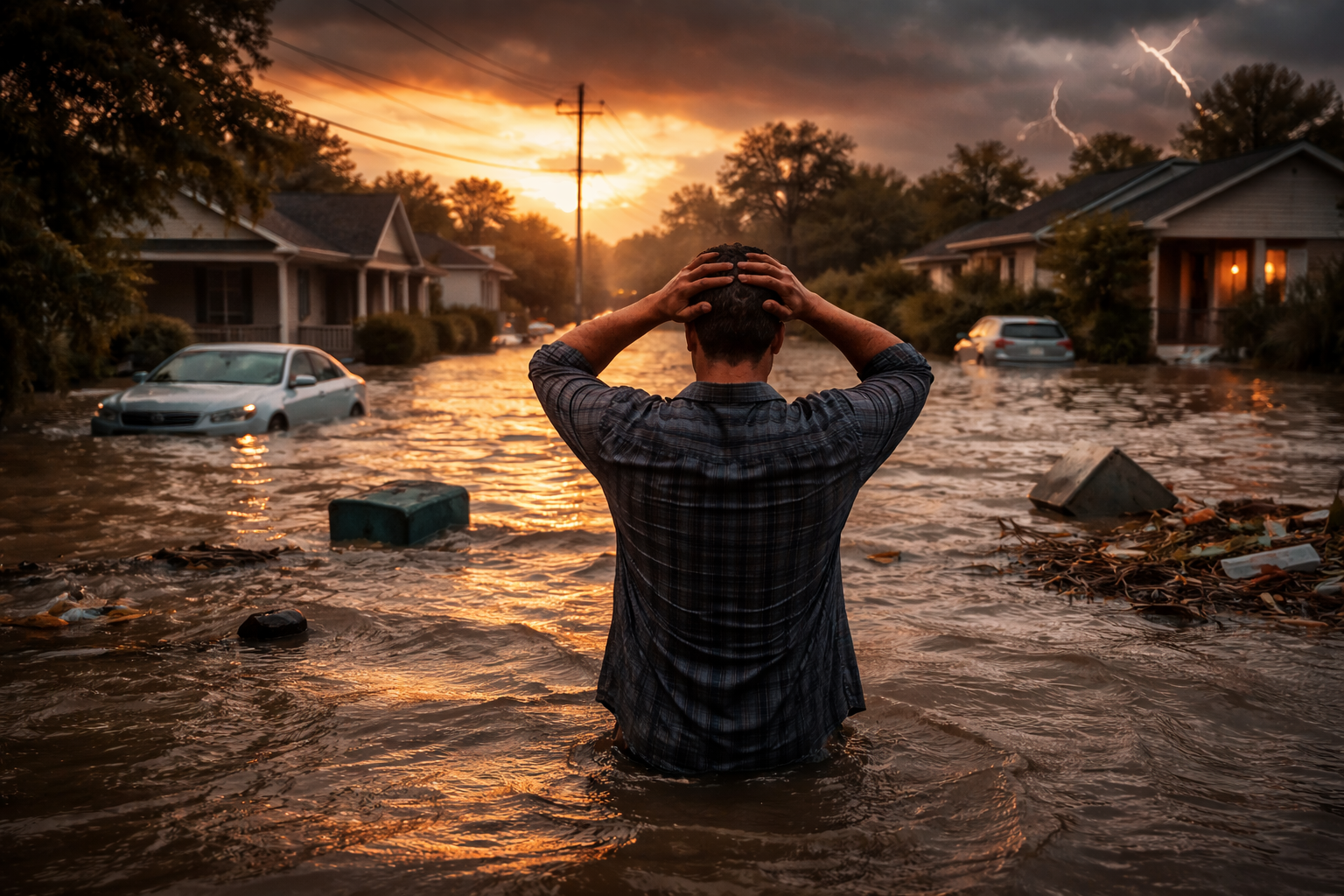
The human brain is an evolutionary masterpiece designed to avoid being eaten by tigers, not to calculate the slow-moving thermal expansion of the oceans. You are currently living through a period where the global scientific consensus is more certain about the reality of human-caused climate change than it is about the link between smoking and lung cancer. Yet, despite record-breaking temperatures and clear visual evidence of ecological collapse, public engagement remains stagnant. This is not a failure of information. It is a biological and psychological design flaw. You are wired to ignore the very threat that endangers your survival.
Psychological distance remains the primary obstacle to collective action. You perceive climate change as something happening elsewhere, to someone else, at some distant point in the future. This cognitive bias, known as temporal discounting, forces your brain to prioritize immediate, tangible rewards over long-term stability. If a fire starts in your kitchen, you act instantly. If the planet warms by two degrees over several decades, your brain registers the threat as abstract noise. This gap between the scale of the crisis and the limitations of human perception defines the current climate stalemate. We are essentially fighting a war with a map that our brains refuse to read.
The Evolutionary Mismatch
Your ancestors survived by focusing on the here and now. In the Pleistocene era, worrying about the state of the grasslands fifty years into the future was a waste of cognitive resources. Survival depended on identifying immediate threats and securing immediate food sources. This evolutionary legacy dictates your modern behavior. You possess a nervous system tuned to fast threats—sudden movements, loud noises, and immediate physical dangers.
Climate change is a slow threat. It operates on a geological timescale that is fundamentally incompatible with the human attention span. When you read about carbon parts per million or melting ice sheets, your amygdala—the brain’s fear center—remains largely dormant. The threat lacks a face, a specific location, and a clear beginning or end. Without these markers, your brain fails to trigger the survival instincts necessary for radical change. You are effectively using Stone Age hardware to try and solve a Space Age crisis. The urgency is lost because your biological alarm system requires a predator in the bushes, not a decimal point shift in a global temperature average.
The Problem of Cognitive Dissonance
You likely consider yourself an environmentally conscious person. You might recycle, use LED bulbs, or carry a reusable water bottle. However, you also participate in a global economy built on fossil fuels. You drive cars, fly on planes, and consume products shipped across oceans. This creates a state of cognitive dissonance—the mental discomfort you feel when your actions contradict your values.
To resolve this discomfort, you do not change your entire lifestyle. Instead, you change your perception of the problem. You minimize the severity of the climate crisis to justify your current behavior. You tell yourself that technology will solve the problem, or that your individual actions do not matter in the grand scheme of things. This defense mechanism allows you to maintain your self-image as a good person while continuing to contribute to the problem. The more someone highlights your personal impact, the more likely you are to retreat into denial or apathy to protect your ego. It is a psychological survival tactic that, ironically, ensures your physical peril.
Social Validation and the Bystander Effect
Why should you sacrifice your comfort if your neighbor refuses to do the same? This question drives the psychological phenomenon of social diffusion of responsibility. You look to others to determine how you should behave in an uncertain situation. When you see your peers, politicians, and business leaders continuing with business as usual, you interpret this as a signal that the situation is not truly urgent.
This is a global-scale version of the bystander effect. You assume that because no one else is panicking, you do not need to panic either. You wait for a leader to take the first step, while those leaders wait for a mandate from you. This creates a circular logic of inaction. Until the social cost of ignoring climate change exceeds the personal cost of addressing it, most people will remain paralyzed. You are a social animal, and your desire for group conformity often outweighs your instinct for long-term survival. If the crowd is walking toward a cliff but doing so calmly, you are psychologically predisposed to follow them rather than scream.
The Finite Pool of Worry
Your brain has a limited capacity for concern. This is what psychologists call the finite pool of worry. When you are stressed about your mortgage, your career, or your health, you have less mental energy available for global issues. The modern world is designed to keep you in a state of constant, low-level anxiety about immediate personal matters.
Climate change often loses out in this competition for your attention. In the hierarchy of needs, survival today always trumps survival tomorrow. Economic instability, political polarization, and personal crises occupy the foreground of your mental landscape. Environmental psychology suggests that as personal stressors increase, concern for the environment decreases. You simply do not have the bandwidth to worry about the end of the world when you are worried about the end of the month. The climate crisis is a luxury of concern that many feel they cannot afford, despite it being the foundation of all other concerns.
Loss Aversion and the Cost of Change
You are twice as sensitive to losses as you are to gains. This is a fundamental principle of behavioral economics known as loss aversion. When climate policy is framed as a series of sacrifices—giving up meat, flying less, or paying higher taxes—your brain interprets this as a direct threat. You focus on what you are losing right now rather than what you are gaining in the future.
The benefits of a stable climate are abstract and preventative. You cannot easily visualize the non-occurrence of a disaster. Conversely, the costs of climate action are immediate and visible. Your brain is not equipped to trade a tangible loss today for a theoretical gain twenty years from now. To overcome this, the narrative must shift from sacrifice to opportunity, but the psychological bias toward the status quo remains a powerful anchor. You are holding onto a sinking ship because you are terrified of the cold water, even though the ship is guaranteed to go under.
The Illusion of Optimism and Control
You likely possess an optimism bias, believing that you are less likely than others to experience negative events. This is why people continue to build homes in flood zones or ignore health warnings. You assume that even if the world suffers, you and your family will somehow be spared. This sense of personal invulnerability is a major barrier to climate engagement.
Similarly, the illusion of control leads you to believe that humans can always engineer their way out of a crisis. You trust that a silver bullet technology—like carbon capture or nuclear fusion—will appear at the last minute to save the day. This belief reduces your sense of urgency. It allows you to delegate responsibility to a future version of humanity that possesses better tools. You are betting your survival on a technological miracle that does not yet exist, treating science fiction as a guaranteed insurance policy.
Confirmation Bias and the Polarized Mind
You seek out information that confirms what you already believe. In the context of climate change, this confirmation bias creates echo chambers that reinforce apathy or denial. If you identify with a political group that downplays environmental risks, you will actively ignore data that contradicts that worldview.
Information alone does not change minds. In fact, providing more facts to someone who is skeptical of climate change can often lead to belief perseverance, where they become even more entrenched in their original position. Your identity is more important to you than objective reality. If accepting the truth about climate change requires you to break with your social or political tribe, you will likely choose the tribe every time. This tribalism is the graveyard of scientific literacy.
Sensory Failure and the Abstract Threat
Climate change is invisible. You cannot see carbon dioxide. You cannot feel the gradual rise in average global temperatures on a daily basis. Most environmental changes are too slow to be captured by the human senses. Because the threat is not perceptually salient, it fails to command your focus.
Think about how you react to a visible oil spill versus an invisible rise in atmospheric CO2. The oil spill produces visceral images of coated birds and blackened beaches, triggering an immediate emotional response. The CO2 increase is a line on a graph. Without a direct sensory trigger, your brain treats the information as academic rather than urgent. We are a visual species, and the lack of a smoking gun image for climate change—one that represents the entire crisis—makes it difficult to maintain public focus. You are waiting for a visual explosion while the oxygen is slowly being sucked out of the room.
The Moral Disconnect
Humans have a well-developed moral compass for actions that cause direct harm to individuals. You feel a sense of outrage if you see someone being mistreated. However, climate change involves de-individualized harm. The victims are often far away, and the perpetrators are everyone.
This lack of a clear villain makes it difficult to frame climate change as a moral issue that demands action. When everyone is responsible, no one feels responsible. The causal chain between your morning commute and a drought in sub-Saharan Africa is too long and complex for your moral intuition to process. You do not feel the sting of conscience because the harm is indirect and diffused across billions of people. It is a crime without a culprit, making it the perfect environment for collective negligence.
The Economics of Inaction and Hyperbolic Discounting
Your economic behavior is governed by hyperbolic discounting. You prefer smaller, immediate rewards over larger, later ones. This is why you might choose a cheap, high-emission product today over a more expensive, sustainable one that saves you money and resources in the long run. The markets reflect this human frailty. Quarterly earnings and annual budgets dictate corporate and political behavior, creating a structural bias against long-term ecological planning.
Every day you delay action, the compounding cost of climate change grows. Yet, because that cost is hidden in the future, your current financial models treat it as a zero. This is a profound failure of human logic. You are effectively stealing from your future self to fund a lifestyle your future self will not be able to sustain. The psychological comfort of immediate liquidity is blinding you to the total bankruptcy of the planet.
The Language of the Climate Crisis
Words matter, and our current lexicon fails to incite action. Terms like global warming sound almost pleasant in colder climates. Climate change suggests a natural, neutral shift rather than a human-induced catastrophe. Environmental psychology shows that the framing of a problem determines the intensity of the response.
We have used technical, sterile language for decades. Phrases like anthropogenic forcing and greenhouse gas concentrations do not spark urgency. They invite intellectualization rather than visceral reaction. You need language that reflects the scale of the danger. When the terminology shifted to climate emergency or global boiling, there was a measurable spike in emotional engagement. However, even these terms are susceptible to semantic satiation—the process where you hear a word so often it loses its meaning. You are becoming numb to the apocalypse because the language used to describe it has become background noise.
Political Identity as a Cognitive Shield
Your political identity is one of the strongest predictors of your climate views. In many nations, climate change has been successfully transformed from a scientific reality into a badge of cultural belonging. If your social group views environmental regulation as an attack on their freedom or economic status, you will psychologically filter out any evidence to the contrary.
This is not a matter of intelligence; it is a matter of motivated reasoning. People with higher levels of scientific literacy are often the best at using that knowledge to justify their pre-existing political biases. You use your intellect not to find the truth, but to defend your tribe. This makes the climate debate nearly impossible to win with facts alone. To change your mind, you would have to risk your social standing, and for a social primate, that is a fate worse than environmental collapse.
Actionable Strategies for Overcoming Apathy
To bypass these psychological barriers, you must change how you process and communicate the climate crisis. The goal is to bring the threat into the here and now.
First, focus on local impacts. When you discuss climate change in terms of your specific city, your favorite park, or your local economy, you reduce psychological distance. National and global statistics are less effective than observations of changes in your own backyard. If you see your local river drying up, your brain reacts differently than it does to news about the Arctic.
Second, emphasize immediate co-benefits. Instead of talking about saving the planet in 2100, talk about cleaner air in your city today, lower energy bills this month, and new jobs in your community this year. Aligning climate action with immediate personal and economic gains bypasses loss aversion. You must make the green choice the selfish choice.
Third, leverage social norms. People change their behavior when they see their peers doing the same. If you want to encourage solar panel adoption, do not just talk about the environment; show that most of the people on your street are already making the switch. Peer pressure is a more effective tool for change than scientific data. You are more likely to act if you feel like the odd one out for not acting.
The Role of Habit and Choice Architecture
Your daily life is a series of habits. Changing those habits requires significant cognitive effort. Most people will choose the path of least resistance. If the sustainable option is more expensive or less convenient, you will likely ignore it. This is why individual willpower is an insufficient tool for global change.
We must redesign our choice architecture. This means making the sustainable choice the default option. In countries where people are automatically enrolled in green energy plans unless they choose to opt-out, participation is significantly higher. You can use this principle in your own life by automating your environmental decisions. Set your thermostat, organize your transport, and plan your diet in ways that do not require a fresh decision every day. Reduce the cognitive load of being sustainable. If you have to choose to be good every morning, you will eventually fail. If the system is good by default, you don’t have to think about it.
Emotional Regulation and Climate Anxiety
Constant exposure to doom and gloom reporting can lead to learned helplessness. When the problem seems too big to solve, your brain shuts down as a defense mechanism against overwhelming anxiety. You stop looking at the news because it makes you feel powerless. This is the dark side of environmental awareness.
To maintain engagement, you must balance the threat with efficacy. You need to believe that your actions will actually make a difference. Focusing on small, achievable wins can build the momentum necessary for larger systemic changes. Efficacy is the antidote to apathy. When you see the direct results of your efforts, your brain releases dopamine, reinforcing the behavior and making you more likely to continue. You must feed your brain evidence of success to prevent it from retreating into the numbness of despair.
Breaking the Silence and the Social Contract
The spiral of silence occurs when people believe their opinions are in the minority, so they stop talking about them. This creates a false impression that no one cares about climate change, even when the majority of the population is actually concerned. You are likely surrounded by people who are just as worried as you are, but you are all waiting for someone else to speak first.
You must break this silence. Simply talking about climate change with your friends, family, and colleagues is one of the most effective psychological interventions. It normalizes the concern and signals to others that the issue is socially relevant. When you voice your concern, you give others permission to do the same. This shifts the social narrative and creates the political space for large-scale action. Conversations are the seeds of cultural shifts.
The Necessity of Systemic Shift and Infrastructure
While psychological insights can help individuals change, the ultimate solution requires systemic change. Psychology explains why you ignore the problem, but it also shows that you cannot be expected to solve a global crisis through individual willpower alone. The burden is too heavy for the human psyche.
The structures of your life—the food systems, transport networks, and energy grids—must change to make sustainability the only rational choice. We must stop fighting human nature and instead design systems that work with it. If the global economy continues to reward short-term extraction over long-term stability, your brain will continue to follow those signals. The goal is to create an environment where doing the right thing is the easiest, cheapest, and most socially rewarded thing to do. We need to build a world where you can be a lazy, selfish human and still be part of the solution.
The Psychology of Sacrifice vs. Abundance
For decades, the environmental movement has been synonymous with the word “no.” No flying, no meat, no consumption, no growth. Psychologically, this is a disastrous strategy. It triggers your defense mechanisms and makes the movement feel like a cult of austerity.
We need to reframe the transition as an era of abundance. A world with less noise, cleaner air, more time, and more resilient communities is not a world of sacrifice. It is an upgrade. When you view the transition through the lens of what you are gaining—health, security, and a future—the psychological resistance melts away. You are not giving up your car; you are gaining a city that is actually livable. You are not giving up your lifestyle; you are securing the conditions that allow a lifestyle to exist at all.
Case Study: The Ozone Layer Success
In the 1980s, the world successfully addressed the hole in the ozone layer. This provides a fascinating psychological comparison. The threat was specific: a hole in the sky. The cause was specific: CFCs in hairspray and refrigerators. The solution was specific: a global ban.
Crucially, the danger of skin cancer provided a fast, visceral threat that the human brain could process. The gap between action and result was relatively short. Climate change lacks this simplicity. It is caused by everything and affects everything. By breaking the climate crisis down into smaller, ozone-like sub-challenges—methane leaks, coal plants, deforestation—we can trigger the same psychological mechanisms that led to the Montreal Protocol. We must turn a monolithic monster into a series of manageable problems.
The Power of Narrative and Future-Imaging
You struggle to act on climate change because you cannot see the future you are trying to build. Human beings are storytelling creatures. We live by the narratives we tell ourselves about who we are and where we are going. Currently, our climate narrative is almost entirely dystopian.
Dystopias lead to paralysis. If the end is inevitable, why bother? We need pro-topian narratives—stories of a future that is incrementally better than today. This is not blind optimism; it is the psychological necessity of having a destination. When you can vividly imagine a world that has successfully transitioned, your brain can start working on the steps to get there. You need a vision to pull you forward, not just a fear to push you from behind.
Summary of Psychological Barriers
You are facing a perfect storm of cognitive biases:
- Temporal Discounting: Prioritizing the present over the future.
- Social Diffusion: Waiting for others to act first.
- Loss Aversion: Fearing the cost of change more than the cost of inaction.
- Finite Pool of Worry: Lacking the mental bandwidth for global crises.
- Optimism Bias: Believing the worst won’t happen to you.
- Hyperbolic Discounting: Valuing immediate rewards over long-term gains.
- Confirmation Bias: Protecting your identity over accepting facts.
Understanding these biases is the first step toward bypassing them. You are not bad or lazy for ignoring climate change; you are simply human. Your brain is performing exactly as it was designed to perform over millions of years of evolution. However, the environment you live in has changed faster than your biology. To survive, you must consciously override these prehistoric instincts with modern, informed decision-making.
Real-World Evidence of Psychological Shifting
Data from the Yale Program on Climate Change Communication shows that alarmed and concerned citizens now make up the majority of the US population. The needle is moving. This shift is happening not because of more scientific reports, but because the psychological distance is closing. As wildfires, floods, and heatwaves become personal experiences rather than news stories, the brain’s fast threat detection system finally begins to engage.
You can see this in the surge of youth climate activism. For younger generations, the threat is not distant or future-based. It is a direct threat to their own adult lives. Their temporal discounting is different because their timeline is longer. This shift in perspective is the most powerful psychological tool we have. When you view the future as your own, rather than as an abstract concept, the motivation for action becomes undeniable. The urgency is no longer a choice; it is a lived reality.
The Final Barrier: Institutional Inertia
Even if every individual on the planet overcame their personal psychological biases, we would still face the massive psychological weight of institutional inertia. Organizations, like people, have habits. They have identities, loss aversions, and a finite pool of worry.
Changing the psychology of a corporation or a government is harder than changing the psychology of a person. It requires a shift in the collective consciousness of the people within those institutions. We must demand that our leaders stop reflecting our own worst cognitive biases and start designing policies that account for them. A leader’s job is to see the tiger in the bushes even when the rest of the tribe is looking at the grass. We are currently led by those who are just as distracted as we are.
Conclusion and Call to Self-Awareness
The next time you find yourself scrolling past a climate headline or justifying an unsustainable purchase, stop and ask yourself which bias is at play. Is it loss aversion? Is it the bystander effect? Is it your finite pool of worry? Is it your political identity protecting itself?
Awareness is the only way to break the cycle of apathy. You cannot wait for your biology to catch up to the crisis. You must use your intellect to build the habits, social norms, and systems that your instincts currently resist. The climate is changing, and your psychology must change with it. If you continue to let your Pleistocene brain drive your 21st-century decisions, the result is predictable.
The clock is not just ticking on the wall; it is ticking in your head. Every moment of delay is a victory for the prehistoric part of your brain that doesn’t believe the future exists. The question is whether you are willing to do the hard psychological work of paying attention when every instinct you have is telling you to look away. Your survival depends on your ability to become a different kind of animal—one that can fear the future as much as the present.
References
The Psychology of Climate Change Communication
https://climatecommunication.yale.edu/about/projects/global-warmings-six-americas/
American Psychological Association: Climate Change and Mental Health
https://www.google.com/search?q=https://www.apa.org/practice/programs/campaigns/climate-change
The Finite Pool of Worry: Cognitive Limits on Environmental Concern
https://www.nature.com/articles/nclimate1041
Loss Aversion and Environmental Policy Decisions
https://www.google.com/search?q=https://www.sciencedirect.com/science/article/pii/S001429211200021X
Social Norms and Energy Conservation: A Field Experiment
https://www.google.com/search?q=https://journals.sagepub.com/doi/abs/10.1177/0956797611413233
Cognitive Dissonance and the Denial of Climate Change
https://www.frontiersin.org/articles/10.3389/fpsyg.2019.01247/full
Temporal Discounting and the Climate Crisis
https://www.google.com/search?q=https://www.pnas.org/doi/10.1073/pnas.1601335113
The Bystander Effect in Global Environmental Crises
Evolutionary Psychology and the Environmental Mismatch
https://www.google.com/search?q=https://www.sciencedaily.com/releases/2011/05/110523101804.htm
Choice Architecture and Green Defaults
https://www.hbs.edu/faculty/Pages/item.aspx?num=41944
Hyperbolic Discounting in Climate Economics https://www.google.com/search?q=https://www.sciencedirect.com/science/article/pii/S092180091500156X
The Moral Psychology of Climate Change https://www.google.com/search?q=https://academic.oup.com/book/26466
Motivated Reasoning and Climate Change Polarization https://www.google.com/search?q=https://www.nature.com/articles/nclimate1547
Learned Helplessness and Environmental Inaction https://www.google.com/search?q=https://link.springer.com/article/10.1007/s10584-010-9824-3
Communicating the Climate Emergency: A Psychological Perspective https://www.google.com/search?q=https://www.thelancet.com/journals/lanplh/article/PIIS2542-5196(21)00203-0/fulltext
Author bio
Julian is a graduate of both mechanical engineering and the humanities. Passionate about frugality and minimalism, he believes that the written word empowers people to tackle major challenges by facilitating systematic collaborative progress in science, art, and technology. In his free time, he enjoys ornamental fish keeping, reading, writing, sports, and music. Connect with him here https://www.linkedin.com/in/juliannevillecorrea/
About The Author


