
EV production halted, South Korea announces full support to arrested.
By Namith DP | Sept 07, 2025
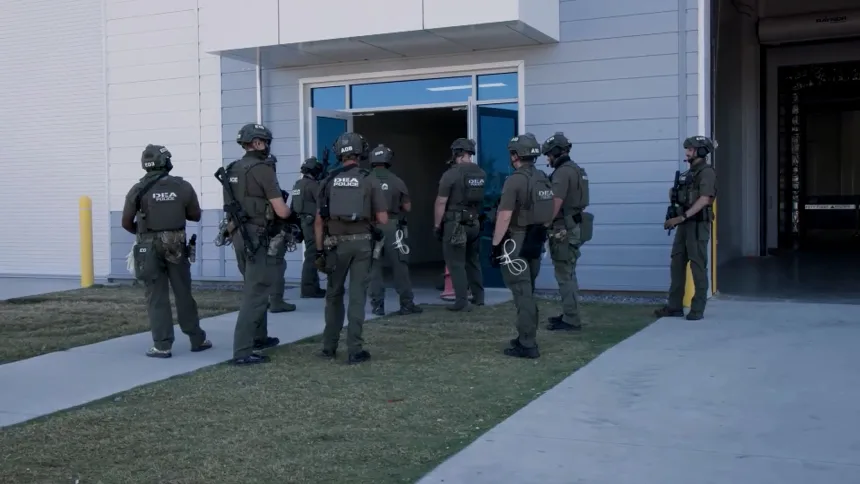
The sound of construction equipment grinding to a halt echoed across the sprawling Hyundai Metaplant America facility in Ellabell, Georgia, on Thursday morning as hundreds of federal officers descended on the site in the largest workplace immigration raid of the current Trump administration. What followed was a dramatic scene that exposed the complex intersection of America’s immigration enforcement policies, foreign investment, and the rapidly expanding electric vehicle industry.
Federal and immigration agents arrested 475 people while executing a judicial search warrant at the Hyundai facility as part of a criminal investigation into allegations of unlawful employment practices. The operation, which targeted one of Georgia’s most prominent manufacturing sites, has created immediate diplomatic tensions with South Korea and raised questions about the future of foreign investment in American manufacturing.
The Scale of the Operation
The magnitude of Thursday’s enforcement action cannot be understated. Nearly 500 people, the majority of them from South Korea, were arrested in what officials describe as the largest single-site immigration raid in recent U.S. history. The operation required extensive coordination between multiple federal agencies and months of planning.
Key Statistics from the Raid:
• Total arrests: 475 individuals • Primary nationality: South Korean nationals comprised the majority • Agency involvement: ICE, Homeland Security Investigations (HSI), and Georgia State Patrol • Operation duration: Several hours beginning at approximately 10:30 AM • Site affected: One of Georgia’s largest and most high-profile manufacturing sites, where Hyundai makes electric vehicles and is building an EV battery plant
Unmarked government buses entered the facility alongside state troopers, with the Georgia Department of Public Safety confirming assistance to Homeland Security Investigations with the service of a criminal search warrant.
The Facility Under Scrutiny
The Hyundai Metaplant America represents a cornerstone of the Biden administration’s push to bring electric vehicle manufacturing to American soil. The Fortune 500 company confirmed the presence of law enforcement at the LG Energy Solution and Hyundai battery joint venture construction site in Ellabell.
Strategic Importance of the Site:
The facility serves multiple critical functions in America’s electric vehicle supply chain:
• Manufacturing hub: Current production of electric vehicles for the U.S. market • Battery production: A massive electric vehicle battery plant under construction as a joint venture between Hyundai Motor Group and LG Energy • Economic investment: Hyundai announced it would invest $21 billion in U.S. onshoring from 2025 to 2028, a number that increased to $26 billion, including a new $5.8 billion steel plant in Louisiana
The timing of the raid proved particularly disruptive, as the operation halted construction of the EV battery plant, potentially affecting production schedules and delivery timelines for electric vehicles.
Immediate Impact and Response

The human drama that unfolded during the raid painted a picture of chaos and fear. Sources inside the Hyundai plant reported that ICE arrived with multiple Humvees and conducted car searches, causing panic at the site with people running away, hopping fences, and trying to escape via rooftops.
Federal Officials’ Statements:
Steven Schrank, special agent in charge of HSI Atlanta, confirmed during a news conference that authorities were “making many arrests of undocumented individuals” while also encountering “many lawful” individuals. The distinction highlights the complex nature of workplace enforcement operations, where legal and undocumented workers often work side by side.
Federal officials emphasized that the investigation focused on “ensuring accountability for those who violate the law and uphold the rule of law,” describing the case as complex and requiring “strong collaboration and extensive investigative efforts”.
Corporate Response and Responsibility
Hyundai’s response to the raid revealed the intricate web of contractors and subcontractors involved in modern manufacturing operations. The car company claimed that nobody detained was “directly employed” by Hyundai, despite 475 people being arrested who were allegedly in the country illegally.
This distinction raises important questions about corporate responsibility in the subcontracting chain. The use of multiple layers of contractors in construction and manufacturing often creates situations where parent companies maintain plausible deniability about the immigration status of workers on their sites.
Employment Structure Complexities:
Modern manufacturing sites like the Hyundai facility typically employ:
• Direct company employees • Primary contractors for specialized work • Subcontractors hired by primary contractors • Temporary staffing agency workers • Construction workers for ongoing expansion projects
LG did not respond to questions about how many arrested workers may have been employed by the company, and how many may have been contractors or subcontractors, further illustrating the opacity in modern employment structures.
International Diplomatic Implications
The arrest of hundreds of South Korean nationals has created immediate diplomatic tensions between the United States and one of its key allies in the Asia-Pacific region. “The economic activities of our companies investing in the U.S. and the rights and interests of our nationals must not be unfairly violated,” a spokesperson for the South Korean foreign ministry stated.
South Korea’s Concerns:
The South Korean government’s response reflects broader concerns about:
• Protection of nationals working abroad • Security of foreign direct investment • Treatment of workers from allied nations • Due process in immigration enforcement
The diplomatic implications extend beyond bilateral relations, as other allied nations with significant investments in U.S. manufacturing may reassess their workers’ vulnerability to immigration enforcement actions.
Political Ramifications and Policy Context
The raid has become a political flashpoint, with Republicans seizing the opportunity to highlight immigration enforcement successes. Tori Branum, a Republican running for Congress, expressed feeling “good” about Trump’s Hyundai raid, which resulted in the arrest of 450 people.
Policy Context Under Trump Administration:
The operation represents a significant escalation in workplace immigration enforcement:
• Largest single-site raid: Surpasses previous operations in scale and scope • High-profile target: Focus on major international manufacturer • Strategic timing: Occurs as administration emphasizes immigration enforcement • Economic disruption: Direct impact on electric vehicle production
Critics argue that the historic worksite ICE raid highlights “the chaos and waste of the Trump administration’s immigration agenda”, pointing to the disruption of legitimate business operations and diplomatic relationships.
Economic and Industry Impact
The raid’s impact extends far beyond the immediate arrests, affecting multiple layers of the American economy and the electric vehicle industry specifically.
Immediate Economic Consequences:
• Production disruption: Halt in electric vehicle manufacturing • Construction delays: The raid halted construction of the EV battery plant • Supply chain effects: Potential delays in battery production for the broader EV market • Investment uncertainty: Questions about future foreign direct investment
The timing proves particularly problematic for the electric vehicle industry, which faces increasing competition from Chinese manufacturers and pressure to establish domestic supply chains.
Legal Framework and Investigation Details
The operation, described as “months in the making,” represents the culmination of an extensive federal investigation. The legal basis for the raid centers on allegations of unlawful employment practices, though specific charges against employers have not been disclosed.
Investigation Scope:
Federal authorities have not revealed the full scope of their investigation, but the scale suggests:
• Multi-agency coordination over several months • Extensive surveillance and evidence gathering • Focus on systematic violations rather than individual cases • Potential criminal charges beyond immigration violations
The emphasis on “unlawful employment practices” suggests that the investigation may target employers and contractors who knowingly hired undocumented workers, not just the workers themselves.
Future Implications for Manufacturing and Immigration Policy
The Hyundai raid establishes important precedents for future immigration enforcement in manufacturing settings. The operation demonstrates the administration’s willingness to target high-profile international investments and disrupt major economic projects in service of immigration enforcement goals.
Long-term Considerations:
• Foreign investment climate: Impact on future international manufacturing investments • Supply chain security: Questions about vetting processes for contractor networks • Diplomatic relations: Effects on relationships with key economic partners • Industry adaptation: How manufacturers will adjust hiring and oversight practices
The intersection of immigration enforcement with critical industries like electric vehicle manufacturing creates complex policy challenges that extend beyond traditional immigration concerns.
Conclusion
The sprawling Hyundai manufacturing plant in a quiet southeast Georgia community became ground zero for one of the most extensive immigration raids in recent U.S. history, fundamentally altering the landscape for foreign investment and immigration enforcement in America.
The 475 arrests at the Hyundai Metaplant America facility represent more than a single enforcement action; they signal a new phase in how the United States balances immigration enforcement with economic development, international relations, and industrial policy. As the electric vehicle industry continues its rapid expansion and foreign companies increase their American manufacturing presence, the precedent set in Ellabell, Georgia, will likely influence corporate decision-making and government policy for years to come.
The raid’s ultimate impact will depend on subsequent legal proceedings, diplomatic negotiations, and policy responses from both government and industry stakeholders. What remains clear is that the intersection of immigration enforcement and international manufacturing has entered uncharted territory, with significant implications for America’s economic and diplomatic future.
See also –
About The Author




Hope this situation is resolved soon