


		<div class="wpcnt">
			<div class="wpa">
				<span class="wpa-about">Advertisements</span>
				<div class="u top_amp">
							<amp-ad width="300" height="265"
		 type="pubmine"
		 data-siteid="173035871"
		 data-section="1">
		</amp-ad>
				</div>
			</div>
		</div>
<p class="wp-block-paragraph"><em>Collapsing bridges and submerged towns expose gaps in India’s disaster preparedness.</em></p>


<p class="is-style-success wp-block-paragraph"><strong>By Namith DP | Aug 28, 2025</strong></p>


<p class="wp-block-paragraph">The sound of rushing water pierced the morning silence on August 14, 2025, as residents of Chositi village in Kishtwar district watched helplessly while flash floods swept away entire homes, bridges, and lives. This devastating cloudburst marked the beginning of the worst flooding disaster Jammu and Kashmir has witnessed this decade, killing at least 65 people and displacing thousands more across the region.</p>


<p class="wp-block-paragraph">The recent flooding crisis in Jammu and Kashmir represents a stark reminder of how climate change amplifies natural disasters in mountainous regions. Over the past two weeks, the union territory has faced unprecedented challenges from multiple flooding events, infrastructure damage, and massive rescue operations that continue to strain local resources and emergency services.</p>


<h2 class="wp-block-heading">The Cloudburst: Scale and Impact</h2>


<h3 class="wp-block-heading">Immediate Casualties and Damage Assessment</h3>


<p class="wp-block-paragraph">The Kishtwar district cloudburst stands as the most devastating single flooding event in recent years. Current official data reveals:</p>


<p class="wp-block-paragraph">• <strong>Death toll</strong>: 65 confirmed fatalities, including three CISF personnel and one Special Police Officer • <strong>Missing persons</strong>: 39 people remain unaccounted for despite extensive search operations • <strong>Injured victims</strong>: Over 100 people sustained injuries requiring medical treatment • <strong>Rescued individuals</strong>: 167 people successfully evacuated from affected areas</p>


<p class="wp-block-paragraph">The disaster struck during the Machail Mata Yatra pilgrimage, affecting both local residents and Hindu pilgrims traveling to the sacred site. Chositi village, the last motorable settlement en route to the temple, bore the brunt of the devastation as flash floods destroyed homes, agricultural land, and critical infrastructure.</p>


<h3 class="wp-block-heading">Geographic Scope of Destruction</h3>


<p class="wp-block-paragraph">The flooding impact extended far beyond Kishtwar district, affecting multiple regions across Jammu and Kashmir:</p>


<p class="wp-block-paragraph"><strong>Jammu Region Infrastructure Damage:</strong> • Historic Madhopur bridge suffered structural damage from swollen Tawi River • Over 3,500 residents evacuated from flood-prone areas • Multiple vehicles submerged in urban Jammu City • Water levels in Taranah River, Ujh River, and tributaries reached dangerous heights</p>


<p class="wp-block-paragraph"><strong>Kashmir Valley Water Crisis:</strong> • Jhelum River crossed danger mark levels, triggering regional alerts • Srinagar implemented emergency flood action protocols • Agricultural areas faced crop destruction and livestock losses</p>


<hr class="wp-block-separator has-alpha-channel-opacity" />


<h2 class="wp-block-heading">Climate Science Behind the Catastrophe</h2>


<h3 class="wp-block-heading">Understanding Cloudburst Phenomena</h3>


<p class="wp-block-paragraph">Cloudbursts represent extreme precipitation events where highly concentrated rainfall occurs over small geographic areas within short timeframes. The cloudburst exemplifies how these &#8220;rain bombs&#8221; devastate mountainous regions.</p>


<p class="wp-block-paragraph"><strong>Technical Characteristics of Cloudbursts:</strong> • Rainfall intensity exceeding 100mm per hour over localized areas • Sudden onset with minimal advance warning systems • Enhanced destructive power in steep terrain due to rapid water accumulation • Limited predictability using current meteorological forecasting models</p>


<p class="wp-block-paragraph">Climate change intensifies cloudburst frequency and severity across South Asian mountain ranges. Rising global temperatures increase atmospheric moisture capacity, creating conditions for more intense precipitation events when combined with orographic lifting in mountainous terrain.</p>


<h3 class="wp-block-heading">Meteorological Data Analysis</h3>


<p class="wp-block-paragraph">Recent meteorological observations from Jammu and Kashmir reveal concerning precipitation patterns:</p>


<p class="wp-block-paragraph">• Record-breaking rainfall amounts recorded across multiple stations • Unusual concentration of extreme weather events within short temporal windows • Elevated soil saturation levels reducing natural water absorption capacity • Temperature fluctuations contributing to accelerated snowmelt in higher elevations</p>


<hr class="wp-block-separator has-alpha-channel-opacity" />


<h2 class="wp-block-heading">Emergency Response and Rescue Operations</h2>


<div class="wp-block-image">
<figure data-amp-lightbox="true" class="aligncenter is-resized"><img src="https://theword360.com/wp-content/uploads/2025/08/3_be744c.webp" alt="Rescue equipment at the site of the flood. Shuaib Masoodi/Indian Express." class="wp-image-25606" style="width:611px" /><figcaption class="wp-element-caption"><strong>Rescue equipment at the site of the flood. Shuaib Masoodi/Indian Express.</strong></figcaption></figure>
</div>


<h3 class="wp-block-heading">Multi-Agency Coordination Efforts</h3>


<p class="wp-block-paragraph">The disaster response involved coordinated efforts from multiple agencies working under challenging conditions:</p>


<p class="wp-block-paragraph"><strong>Primary Response Teams:</strong> • National Disaster Response Force (NDRF) deployment • State Disaster Response Force (SDRF) operations • Indian Army rescue battalions • Jammu and Kashmir Police emergency units • Local volunteer organizations</p>


<p class="wp-block-paragraph"><strong>Operational Challenges:</strong> • Remote location access difficulties in mountainous terrain • Communication infrastructure damage hampering coordination • Weather conditions limiting helicopter rescue operations • Limited medical facilities in affected rural areas</p>


<h3 class="wp-block-heading">Technological Solutions in Rescue Operations</h3>


<p class="wp-block-paragraph">Modern rescue operations employed various technological tools to maximize effectiveness:</p>


<p class="wp-block-paragraph">• Drone surveillance for locating trapped survivors • Satellite imagery analysis for damage assessment • GPS tracking systems for coordinating search teams • Mobile communication restoration using portable tower systems</p>


<hr class="wp-block-separator has-alpha-channel-opacity" />


<h2 class="wp-block-heading">Economic Impact Assessment</h2>


<h3 class="wp-block-heading">Infrastructure Damage Costs</h3>


<p class="wp-block-paragraph">The flooding disaster created substantial economic losses across multiple sectors:</p>


<p class="wp-block-paragraph"><strong>Agricultural Sector Losses:</strong> • Over 300 kanals of crops destroyed in Kishtwar district alone • Livestock casualties affecting rural livelihoods • Irrigation system damage disrupting future cultivation cycles • Seed and fertilizer storage facility destruction</p>


<p class="wp-block-paragraph"><strong>Transportation Infrastructure:</strong> • Bridge damage disrupting regional connectivity • Road network erosion requiring extensive reconstruction • Vehicle losses from urban flooding in Jammu City • Airport and railway service interruptions</p>


<h3 class="wp-block-heading">Tourism Industry Disruption</h3>


<p class="wp-block-paragraph">The disaster significantly impacted Jammu and Kashmir&#8217;s crucial tourism sector:</p>


<p class="wp-block-paragraph">• Machail Mata Yatra pilgrimage suspension affecting religious tourism • Hotel and accommodation facility damage in affected regions • Tourist evacuation costs and insurance claims • Long-term reputation impact on destination safety perception</p>


<hr class="wp-block-separator has-alpha-channel-opacity" />


<h2 class="wp-block-heading">Government Response and Policy Measures</h2>


<h3 class="wp-block-heading">Immediate Administrative Actions</h3>


<p class="wp-block-paragraph">State and central government responses included comprehensive emergency measures:</p>


<p class="wp-block-paragraph"><strong>Chief Minister&#8217;s Crisis Management:</strong> • Direct briefings with Prime Minister Modi on disaster response • Emergency fund allocation for relief operations • Evacuation order implementation for high-risk areas • Medical emergency service enhancement</p>


<p class="wp-block-paragraph"><strong>Central Government Support:</strong> • NDRF team deployment authorization • Financial assistance package announcement • Inter-state coordination for additional resources • Military asset utilization for rescue operations</p>


<h3 class="wp-block-heading">Long-term Policy Implications</h3>


<p class="wp-block-paragraph">The disaster highlights critical policy areas requiring attention:</p>


<p class="wp-block-paragraph">• Early warning system enhancement for cloudburst prediction • Building code enforcement in flood-prone areas • Disaster-resilient infrastructure development planning • Climate adaptation strategy implementation</p>


<hr class="wp-block-separator has-alpha-channel-opacity" />


<h2 class="wp-block-heading">Flood Management Challenges in Mountainous Regions</h2>


<div class="wp-block-image">
<figure data-amp-lightbox="true" class="aligncenter is-resized"><img src="https://img.onmanorama.com/content/dam/mm/en/archive/news/india/images/2025/8/26/jammu-rain-c.jpg?w=1120&;h=583" alt="Structures partially submerged following heavy rainfall, in Jammu on August 26. Photo: PTI" style="width:611px" title="jammu-rain-c" /><figcaption class="wp-element-caption"><strong>Structures partially submerged following heavy rainfall, in Jammu on August 26. Photo: PTI</strong></figcaption></figure>
</div>


<h3 class="wp-block-heading">Unique Geographic Vulnerabilities</h3>


<p class="wp-block-paragraph">Jammu and Kashmir faces distinct challenges due to its mountainous geography:</p>


<p class="wp-block-paragraph"><strong>Topographical Factors:</strong> • Steep terrain accelerating water flow velocity • Limited natural drainage capacity in valley systems • Glacial lake outburst flood (GLOF) risks in higher elevations • Landslide susceptibility increasing flood damage potential</p>


<p class="wp-block-paragraph"><strong>Hydrological Complexities:</strong> • Multiple river system interactions • Seasonal snowmelt contributing to base flow levels • Cross-border water management coordination requirements • Limited reservoir capacity for flood control</p>


<h3 class="wp-block-heading">Infrastructure Adaptation Requirements</h3>


<p class="wp-block-paragraph">Effective flood management requires specialized infrastructure solutions:</p>


<p class="wp-block-paragraph">• Debris flow barriers in vulnerable mountain valleys • Early warning sensor networks for rapid water level detection • Evacuation route improvement in remote communities • Emergency shelter construction meeting seismic safety standards</p>


<hr class="wp-block-separator has-alpha-channel-opacity" />


<h2 class="wp-block-heading">Climate Change Adaptation Strategies</h2>


<h3 class="wp-block-heading">Regional Vulnerability Assessment</h3>


<p class="wp-block-paragraph">Scientific analysis reveals increasing flood risks across Jammu and Kashmir:</p>


<p class="wp-block-paragraph"><strong>Climate Projection Data:</strong> • Increased precipitation variability expected in coming decades • Rising temperatures affecting glacial melt patterns • Extreme weather event frequency acceleration • Seasonal rainfall distribution changes</p>


<p class="wp-block-paragraph"><strong>Ecosystem Impact Analysis:</strong> • Forest degradation reducing natural water retention • Soil erosion increasing downstream sedimentation • Biodiversity loss affecting watershed stability • Agricultural pattern shifts due to changing precipitation</p>


<h3 class="wp-block-heading">Adaptive Management Approaches</h3>


<p class="wp-block-paragraph">Successful climate adaptation requires integrated strategies:</p>


<p class="wp-block-paragraph"><strong>Community-Based Preparedness:</strong> • Local early warning system development • Traditional knowledge integration with modern forecasting • Community evacuation plan implementation • Livelihood diversification programs reducing climate vulnerability</p>


<p class="wp-block-paragraph"><strong>Technological Innovation:</strong> • Real-time hydrological monitoring network expansion • Mobile alert system development for remote communities • Drone-based damage assessment capabilities • Satellite-derived precipitation forecasting improvement</p>


<hr class="wp-block-separator has-alpha-channel-opacity" />


<h2 class="wp-block-heading">Lessons Learned and Future Preparedness</h2>


<h3 class="wp-block-heading">Critical Success Factors in Disaster Response</h3>


<p class="wp-block-paragraph">The flooding response revealed important operational insights:</p>


<p class="wp-block-paragraph"><strong>Effective Coordination Elements:</strong> • Multi-agency command structure clarity • Local community involvement in rescue operations • Rapid resource mobilization protocols • Information sharing system efficiency</p>


<p class="wp-block-paragraph"><strong>Areas Requiring Improvement:</strong> • Advance warning system reliability • Remote area communication infrastructure • Medical emergency response capacity • Post-disaster rehabilitation planning</p>


<h3 class="wp-block-heading">Building Resilient Communities</h3>


<p class="wp-block-paragraph">Long-term flood risk reduction requires comprehensive community development:</p>


<p class="wp-block-paragraph">• Education programs on flood safety and preparedness • Local capacity building for emergency response • Infrastructure hardening in critical facilities • Economic diversification reducing disaster vulnerability</p>


<hr class="wp-block-separator has-alpha-channel-opacity" />


<h2 class="wp-block-heading">Conclusion: Charting a Path Forward</h2>


<p class="wp-block-paragraph">The August flooding disaster in Jammu and Kashmir serves as a crucial inflection point for regional disaster management policy. With 65 confirmed deaths, extensive infrastructure damage, and thousands of affected residents, this catastrophe demonstrates the urgent need for comprehensive climate adaptation strategies.</p>


<p class="wp-block-paragraph">Moving forward, Jammu and Kashmir must prioritize integrated flood management approaches combining advanced early warning systems, community preparedness programs, and climate-resilient infrastructure development. The human cost of this disaster underscores that effective flood management represents not merely an environmental challenge, but a fundamental requirement for protecting lives and livelihoods in an era of intensifying climate change.</p>


<p class="wp-block-paragraph">The resilience demonstrated by rescue teams, local communities, and government agencies provides hope for building stronger disaster preparedness systems. However, preventing future tragedies requires sustained commitment to climate adaptation, infrastructure investment, and community empowerment initiatives that address the root causes of flood vulnerability in mountainous regions.</p>


<p class="wp-block-paragraph">Through evidence-based policy implementation, technological innovation, and community engagement, Jammu and Kashmir can transform this tragic experience into a foundation for creating more resilient communities capable of withstanding future climate-related disasters.</p>


<hr class="wp-block-separator has-alpha-channel-opacity" />


<h2 class="wp-block-heading has-vivid-red-color has-text-color has-link-color wp-elements-1">See also &#8211; </h2>


<figure class="wp-block-embed is-type-wp-embed is-provider-the-word-360 wp-block-embed-the-word-360"><div class="wp-block-embed__wrapper">
<blockquote class="wp-embedded-content" data-secret="bCdi99on8V"><a href="https://theword360.com/2025/08/06/cloudburst-in-north-india-leaves-4-dead-and-many-injured/">Cloudburst in North India leaves 4 dead and many injured</a></blockquote><iframe class="wp-embedded-content" sandbox="allow-scripts" security="restricted" style="position: absolute; visibility: hidden;" title="&#8220;Cloudburst in North India leaves 4 dead and many injured&#8221; &#8212; The Word 360" src="https://theword360.com/2025/08/06/cloudburst-in-north-india-leaves-4-dead-and-many-injured/embed/#?secret=3wuQISTAK9#?secret=bCdi99on8V" data-secret="bCdi99on8V" width="600" height="338" frameborder="0" marginwidth="0" marginheight="0" scrolling="no"></iframe>
</div></figure>

65 Lives lost as J@K Faces Catastrophic Flooding
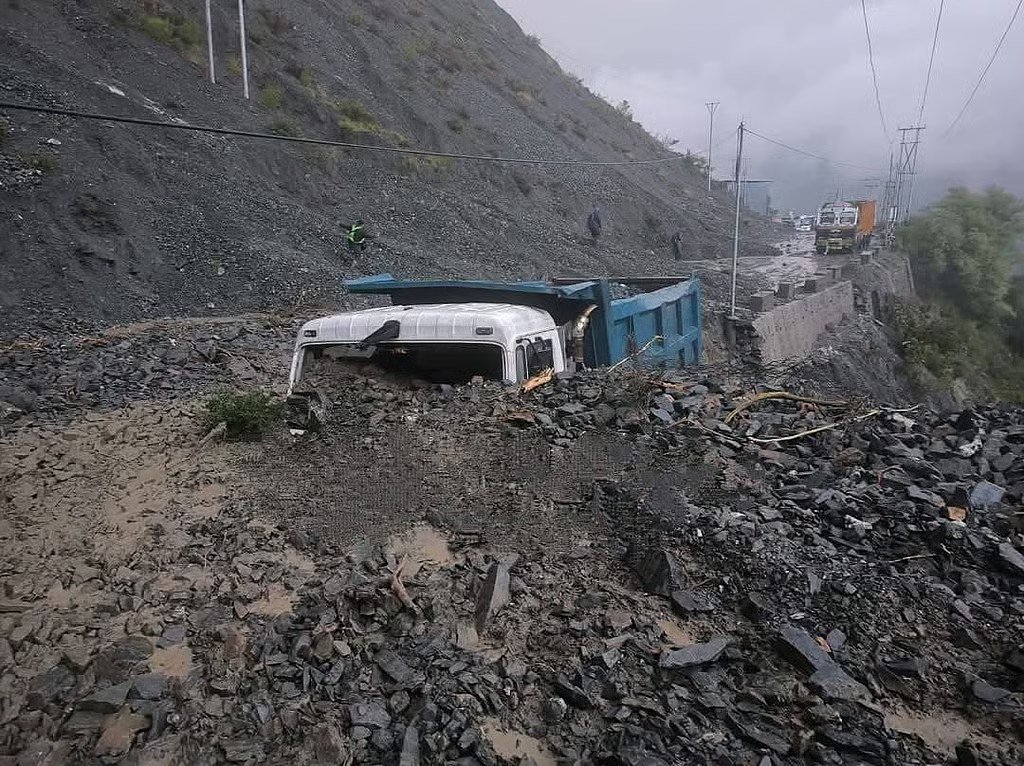
A truck buried under debris. Photo: Raja Muzaffar Bhat/Down To Earth.